
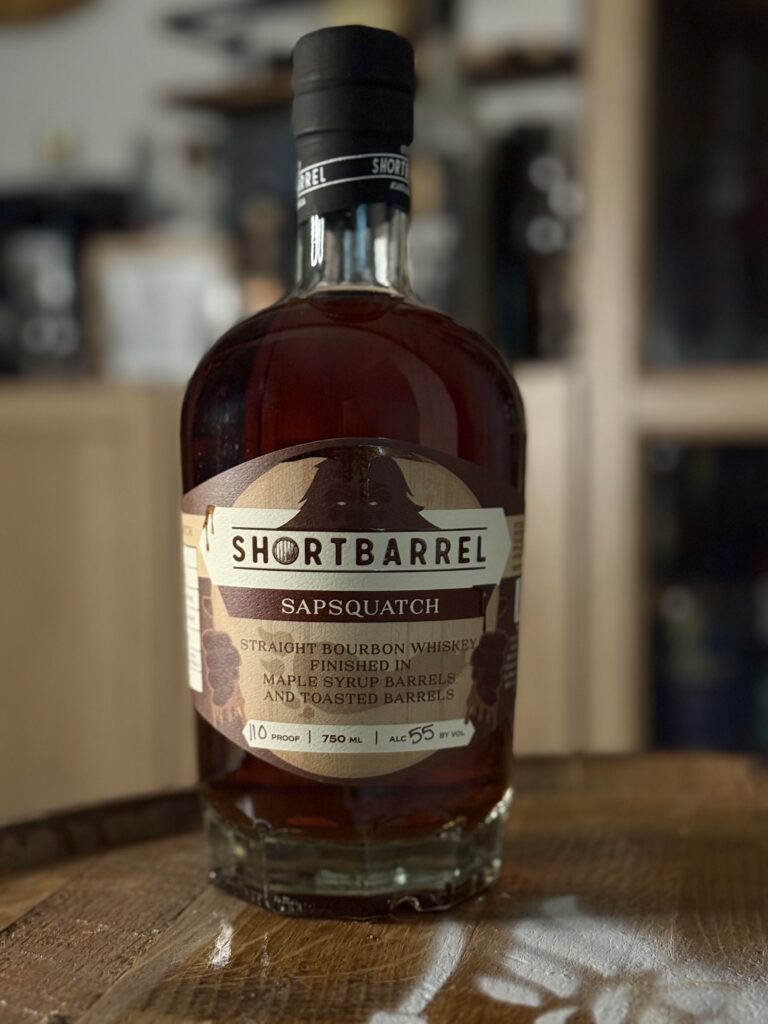
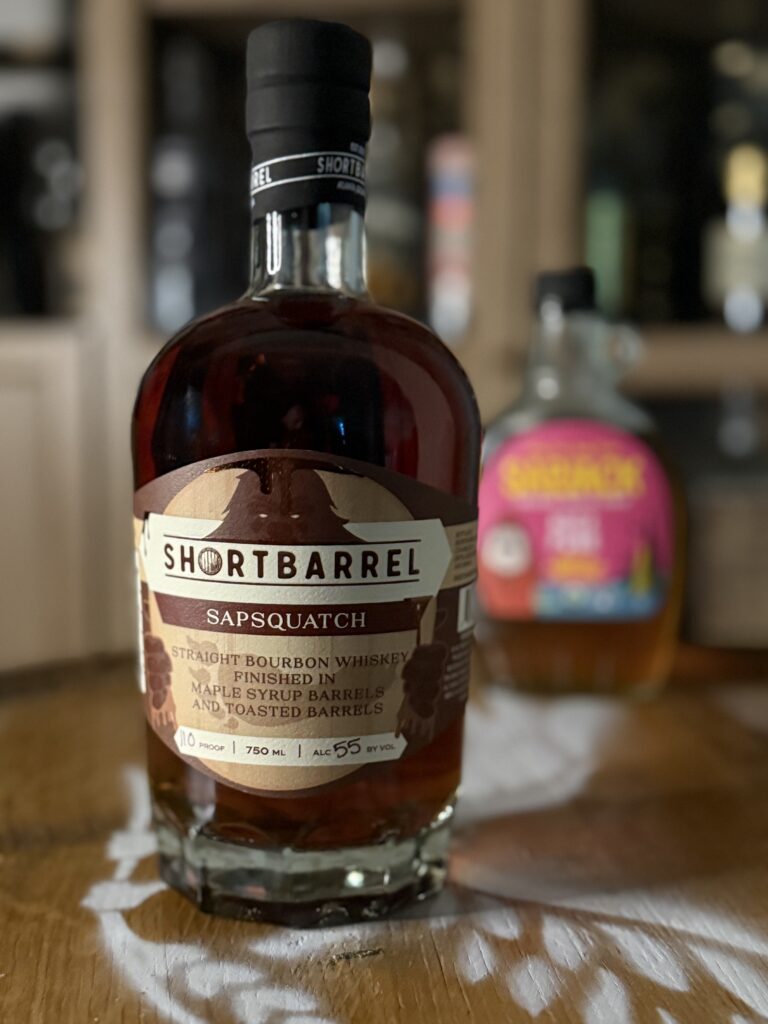
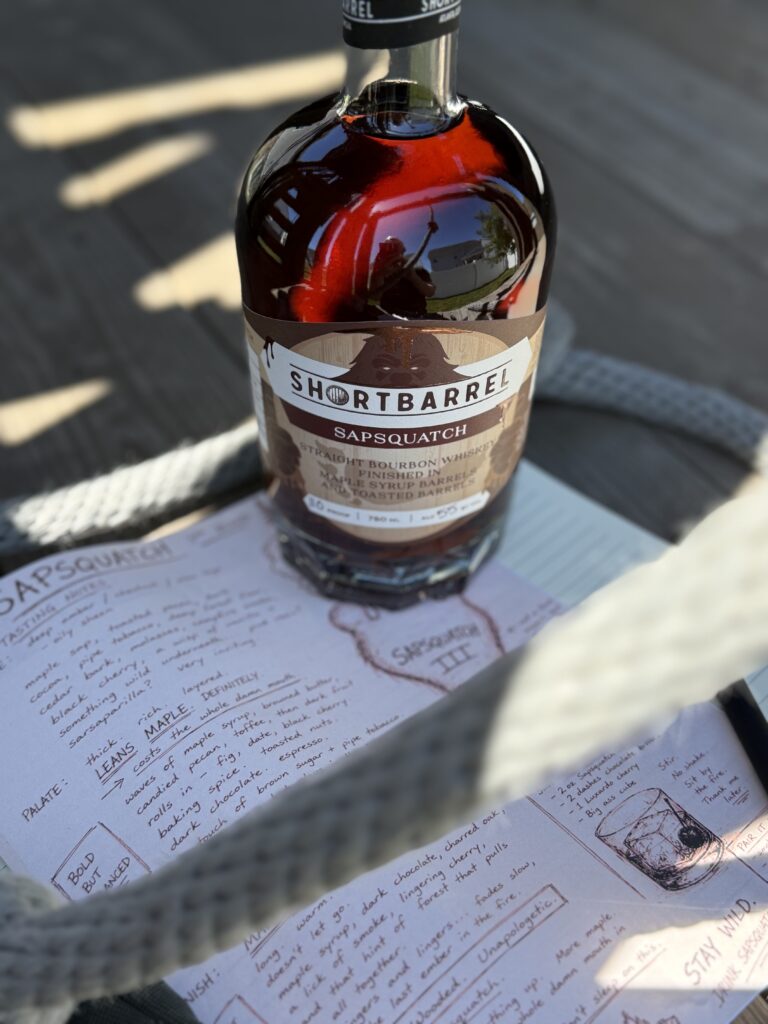
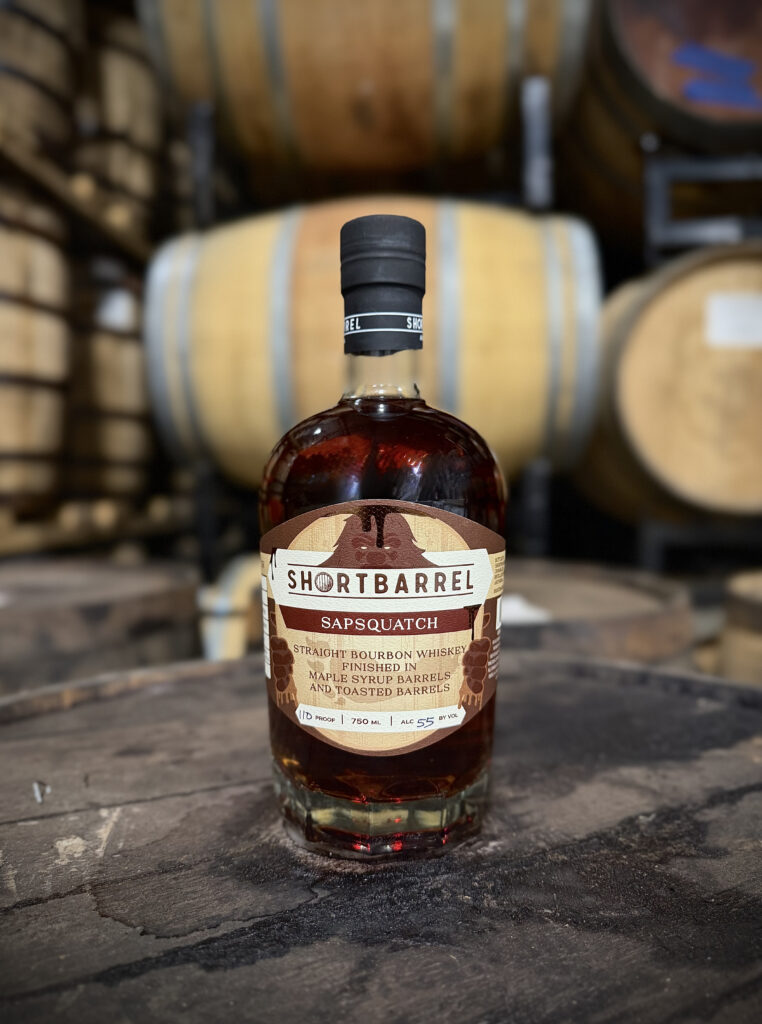
A thoughtfully finished blend of Kentucky and Indiana bourbon that delivers rich maple sweetness, toasted oak depth, and enough spice to keep everything in balance.
Stats
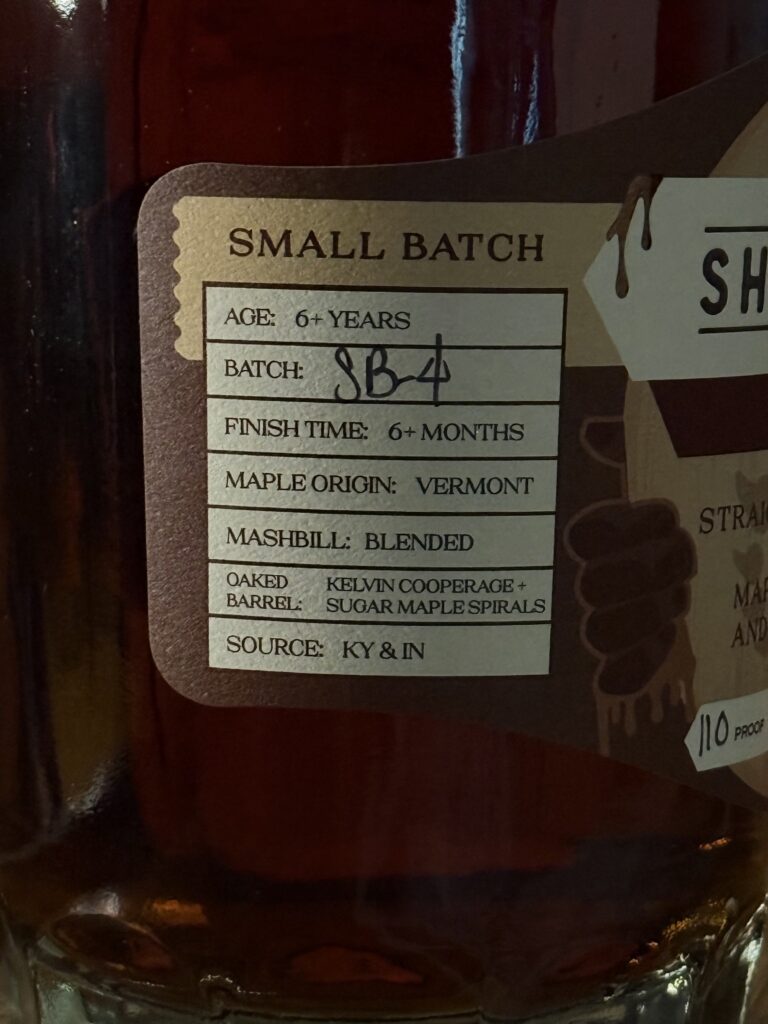
- Age: 6-8 year
- Proof: 110 (55% ABV)
- Mashbill: Primarily 70% corn │ 21% rye │9% malted barley and 75% corn │ 21% rye │ 4% malted barley
- Origin: Jim Beam, Barton 1792, Bardstown Bourbon Company, Green River and Ross & Squibb (MGP) — Clermont, Bardstown, Owensboro, Kentucky and Lawrenceburg, Indiana
- Blend Size: 20-30 barrels
- Batch: SB-4
- Finish: 6-8 weeks with sugar maple infusion spirals, then enter toasted barrel which has been conditioned with maple syrup.
- Syrup: Barred Wood & Seldom Seen Farm (Vermont)
- Release: Wide release, blended
- MSRP: $94.99 (Shortbarrel)
Tasting Notes
- Nose: The nose opens with brûléed dark maple syrup poured over French toast, immediately establishing the whiskey’s finishing influence. Beneath the sweetness are layers of roasted pecans and toasted oak, adding depth and preventing the aroma from feeling one-dimensional. This is a rich, inviting bouquet that delivers exactly what the label promises while remaining surprisingly refined.
- Palate: A soft, coating mouthfeel carries waves of dark caramel and maple sweetness across the tongue. The maple is prominent but never overwhelming, while recurring notes of roasted pecan provide structure and keep the profile grounded. The texture borders on creamy and delivers tremendous satisfaction, even if it sacrifices a touch of complexity in favor of balance.
- Finish: The finish is where the blending and finishing strategy truly come together. Maple sweetness gradually transitions into warming cinnamon and cardamom spice, creating a long, evolving experience rather than a simple sweet fade. Hints of cherry chocolate, toasted oak, and lingering pecan nuttiness remain present as moderate heat carries the whiskey to a balanced conclusion.
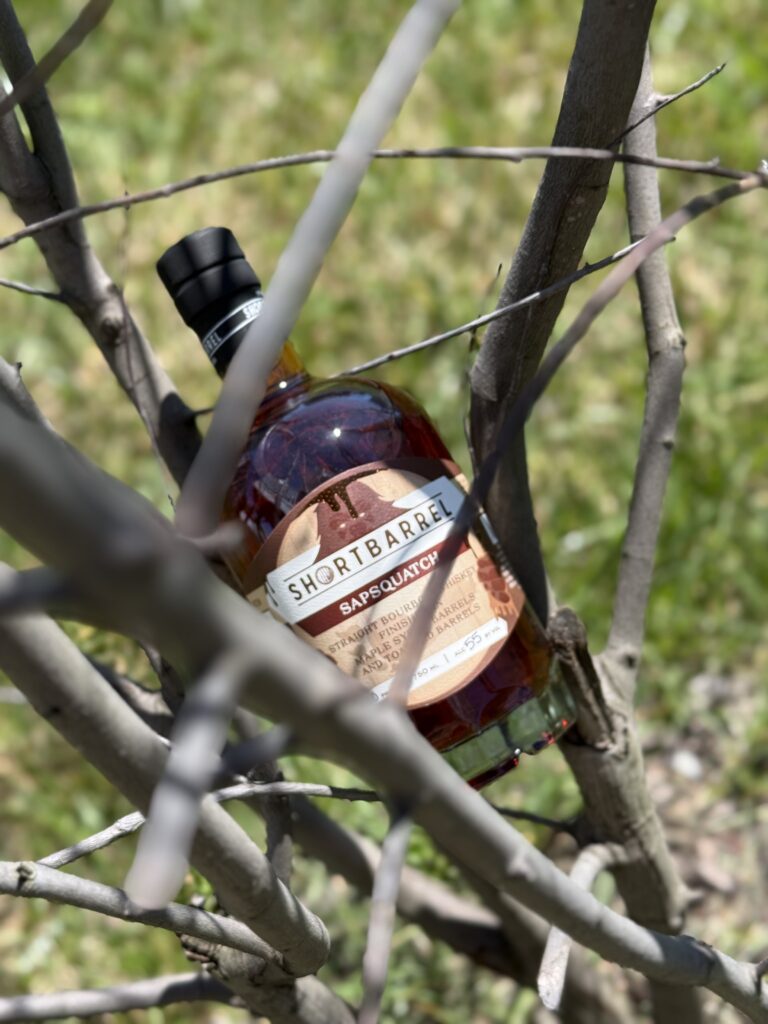
Maple-finished bourbon can be a tricky category. Lean too heavily into the finishing and the whiskey becomes little more than sweet syrup. Hold back too much and you leave drinkers wondering why the finish was added at all.
Shortbarrel Sapsquatch walks that line remarkably well.
This blend of Kentucky and Indiana straight bourbons spends time with maple spirals, then enters barrels that previously held Vermont maple syrup before receiving additional influence from toasted oak. The result is a whiskey that embraces maple sweetness without ever becoming cloying, creating one of the most balanced finished bourbons I’ve encountered in recent memory.
At 110 proof, Batch SB-4 lands squarely in a sweet spot for my palate, delivering plenty of flavor while maintaining an approachable and satisfying drinking experience.
Presentation
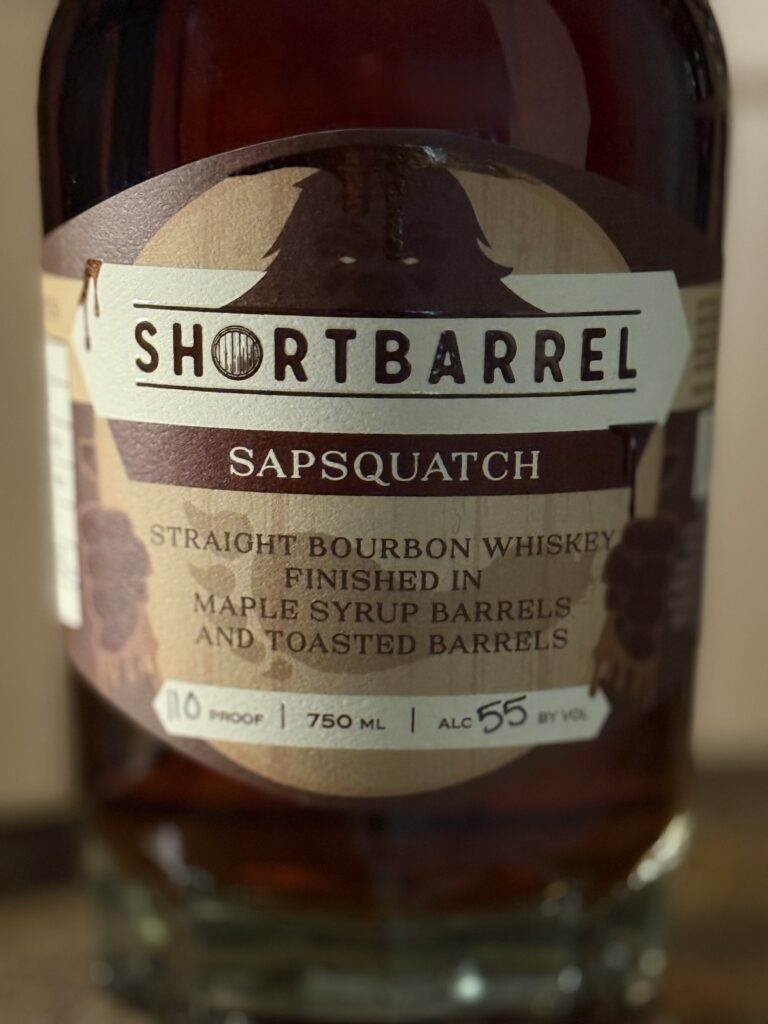
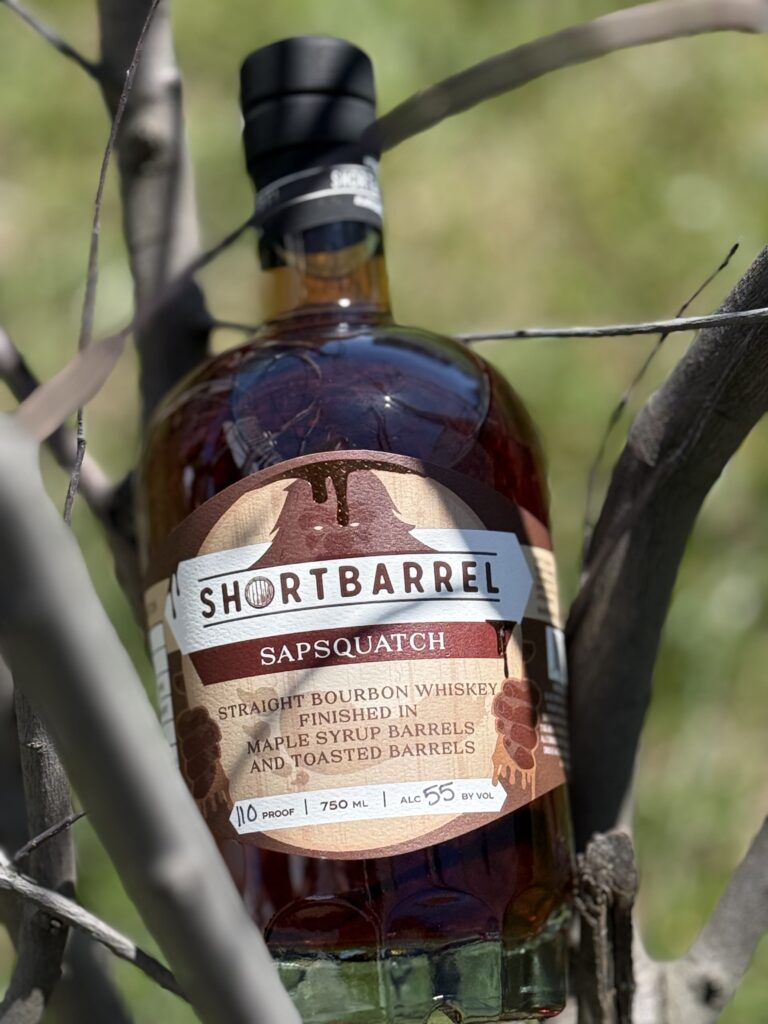
The special Sapsquatch label is a great example of themed packaging done well. The fictional maple-loving Sasquatch appears to be hugging the primary label, adding personality and visual appeal without crossing into gimmicky territory.
It catches your eye on the shelf, but ultimately allows the whiskey itself to remain the star of the show.
Distinctiveness
What separates Sapsquatch from many finished bourbons is the way the finishing elements work together rather than competing for attention. The combination of maple syrup barrels, maple spirals, and toasted oak creates authentic maple character while preserving the whiskey’s identity.
Many maple-finished releases either become overly sweet or fail to showcase enough maple influence. Sapsquatch manages to avoid both pitfalls. The toasted oak introduces a subtle savory dimension, while the pecan and spice notes keep the profile grounded. For my palate, this is one of the best maple-finished bourbons I’ve had to date.
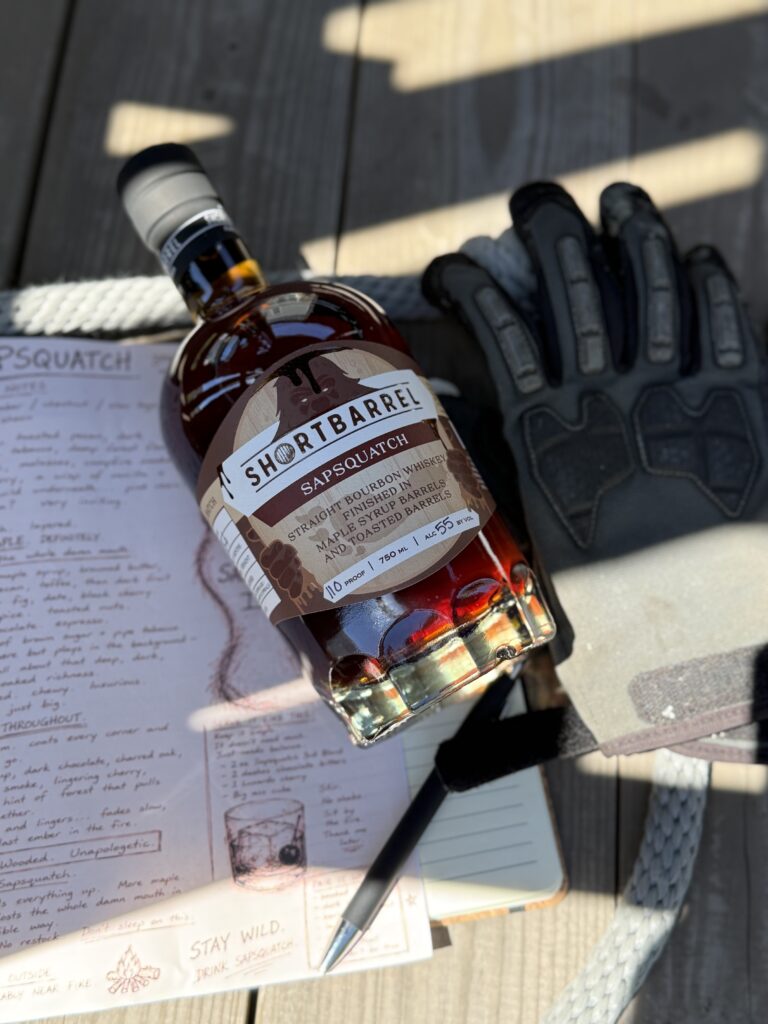
“For my palate, this is one of the best maple-finished bourbons I’ve had to date.”
Transparency
Shortbarrel deserves considerable credit here. The company openly discloses the whiskey’s states of distillation, age statement, proof, and finishing process, which remains surprisingly uncommon in today’s whiskey market.
Founder Clinton Dugan and the team have consistently emphasized doing things the right way, and that philosophy shows in the information provided. The only minor criticism is that the specific source distilleries are not identified directly on the label.
Value
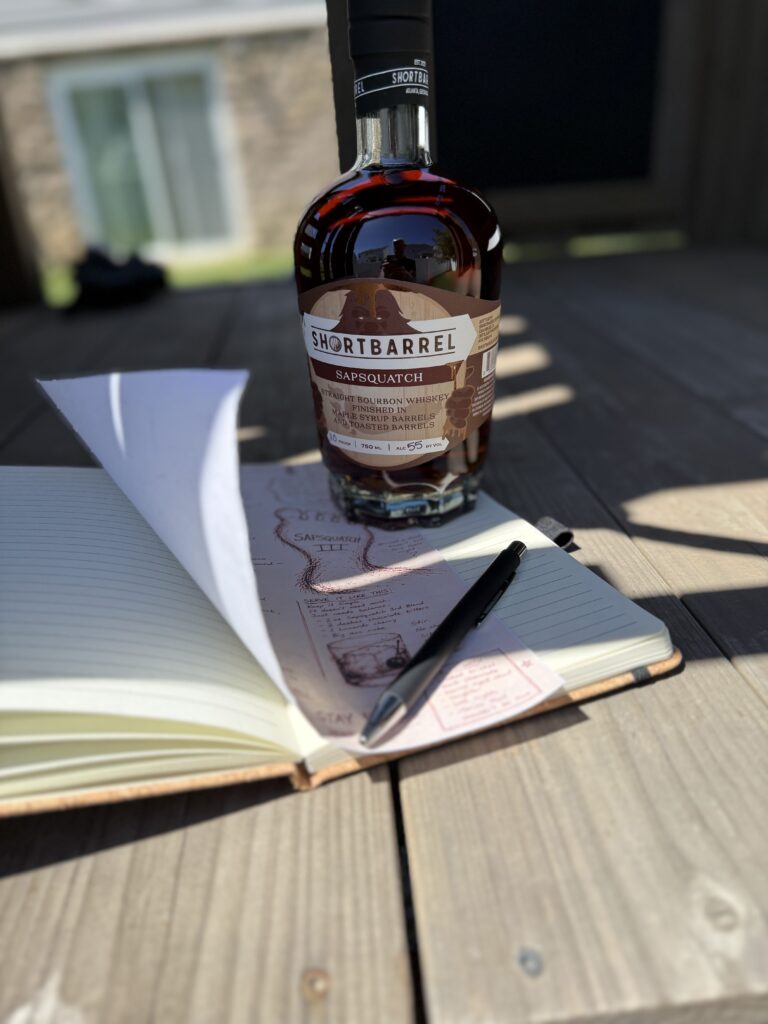
At $94.99, Sapsquatch is not inexpensive, especially for a 6-8-year-old blend. For many buyers, the price will create understandable hesitation.
That said, the whiskey’s unique finishing process, quality execution, and overall drinking experience help justify much of the premium. Would I personally spend $95 on a bottle of this? Absolutely. I’ve paid more for bottles that delivered far less enjoyment. Still, it sits close enough to the psychological $100 barrier that value-conscious buyers may pause.
Buy if:
- You enjoy finished bourbons that still taste like bourbon
- Rich notes of maple syrup, pecans, and toasted oak sound appealing
- You appreciate a balanced sweet-and-spice profile
- You’re looking for a premium maple-finished bourbon that avoids becoming gimmicky
Skip if:
- You strongly prefer traditional, unfinished bourbon
- Spending nearly $100 on a finished whiskey feels difficult to justify
- You dislike bourbons with dessert-inspired flavor profiles
- You want a whiskey focused on oak, leather, and classic barrel-forward notes
Verdict
Balance is the word that kept coming to mind throughout this review.
The nose promises maple sweetness. The palate delivers a rich, coating experience. The finish introduces spice and oak that keep everything honest. At no point does the whiskey become overly sweet, overly finished, or disjointed. Instead, each component supports the next.
A little digging revealed that previous Sapsquatch releases occasionally received criticism for lacking enough maple character. Batch SB-4 appears to be the result of Shortbarrel refining its process, including barrel-aging its own maple syrup before introducing the maple-conditioned bourbon into those barrels. Whatever adjustments were made, they worked.
This is a whiskey that knows exactly what it wants to be and executes the concept exceptionally well.
For those who prefer numbers, here’s the full score breakdown:
- Nose: 6.1 / 7
- Palate: 6 / 7
- Finish: 6.2 / 7
- Presentation: 5 / 7
- Distinctiveness: 6 / 7
- Transparency: 6.5 / 7
- Value: 5.5 / 7
Bourbon Bishop Rating: 5.9 / 7 – Divine
Top-shelf. Must-buy for fans of the style.
| Score | Descriptor | Notes |
|---|---|---|
| 0–1 | Hell No | Drain pour. Seriously undrinkable. |
| 1.1–2 | Purgatory | Bad, but could be worse. Only in extreme cases. |
| 2.1–3 | Only Earthly | Just okay. Best used as a mixer. |
| 3.1–4 | Bliss | Passable to Good sipper. Works well in cocktails. |
| 4.1–5 | Angelic | Good to great. Often high value for the price. |
| 5.1–6 | Divine | Top-shelf. Must-buy for fans of the style. |
| 6.1–7 | Holy Heaven | Out-of-this-world. A true unicorn. |
Disclosure: This bottle was provided to me free of charge for review. All opinions are my own.
About Shortbarrel
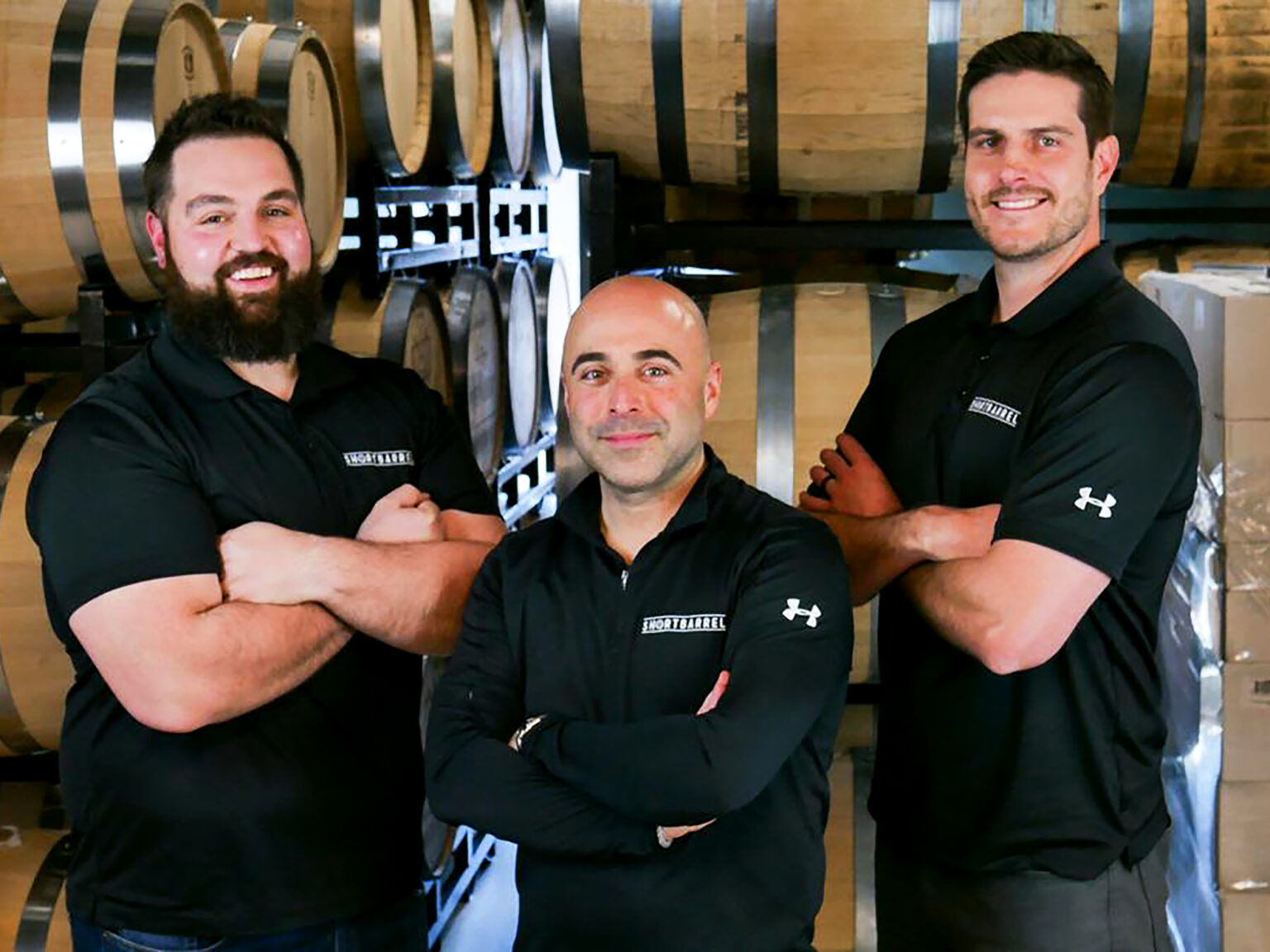
Founded by friends Adam Dorfman, Clinton Dugan, and Patrick Lemmond, Shortbarrel began as a passion project among Atlanta bourbon enthusiasts. Between 2016 and 2020, the trio built a reputation by selecting more than 350 private barrels, developing a palate for identifying exceptional whiskey and learning firsthand what makes a memorable pour. What started as weekend barrel picks eventually evolved into a whiskey brand of their own after a chance meeting in Louisville inspired them to take the leap from enthusiasts to blenders.
Shortbarrel officially launched in 2021 with a focus on thoughtfully blended American whiskey that emphasizes flavor, texture, and drinkability. The company has grown rapidly from its Georgia roots, expanding distribution across multiple states while maintaining a philosophy built around transparency, quality sourcing, and creating whiskeys that keep drinkers coming back for another sip. The name itself comes from the rare “short barrel” phenomenon, where a barrel loses more than half its contents to evaporation, often concentrating flavor and creating remarkable depth.
Today, Shortbarrel’s influence extends beyond independent bottling. In 2023, the company acquired Atlanta’s historic Old Fourth Distillery, helping preserve one of Georgia’s most important modern whiskey brands while investing in the future of Southern spirits. Whether through innovative blends, single barrels, or revitalizing local distilling, Shortbarrel continues to build on the friendships, curiosity, and passion that inspired the company from the very beginning.
Related Articles
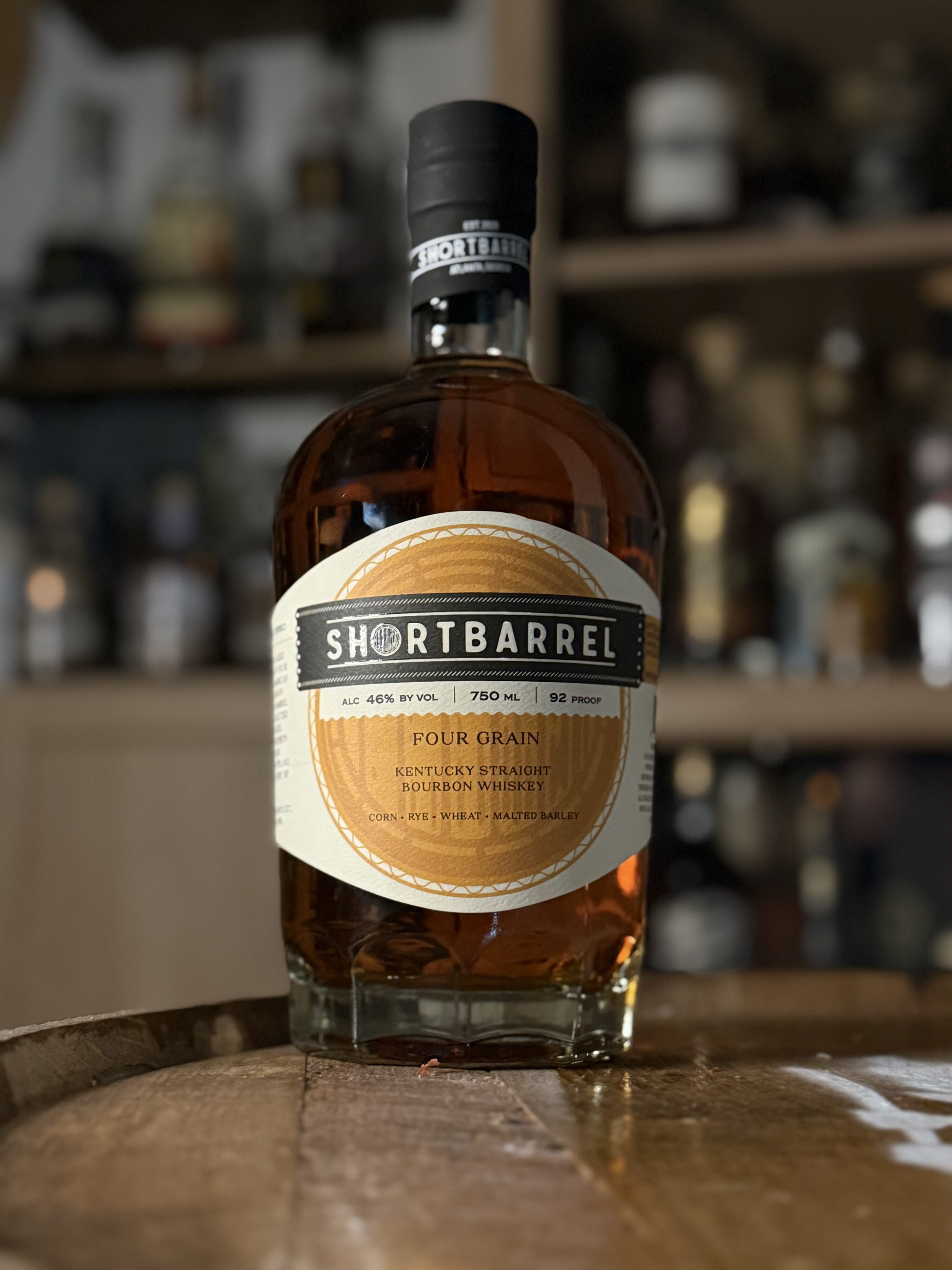
Shortbarrel Four Grain Small Batch Bourbon combines Green River and Wilderness Trail distillate into a creamy, approachable four-grain bourbon with surprising depth, subtle spice, and excellent value at $44.99. Based on publicly available information, the blend combines 4-5 year old bourbon from both distilleries and is bottled at 92 proof.
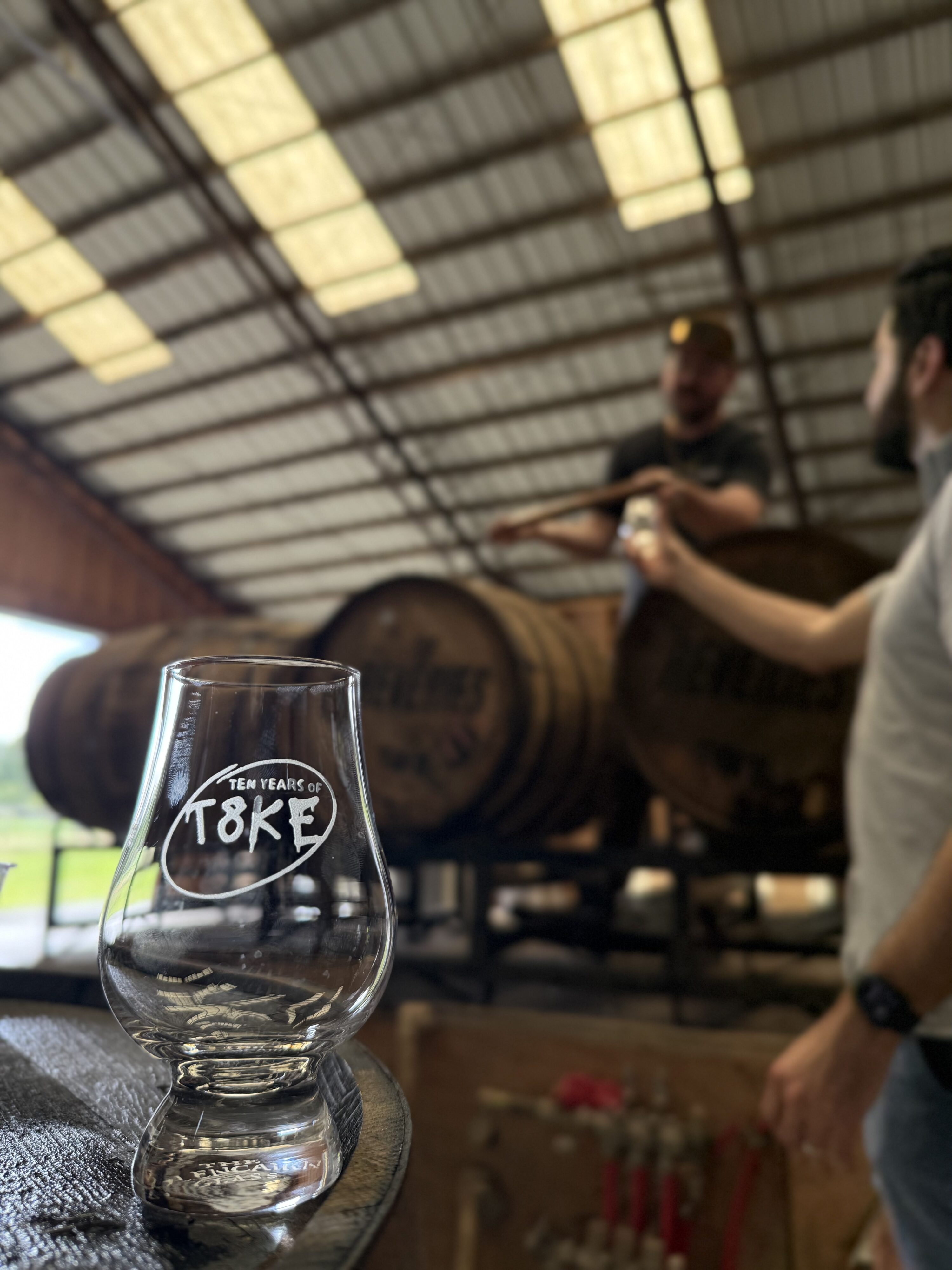
Looking for great Virginia distilleries? Here are the distilleries around Northern Virginia I’d recommend first, from whiskey-focused destinations to hidden gems and exclusive tasting experiences.
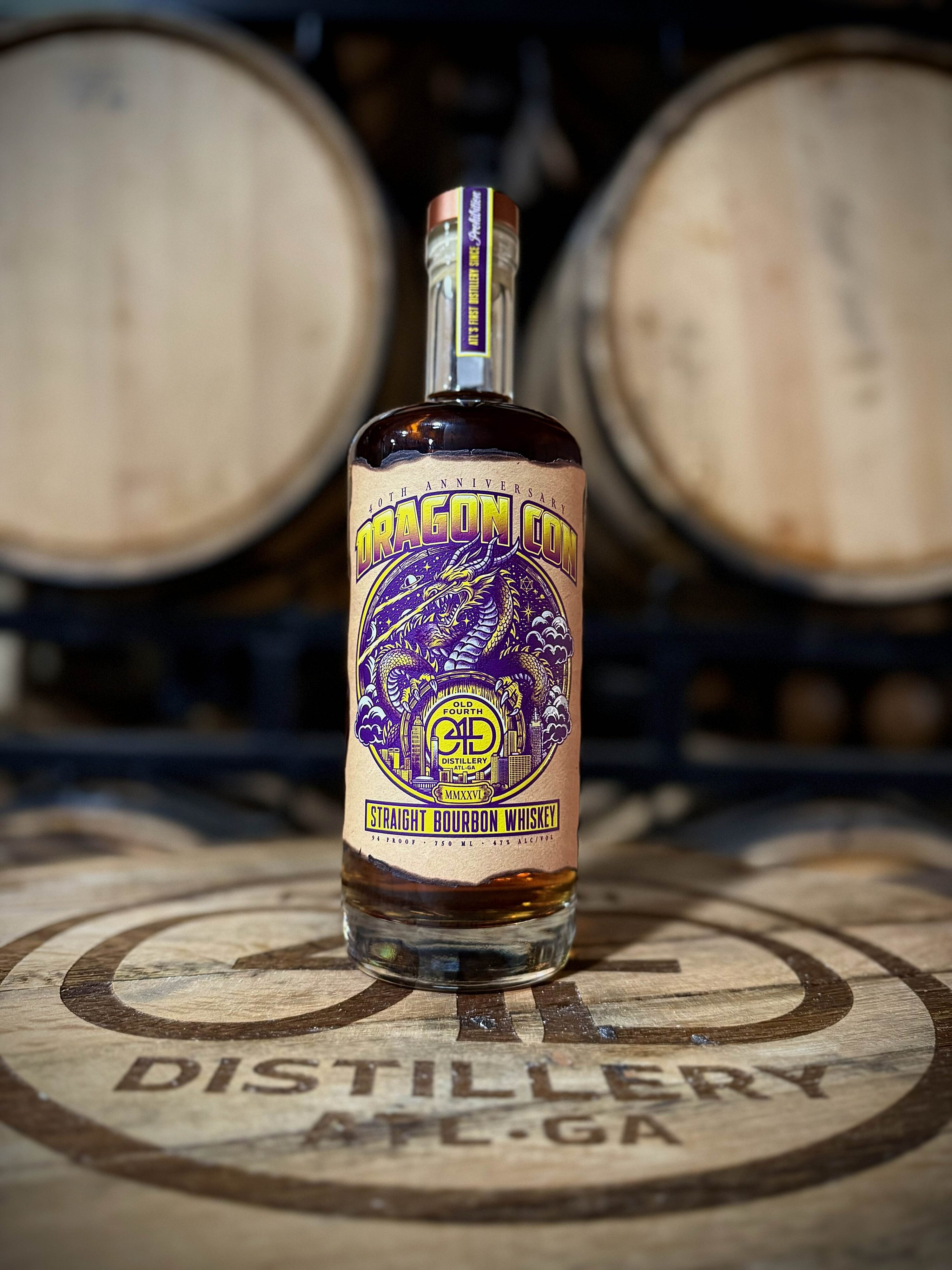
Dragon Con Bourbon returns for its second annual release, celebrating the convention’s 40th anniversary with a limited-edition whiskey from Old Fourth Distillery. Only 3,700 bottles will be available.
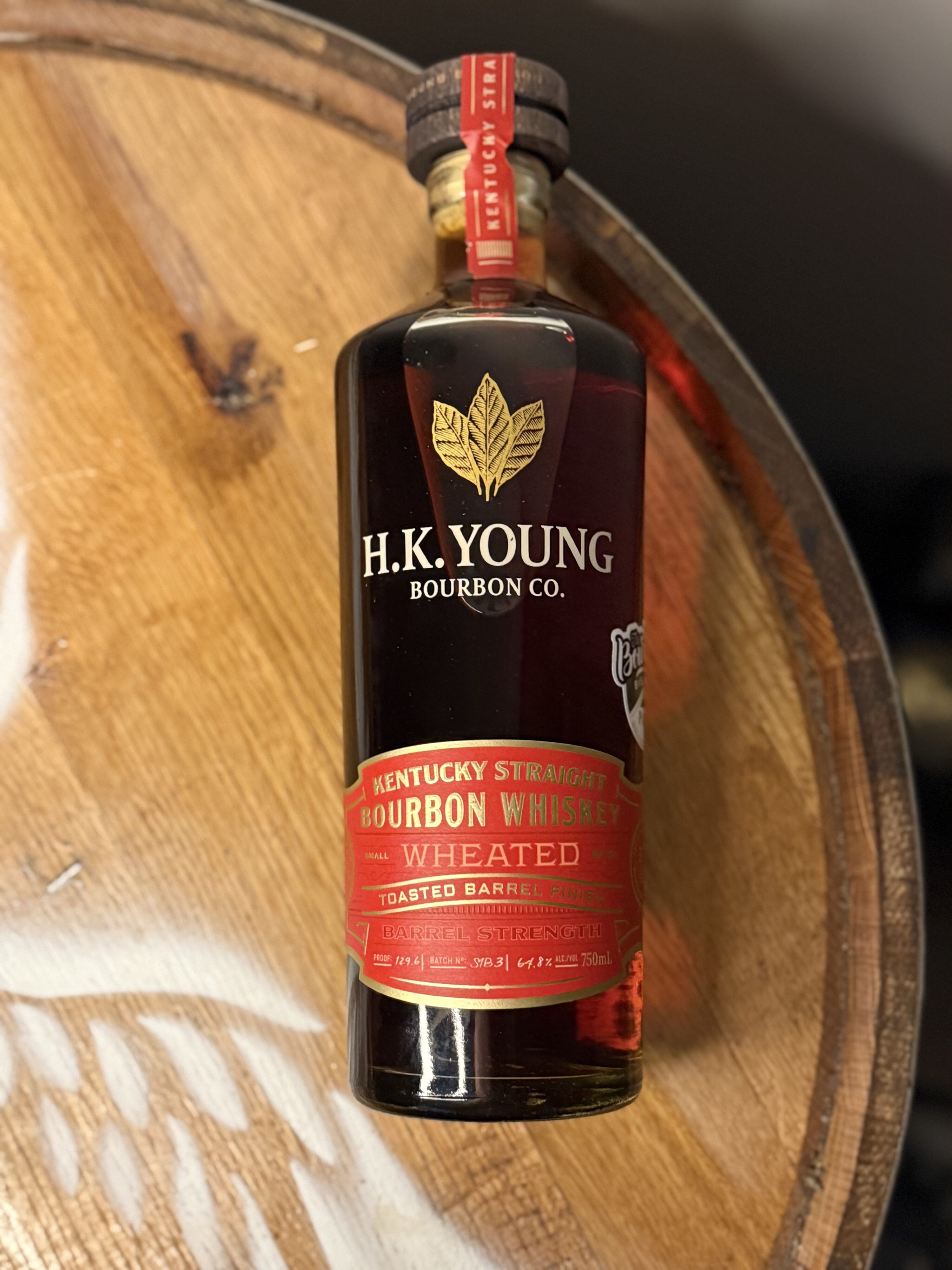
A 7-year, 129.6 proof HKY toasted wheated private barrel selected by Ethan Pope (@thebourbonbishop) and Pierre Bernal (@pierrebernal_). Dessert-forward with structure, defined by a long, spice-driven finish.
Pingback: Locke + Co.'s Big Blaze Bourbon Earns Double Gold at 2026 Denver International Spirits Competition Review | Bourbon Bishop
Pingback: RNDC Chapter 11 Filing Signals Deeper Strain Across the American Whiskey Industry Review | Bourbon Bishop
Pingback: Pursuit Spirits and Shortbarrel Announce “Found Footage” Bourbon Collaboration for Kentucky Bourbon Festival Review | Bourbon Bishop