
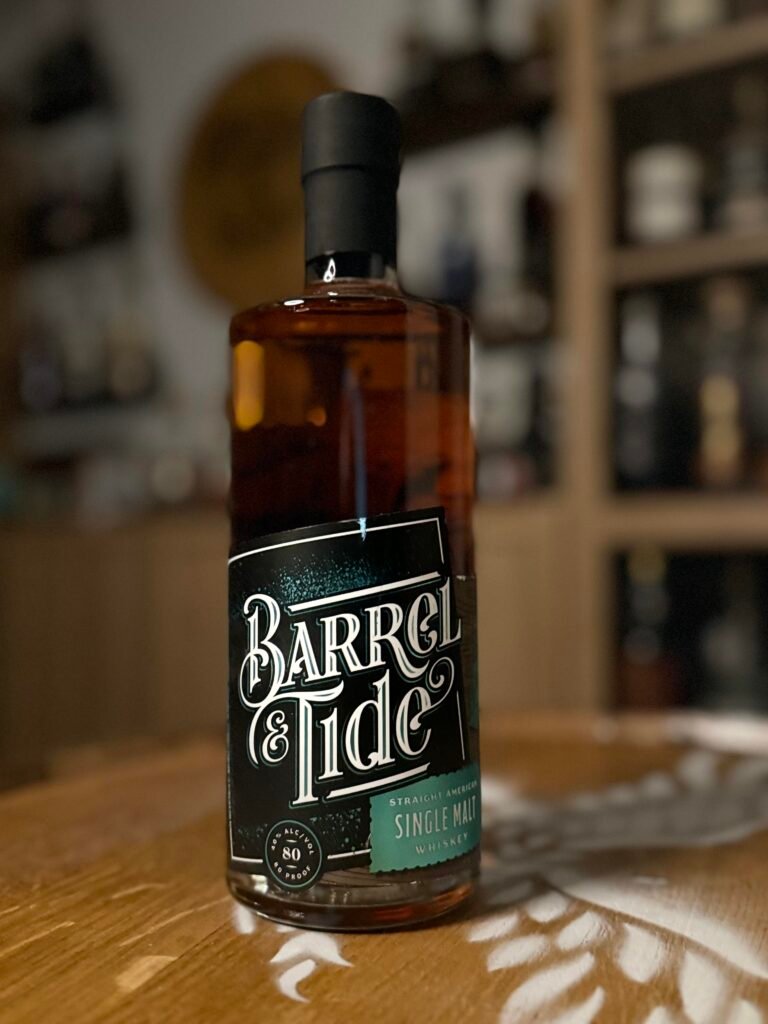
A young American whiskey that turns milk chocolate, toasted grain and pepper into something far more elegant than its age suggests.
Stats
- Type: American Single Malt
- Age: 2-5 year
- Proof: 80 (40% ABV)
- Mashbills: 100% malted barley
- Origin: Pilot House — Astoria, Oregon
- Blend Components: Exact % unknown.
- Finishing Cask: Straight
- Release: Wide release, blended
- MSRP: $60.00 / 750 mL (via Pilot House)
Tasting Notes
- Nose: A pronounced coastal salinity arrives first, followed by cereal malt and chocolate-covered fruit, including notes reminiscent of Brookside chocolate-covered açai and blueberry candy. There’s a slightly grain-forward quality underneath it all, with a subtle hint of citrus.
- Palate: The texture is velvety without becoming dense, with poached pear and vanilla surrounding a significant mocha character. Orange peel adds some brightness, while the mid-palate is relatively short but surprisingly flavorful for an 80-proof whiskey.
- Finish: The initial finish is relatively short, but the flavors linger and build, particularly the growing black pepper that never becomes hot. Coastal brine, chocolate malt and espresso carry through with cinnamon and a nearly overripe red apple note.
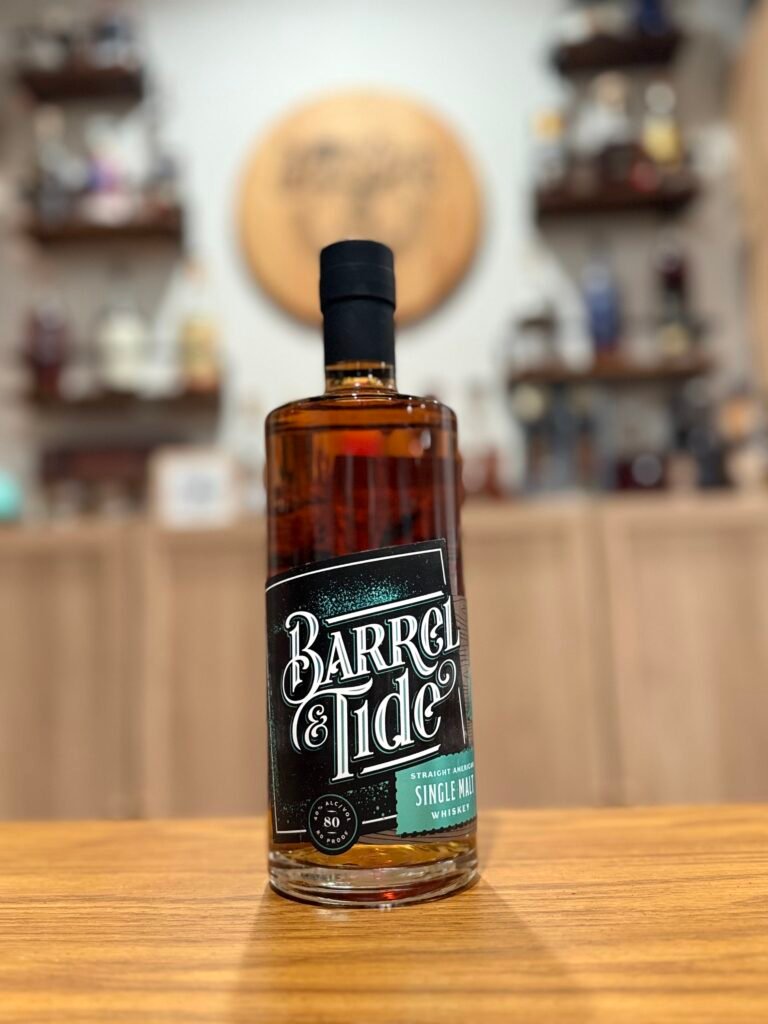
Pilot House Barrel & Tide is a 100% malted barley American single malt that immediately stands apart from most of what I’ve been drinking lately. At just 80 proof, I expected something lighter and simpler, but the combination of coastal salinity, chocolate malt, espresso, fruit and honey gives this blend considerably more depth than its proof would suggest.
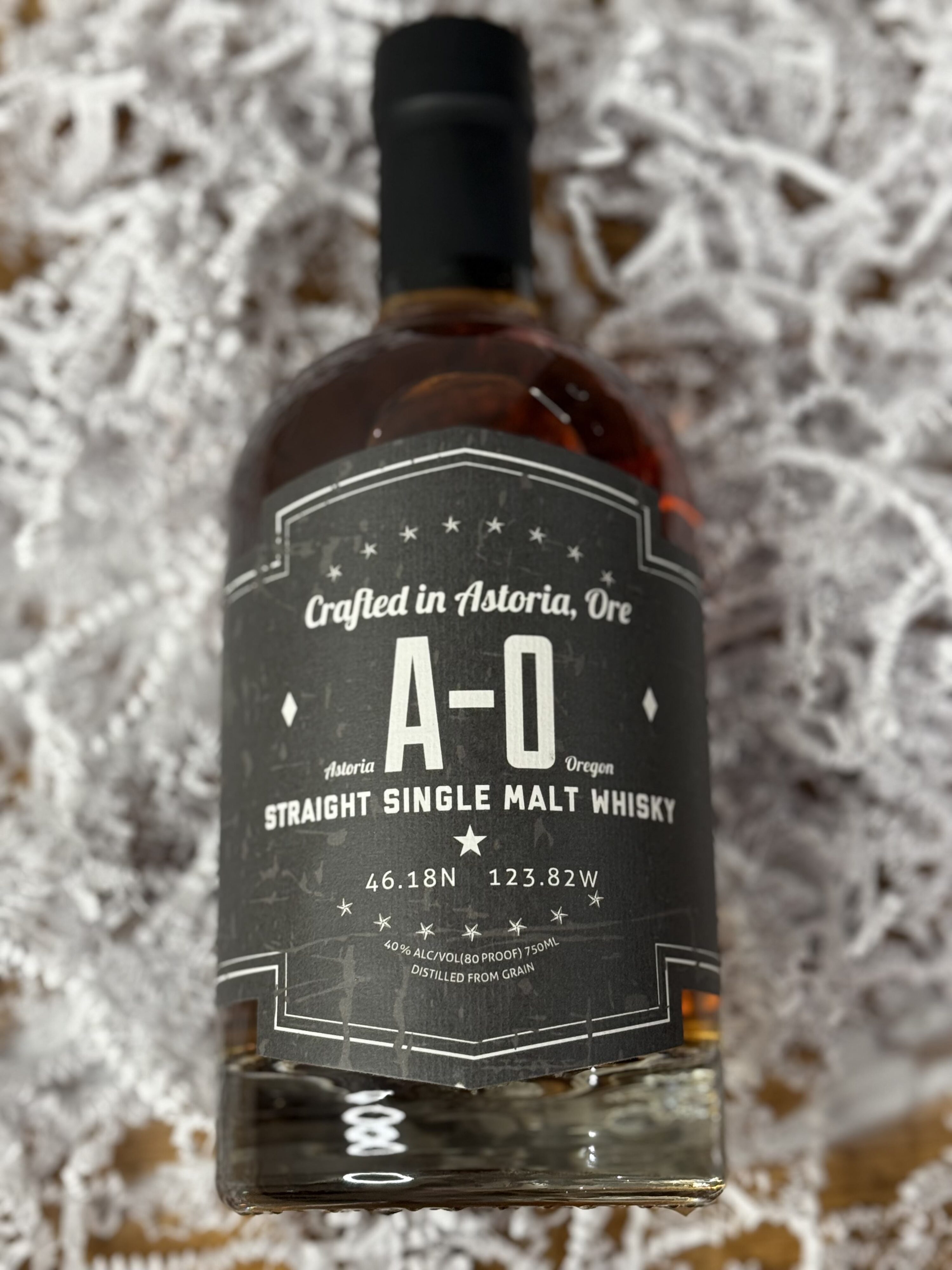
This is an updated expression of the same distillate found in Pilot House’s previously reviewed two-year-old American single malt, but the new 2–5 year age range makes a noticeable difference. The added maturity softens the more dominant mocha and espresso character of the younger whiskey while bringing in more sweetness, fruit and balance. It’s still unmistakably coastal, but here the salt feels like an integral part of the whiskey rather than a gimmick.
Presentation
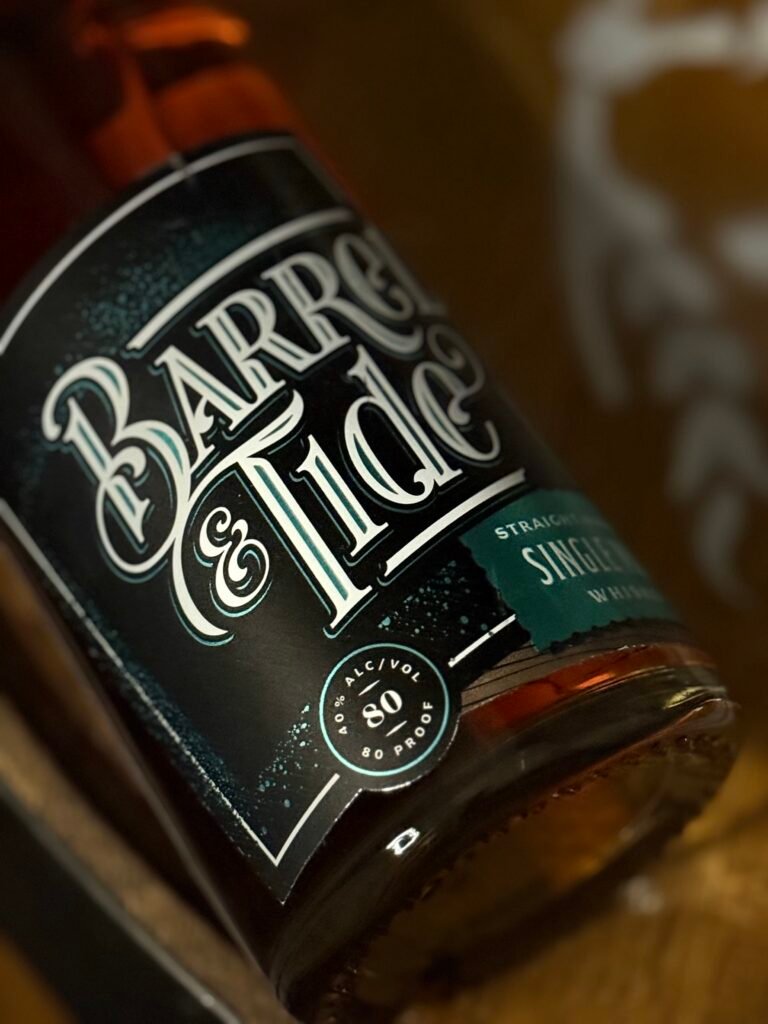
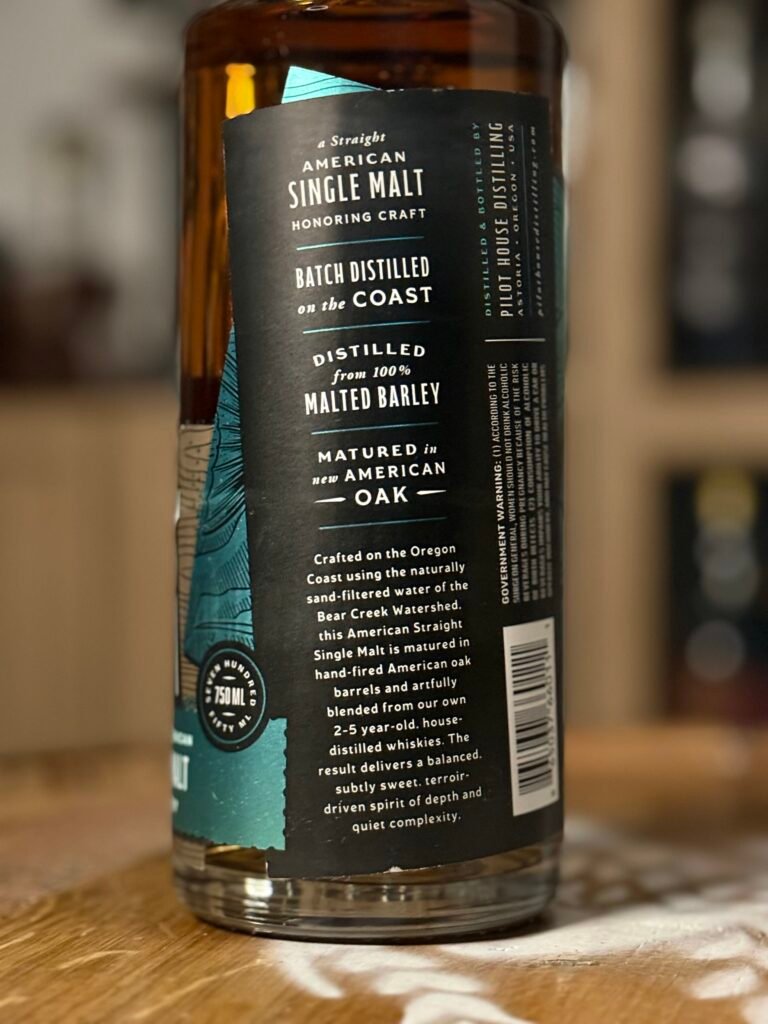
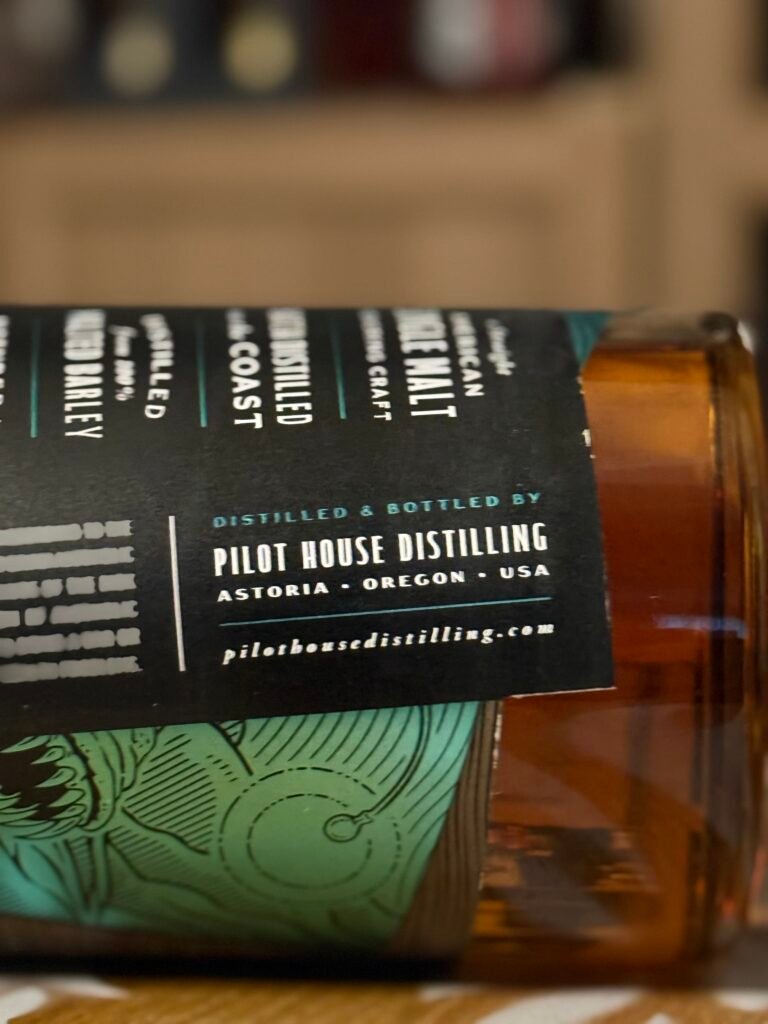
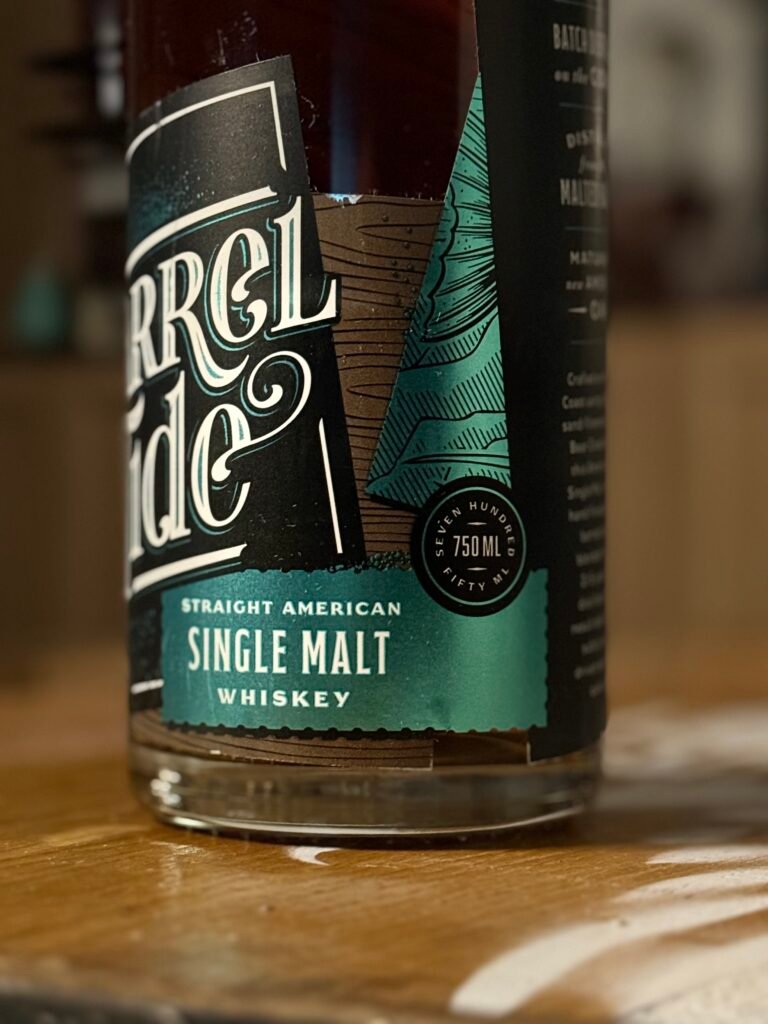
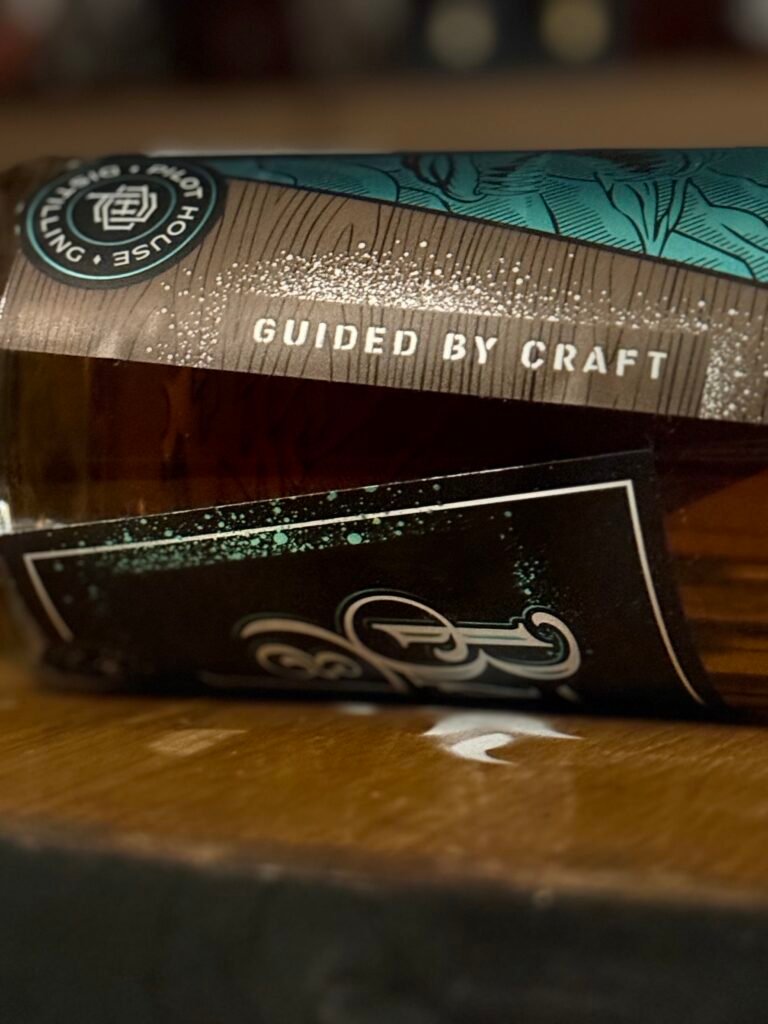
Barrel & Tide gets a major visual upgrade from Pilot House’s previous release. The new label replaces the older, very simple black design with a clean, ocean-inspired presentation featuring metallic teal, distinctive typography and coastal iconography.
The information is also exceptionally easy to find, including the American single malt designation, 100% malted barley, new American oak aging and craft-batch positioning. Even the little lantern fish emerging from underneath the label adds personality without making the bottle feel cluttered.
For a redesign, this one really works. It feels more distinctive, more polished and far more photographable than the previous label.
Distinctiveness
This is where Barrel & Tide really separates itself.
The salinity is unmistakable, showing up on both the nose and finish, and in this case the coastal influence feels like a genuine part of the whiskey rather than a marketing gimmick. Alongside that saltiness, you get an unusual combination of espresso, chocolate malt, honey, citrus and fruit that doesn’t taste like most American whiskey.
The biggest question I’m left with is what this profile would do at cask strength. At 80 proof, there is impressive depth here; giving those flavors more alcohol and concentration could be fascinating.
“The biggest question I’m left with is what this profile would do at cask strength.”
Transparency
Pilot House deserves credit for being open about what is in the bottle. The distillery provides the mash bill, aging details and the 2–5 year age range, giving drinkers useful context for understanding the whiskey.
That transparency also makes the evolution from the previously reviewed two-year-old release easier to appreciate. The distillate is the same, but the broader age range clearly brings more softness, sweetness and balance, moving the profile away from the dominant mocha and chocolate malt character of the younger whiskey.
Value
At a $60 MSRP, Barrel & Tide is a bit of a stretch on paper. The oldest component is only five years old, and 80 proof is significantly lower than what many American whiskey drinkers have come to expect at this price point.
But the profile complicates that equation. This isn’t a whiskey I’d recommend because you’re getting a lot of alcohol or age for your money; you’re paying for a distinctive American single malt with a genuinely unusual flavor profile. For the right drinker, particularly someone who enjoys lower-proof whiskey, single malts and coastal character, I can see the value.
Buy if:
- You enjoy American single malt
- You like lower-proof whiskey
- You want coastal salinity in your glass
- You value distinctive flavor profiles over age or proof
Skip if:
- You primarily chase high-proof whiskey
- You expect significant age at $60
- You prefer traditional bourbon profiles
- Salty/coastal flavors aren’t your thing
Verdict
Barrel & Tide genuinely surprised me. At 80 proof, I expected this to be a lighter, simpler whiskey, but it has far more depth than the numbers suggest. The salinity is obvious without overwhelming the whiskey, while mocha, espresso, chocolate malt, fruit and honey create a profile that continues to reveal itself with each sip.
The 2–5 year blend is also a meaningful step forward from the younger Pilot House expression I previously tasted. The additional maturity brings sweetness, softness and balance, smoothing out the more aggressive chocolate-and-coffee character while preserving what makes the whiskey distinctive.
This won’t be for everyone, and I understand why some drinkers will want more proof for $60. But if you’re the kind of whiskey drinker who seeks out unusual American single malts or simply wants to see how much flavor can exist at 80 proof, Barrel & Tide is worth seeking out. I just wish I could taste this one at cask strength.
Bourbon Bishop Bottom Line:
An unusually deep 80-proof American single malt where coastal salinity, chocolate malt and fruit come together in a genuinely distinctive pour.
For those who prefer numbers, here’s the full score breakdown:
- Nose: 4 / 7
- Palate: 4.1 / 7
- Finish: 4.2 / 7
- Presentation: 5 / 7
- Distinctiveness: 6 / 7
- Transparency: 6.75 / 7
- Value: 4 / 7
Bourbon Bishop Rating: 4.86 / 7 – Divine
Good to great. Often high value for the price.
| Score | Descriptor | Notes |
|---|---|---|
| 0–1 | Hell No | Drain pour. Seriously undrinkable. |
| 1.1–2 | Purgatory | Bad, but could be worse. Only in extreme cases. |
| 2.1–3 | Only Earthly | Just okay. Best used as a mixer. |
| 3.1–4 | Bliss | Passable to Good sipper. Works well in cocktails. |
| 4.1–5 | Angelic | Good to great. Often high value for the price. |
| 5.1–6 | Divine | Top-shelf. Must-buy for fans of the style. |
| 6.1–7 | Holy Heaven | Out-of-this-world. A true unicorn. |
Disclosure: This bottle was provided to me free of charge for review. All opinions are my own.
About Pilot House Distillery
Founded in 2013 by Larry Cary, Pilot House Distilling is a craft distillery rooted in historic downtown Astoria, Oregon. The distillery initially focused on gin and vodka while its whiskies aged in-house, taking a long-term approach that continues to shape its portfolio.
Pilot House has also played a role in Oregon’s craft spirits industry beyond the bottle, helping lead a successful 2017 effort to allow canned cocktail sales in the state. That work led to the Astoria Mary, Oregon’s first canned cocktail. Today, Pilot House produces whiskey, gin, vodka, agave spirits, absinthe, liqueurs and canned cocktails, with tasting rooms in Astoria and Cannon Beach and distribution throughout the Pacific Northwest and beyond.
With its growing whiskey portfolio and distinctly coastal identity, Pilot House continues to build on its roots while expanding its footprint across the West Coast.

Related Articles
Pilot House — A-O Single Malt Review
Pilot House A-O Single Malt (2 Year, 80 proof) delivers chocolate malt, espresso, pepper, and light smoke with a grain-forward profile. Interesting character, but limited depth at $60.
Brother Justus Founders Reserve IV delivers silky milk chocolate, toasted grain, vanilla cream and black pepper in a remarkably refined young American whiskey.
Minden Mill American Single Malt blends oloroso sherry, ex-bourbon, and American oak aging into a malt-forward pour that feels far closer to unpeated Scotch than modern American whiskey.
Bardstown Bourbon Company Discovery 2026 blends 7-, 10-, and 11-year-old bourbons before a four-month Garryana oak finish. Here’s how it drinks.
Confused by whiskey terms like small batch, bottled in bond, NDP, cask strength, or mash bill? Here’s a plain-English whiskey dictionary that defines common whiskey words and actually makes sense.
Discover the best budget whiskey releases of 2026 so far. From Blue Bolt 107 to Keeper’s Heart Pot Still Whiskey and Wheel Horse Rum Finished, these five bottles under $50 offer outstanding flavor, value, and character.
Small Batch has no legal definition, but a growing number of independent bottlers and craft distilleries are redefining the term through transparency, intentional blending, and truly limited barrel counts.