
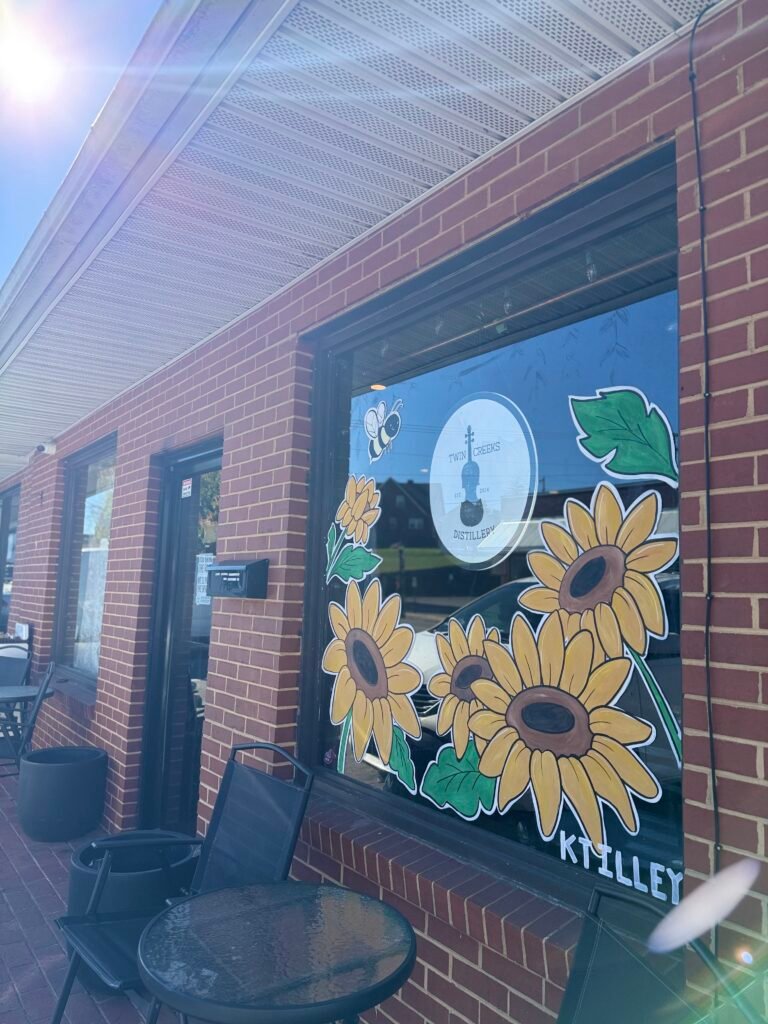
In Franklin County, Virginia, the story of making spirits is inseparable from the people, music, and mountain traditions that shaped it. At Twin Creeks Distillery, Anna Prillaman is helping carry that legacy forward while finding room for a new generation.
STOP 3 — Part of a Bigger Southwestern Virginia Spirits Project:
I’m working with Virginia Spirits on an ongoing project to shine a light on the craft distilleries of Southwestern Virginia, helping more people discover the people, places, and spirits that make this corner of the Commonwealth special.
Known as the Moonshine Capital of the World, Franklin County has a complicated and deeply rooted relationship with spirits. For generations, making liquor was more than a hobby or a business. It was a means of survival, a family trade, and an important part of the local culture. That history includes everything from resourceful mountain craftsmanship to federal investigations, raids, and some of the most notorious moonshine prosecutions in American history.
Twin Creeks Distillery, located in downtown Rocky Mount, is an effort to preserve that history rather than simply capitalize on it.
During the third stop on my Southwest Virginia Whiskey Trail visit series, I sat down with Anna Prillaman to talk about her family’s history, the distillery’s approach to making spirits, and the Appalachian traditions that connect the two. Although Rocky Mount sits in Southern Central Virginia rather than what most people would consider the heart of Southwest Virginia, Twin Creeks offers an important piece of the broader story of Virginia’s mountain distilling heritage.
What I found was a distillery where the spirits, the equipment, the music, and the people are all connected by something much deeper than a brand identity.
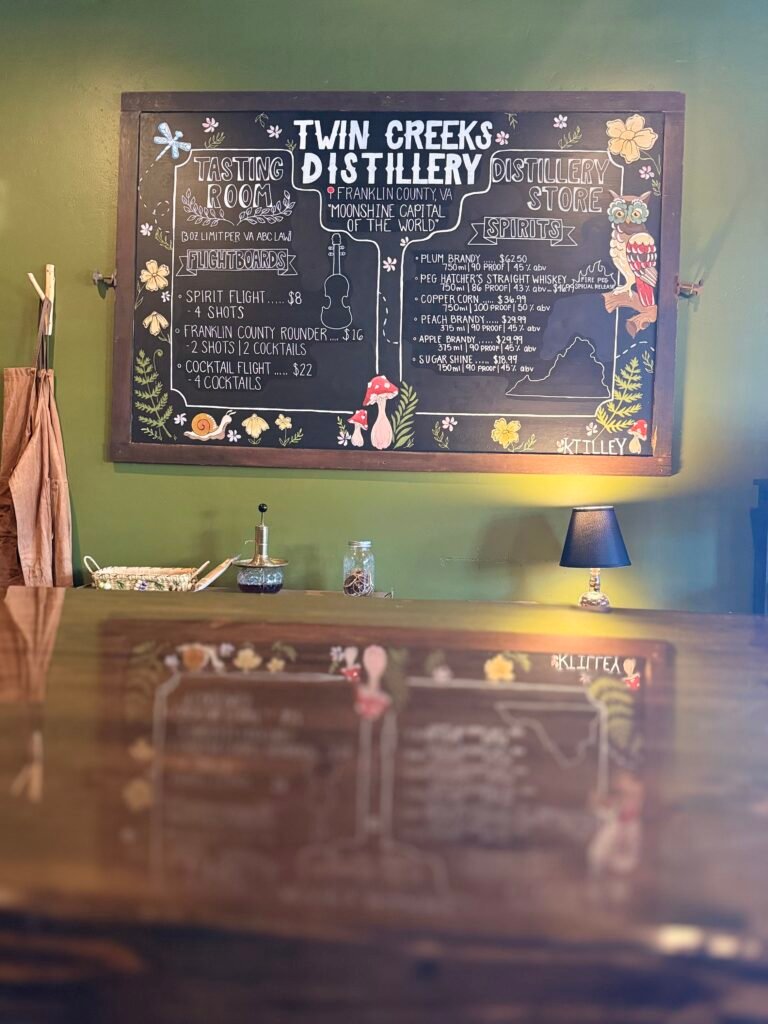
- Distillery: Twin Creeks Distillery
- Location: Rocky Mount, Franklin County, Virginia
- Opened: 2015
- Known for: Traditional sugar liquor, locally sourced fruit brandies, Appalachian moonshine heritage, and old-time music
- Hosted by: Anna Prillaman
A Family History Written in Moonshine
Twin Creeks began legally producing spirits in 2015, becoming the first legal liquor producer in Franklin County since Prohibition. The family’s roots in distilling, however, go back generations.
Anna’s great-grandfather, James Walter “Peg” Hatcher, was one of the figures caught up in the infamous Great Moonshine Conspiracy Trial of 1935. The case involved dozens of Franklin County residents accused of participating in an extensive illegal liquor operation during the Depression. Hatcher was among the relatively few who ultimately served prison time, receiving an 18-month sentence in 1939.
According to Anna, Peg was considered a major figure in the operation, helping coordinate and move liquor throughout an extensive network. It was a difficult period for the family and the community, but it also illustrates just how deeply the business of making spirits was woven into everyday life in Franklin County.
There is another side to Peg’s story, though, and it has just as much importance to the identity of Twin Creeks.
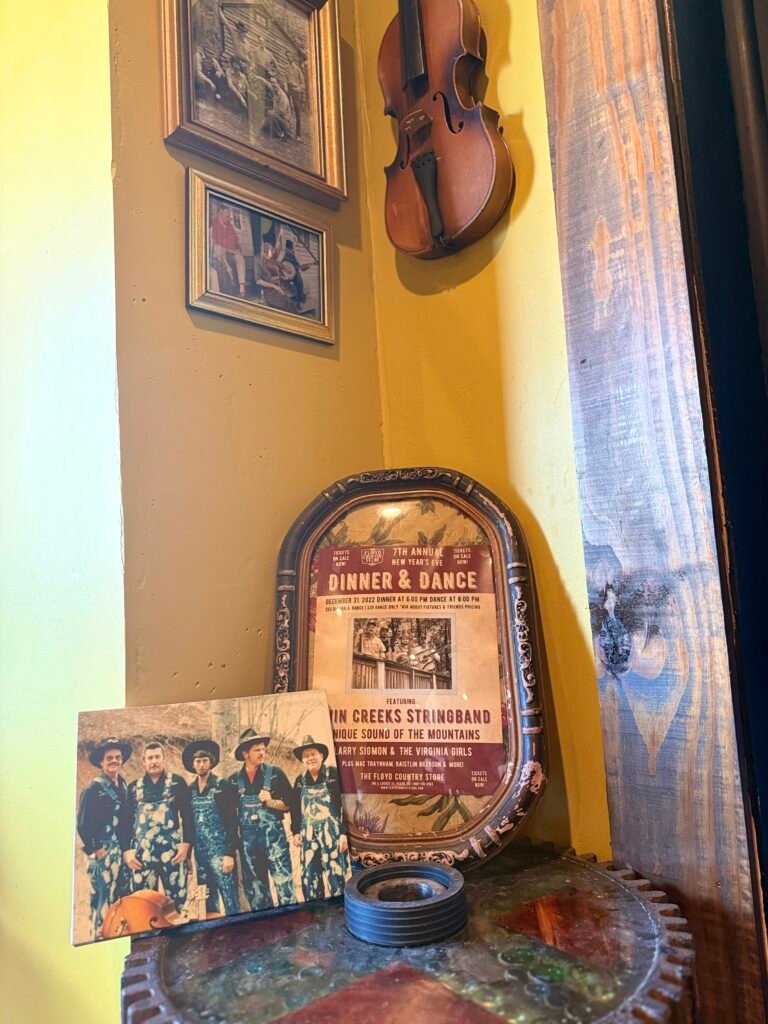
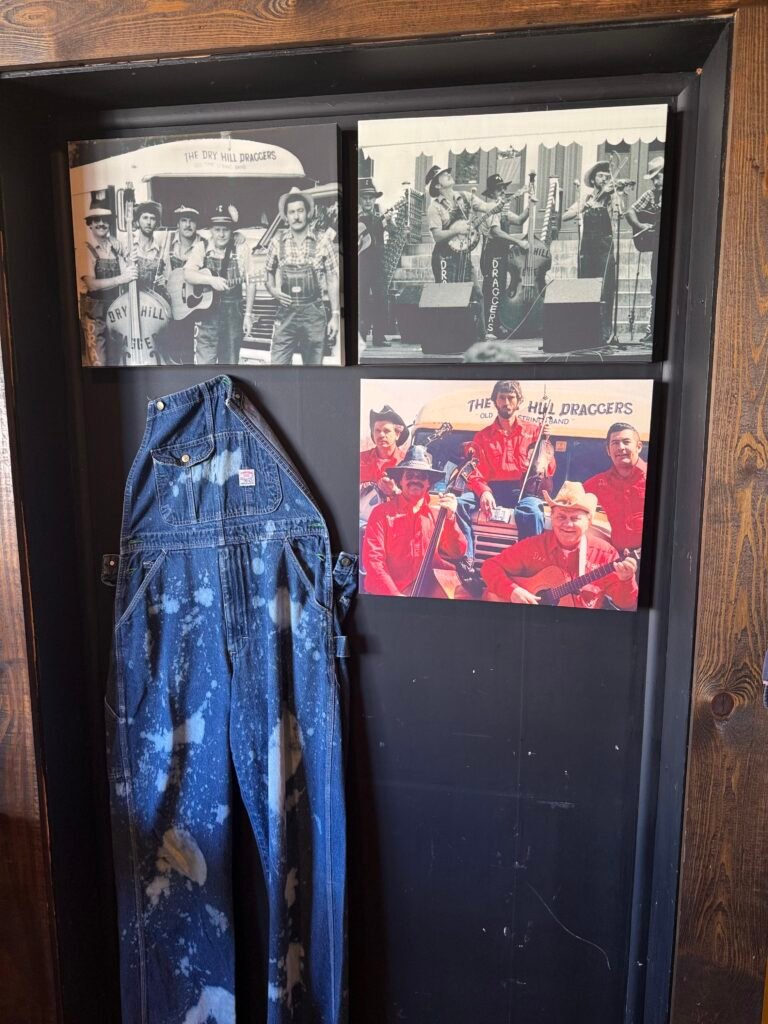
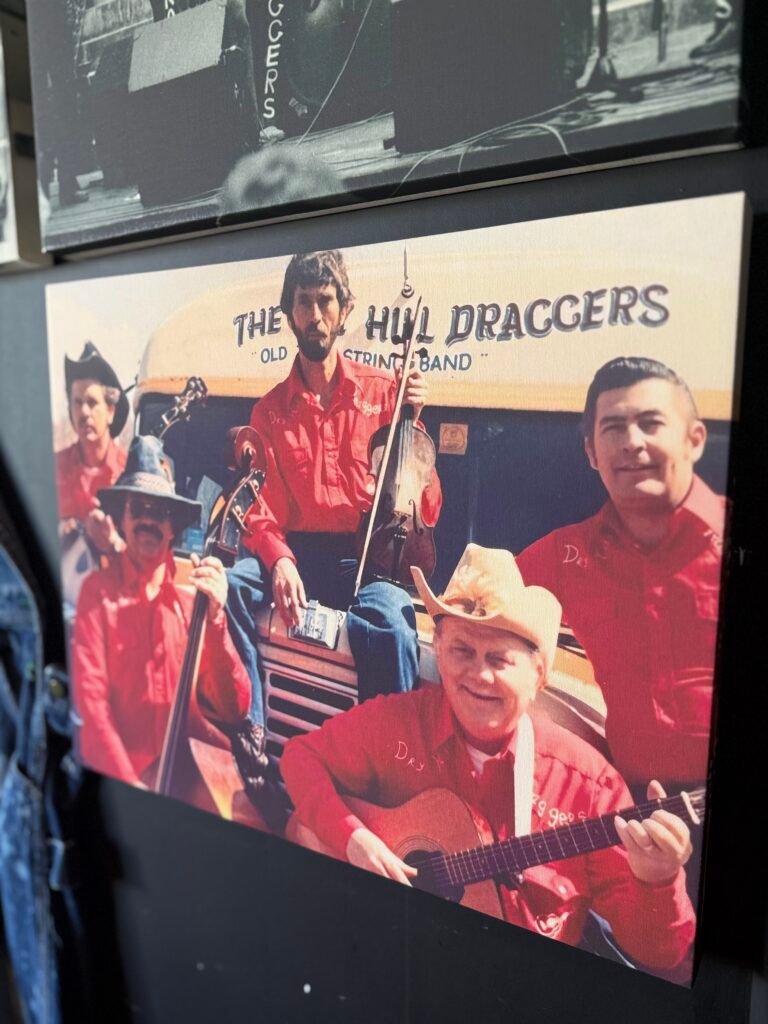
He was also an old-time fiddle player. His music was important enough that the Library of Congress came to record him, preserving a piece of the region’s musical heritage for future generations.
That same fiddle remains in the family today. Anna’s father, Chris, still plays the instrument, keeping a musical tradition alive alongside the family’s distilling history.
It’s also why you’ll find a fiddle incorporated into the Twin Creeks logo. The name itself comes from the two creeks that run alongside the family’s original home place, bringing together the land, the people, and the traditions that inspired the distillery.
At Twin Creeks, the music isn’t a decorative addition to a moonshine story. It’s part of the same story.
Old-Time Music Is More Than Bluegrass
One of the more interesting parts of my conversation with Anna was learning about the distinction between old-time music and bluegrass.
It’s easy to assume the two are interchangeable. They share instruments, regional roots, and plenty of musical overlap. But old-time music has its own character, rhythm, and purpose.
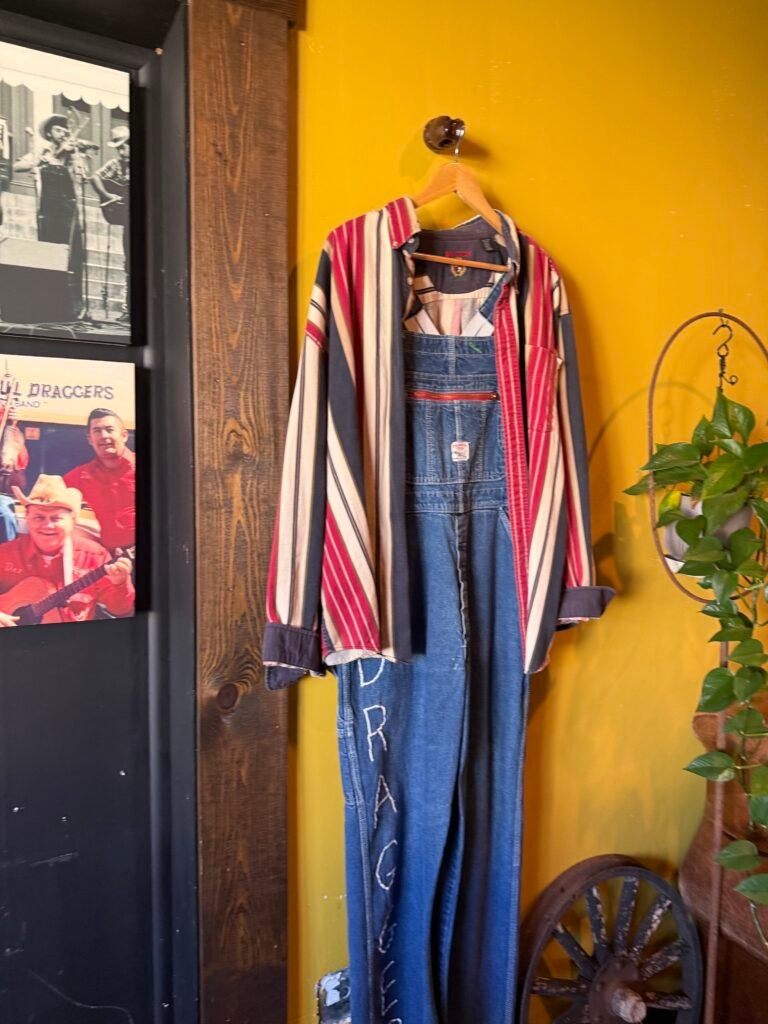
Where bluegrass often emphasizes individual musicianship, solos, and improvisation, traditional old-time music is more focused on the collective sound and driving rhythm of the ensemble. Fiddle and clawhammer banjo are particularly important, with the music traditionally played for dancers, flatfooters, and community gatherings.
For Anna’s family, this is more than a historical interest. Her father has continued playing old-time music for decades, including with the Twin Creeks Stringband, and has even been featured by the BBC for his musicianship.
The family also hosts Wednesday evening old-time music jams, giving visitors and locals an opportunity to experience the tradition firsthand.
It’s an important distinction because it helps explain why Twin Creeks feels different from a distillery that simply uses Appalachian imagery or moonshine references as part of its marketing. These traditions are still being practiced by the people who grew up with them.
Making Spirits the Old-Fashioned Way
The same resourcefulness that shaped Appalachian music and mountain life is visible in the way Twin Creeks makes its spirits.
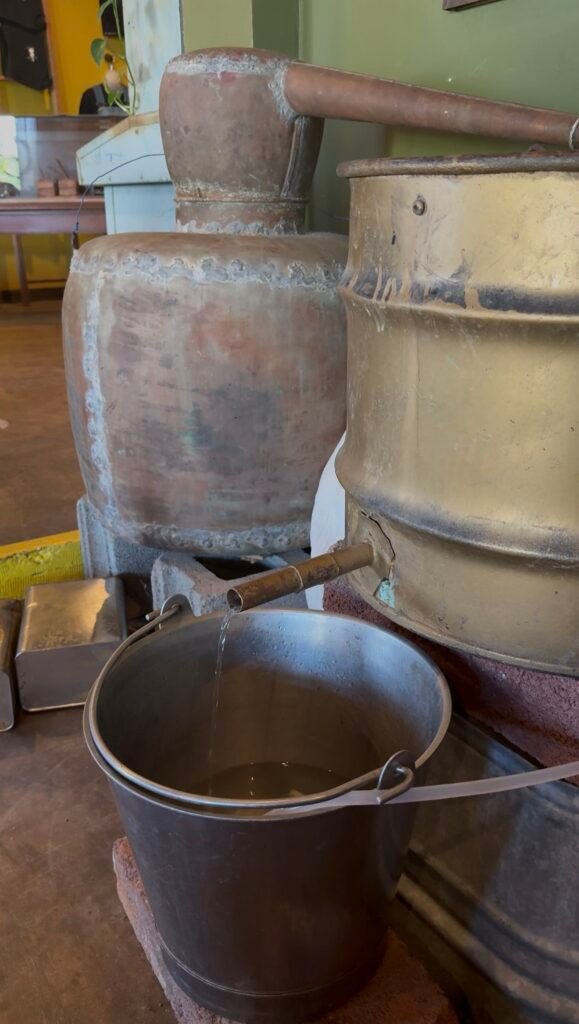
Anna’s father handles much of the distilling, relying on traditional techniques and equipment that reflect the region’s history. Rather than outfitting the operation with an impressive collection of modern, high-end machinery, the distillery makes use of handmade and repurposed equipment.
The stills incorporate stainless steel and copper, with handmade copper coils, steel plates, thumpers, and a traditional worm. Some of the equipment has been assembled from pieces found in the woods or passed along by friends.
There’s an ingenuity to it that is easy to overlook if you’re accustomed to seeing modern commercial distilleries. These are tools built to accomplish a job, often using whatever materials were available, and refined through experience.
That doesn’t mean the craftsmanship is any less impressive. If anything, it makes it more interesting.
Anna described the people who built and maintained these operations as survivors, engineers, and crafters. Their ability to make something work wasn’t simply a matter of convenience. It was a necessary part of life.
The same philosophy carries over into the spirits themselves. Twin Creeks works with locally sourced grains and fruits, using ingredients from the surrounding region and recipes influenced by generations of family experience.
The goal isn’t to recreate the appearance of an old moonshine operation for visitors. It’s to preserve the knowledge and techniques that made those operations possible in the first place.
“Their ability to make something work wasn’t simply a matter of convenience. It was a necessary part of life.”
Sugar Shine: A Franklin County Tradition
If there’s one product that best represents Twin Creeks, it’s the distillery’s sugar-based spirits.
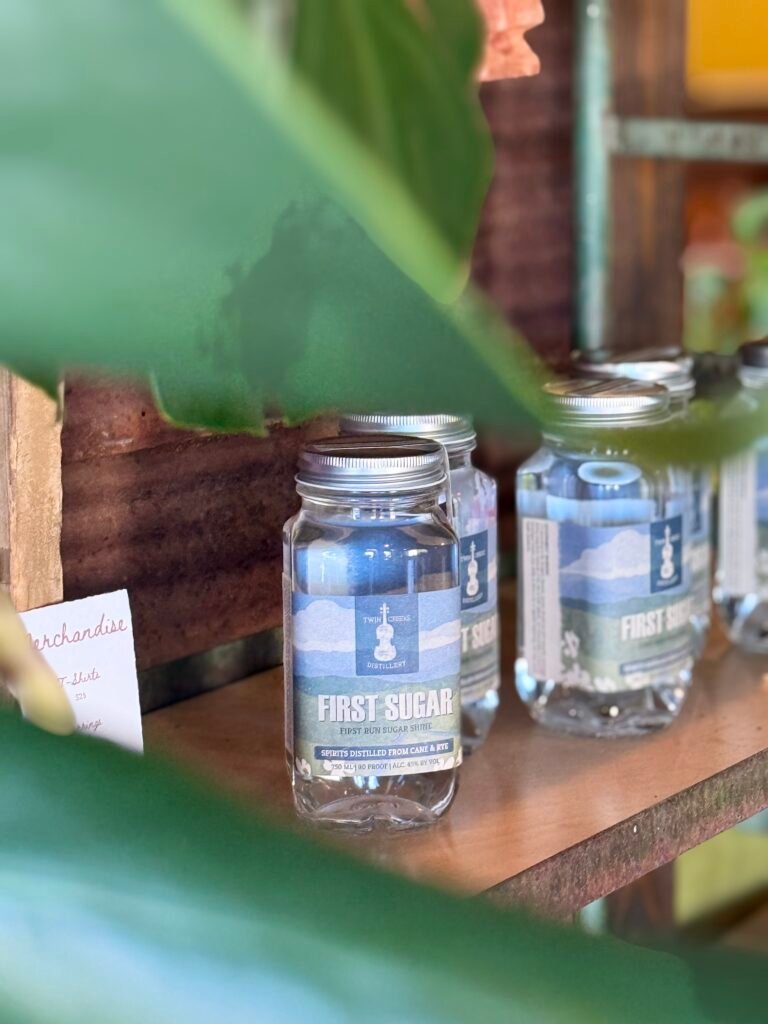
Sugar liquor has a long history in Franklin County, and it remains one of the region’s defining categories. Twin Creeks’ signature sugar-and-rye spirit draws on that tradition, combining the sweetness of sugar with the spice and character of rye.
The result is a spirit that challenges the assumption that all clear liquor or moonshine is essentially the same.
During my tasting, the original sugar offering was notably sweet, with a distinct rye spice that helped balance the profile. It’s easy to understand why this style remains so popular throughout Virginia, particularly in a region where it has been made for generations.
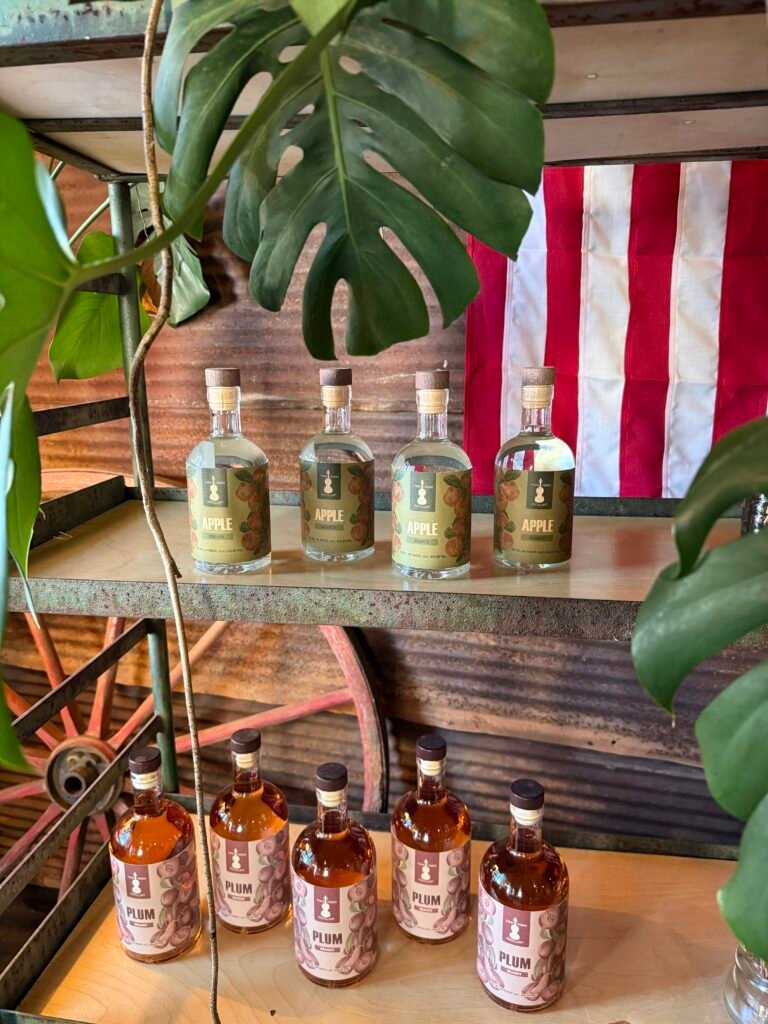
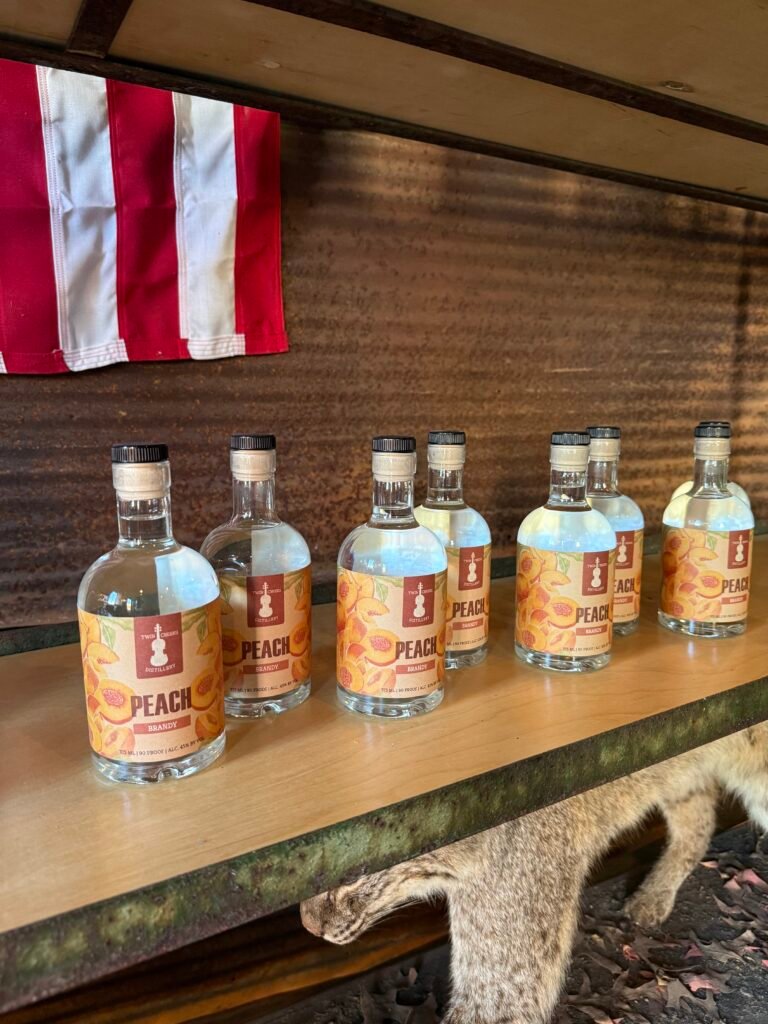
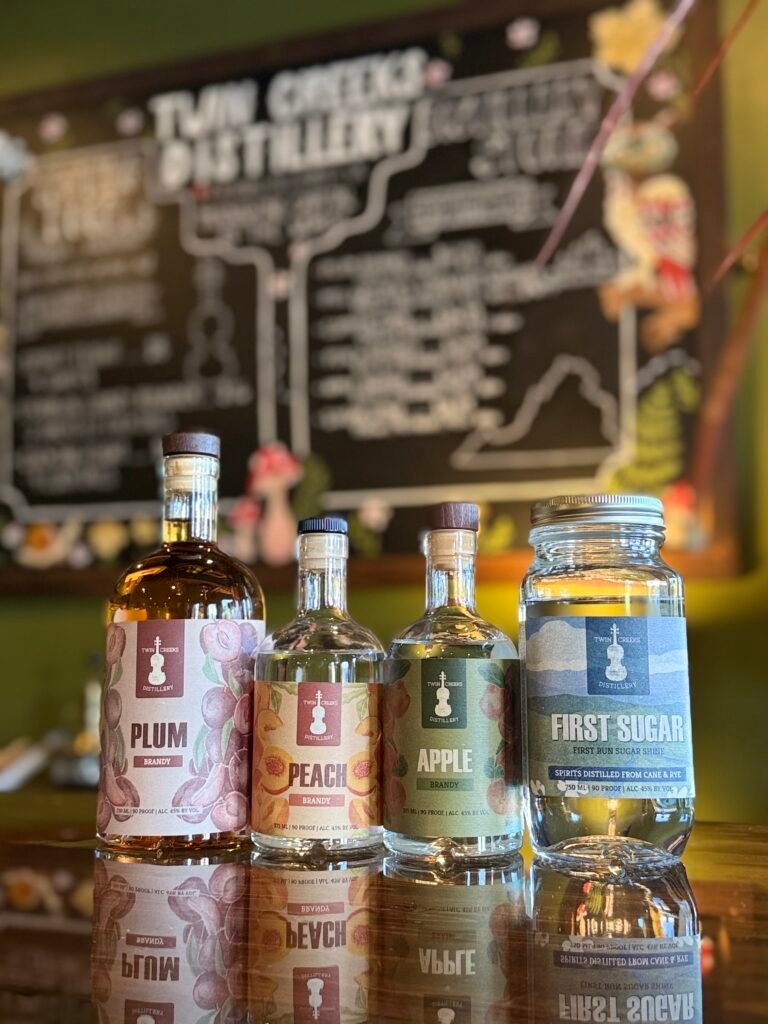
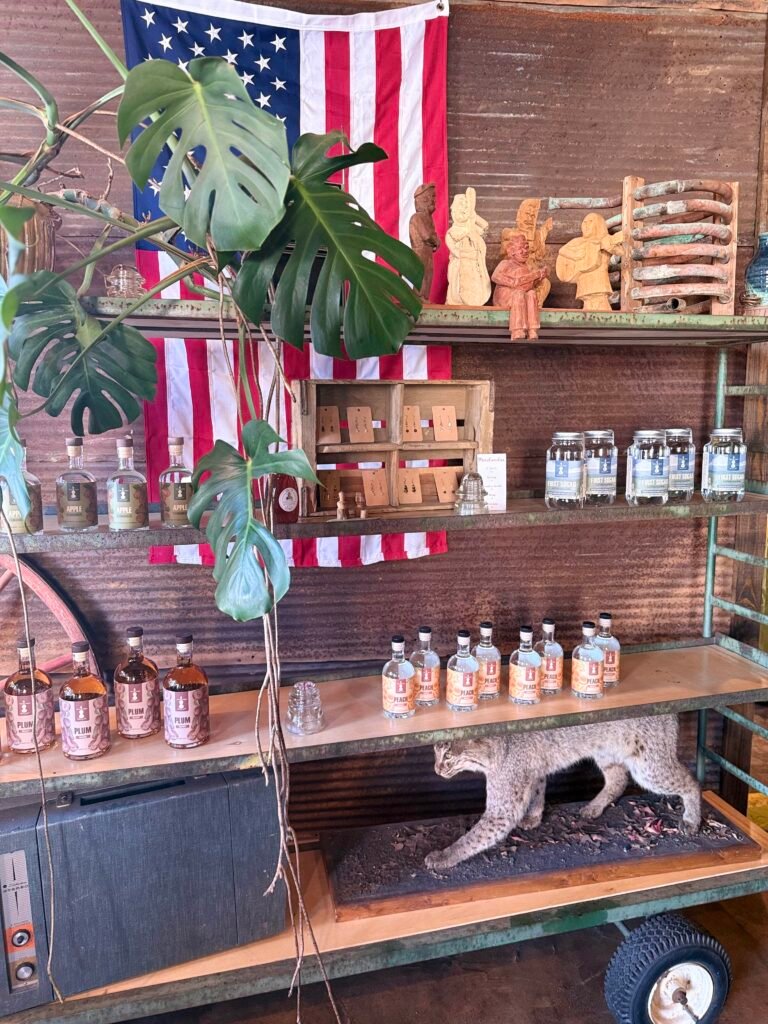
Twin Creeks also offers several fruit-based expressions, including peach, apple, and plum.
The peach brought to mind peach rings, with a little pepper on the back end. The apple was reminiscent of a very sweet red apple, while the plum leaned toward a sugar-plum character with a touch of white pepper.
These aren’t necessarily spirits designed to fit neatly into the traditional whiskey drinker’s expectations. They’re a reflection of another part of Appalachian drinking culture, where fruiting spirits and making use of seasonal harvests have long been part of the tradition.
Brandy Made From Local Fruit
Beyond its sugar-based spirits, Twin Creeks produces brandies using fruit sourced from nearby orchards and farms.
The process begins with the fruit itself. Rather than relying on neutral spirit and added flavoring, the fruit is fermented and distilled to produce the finished brandy. Anna emphasized that the distillery doesn’t add sugar simply to increase yields. The character of the spirit comes from the fruit and the work involved in producing it.
It’s a meaningful distinction, particularly in a category where fruit-flavored spirits can sometimes have more in common with sweetened liqueurs than traditional brandy.
The connection to local agriculture is another important part of the operation. It’s easy to focus on the distillery when talking about whiskey and spirits, but every bottle begins somewhere else: with the farmer who grew the grain, the orchard that produced the fruit, and the people who have spent generations developing the skills to turn those ingredients into something worth sharing.
Twin Creeks keeps that connection close to home.
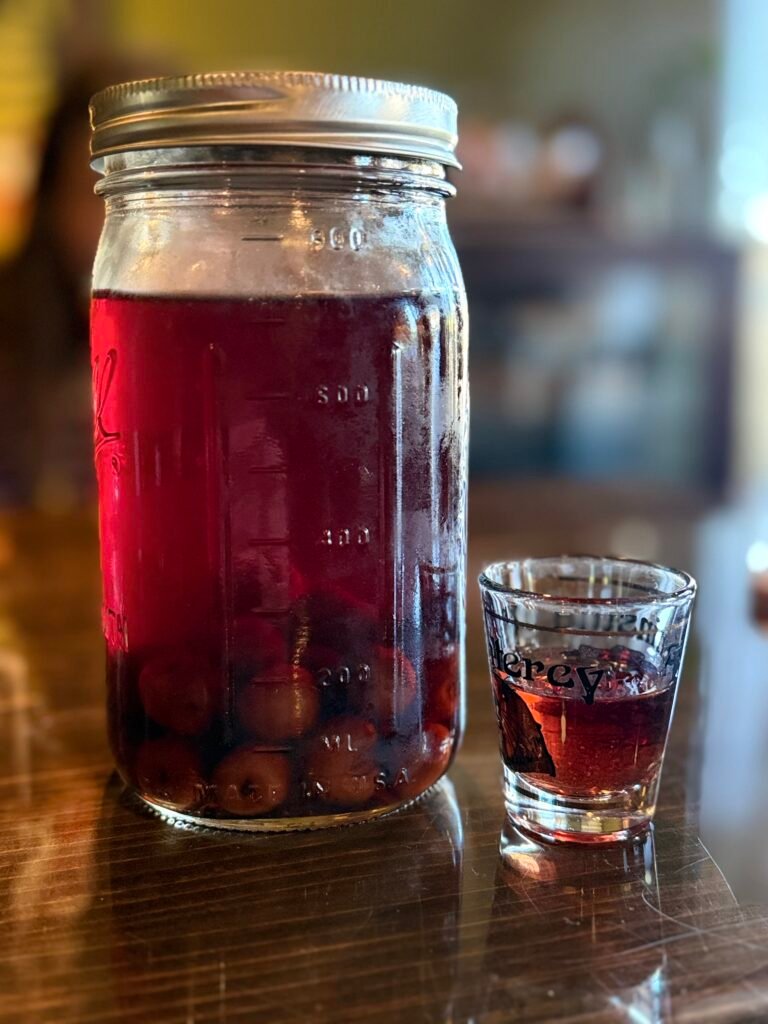
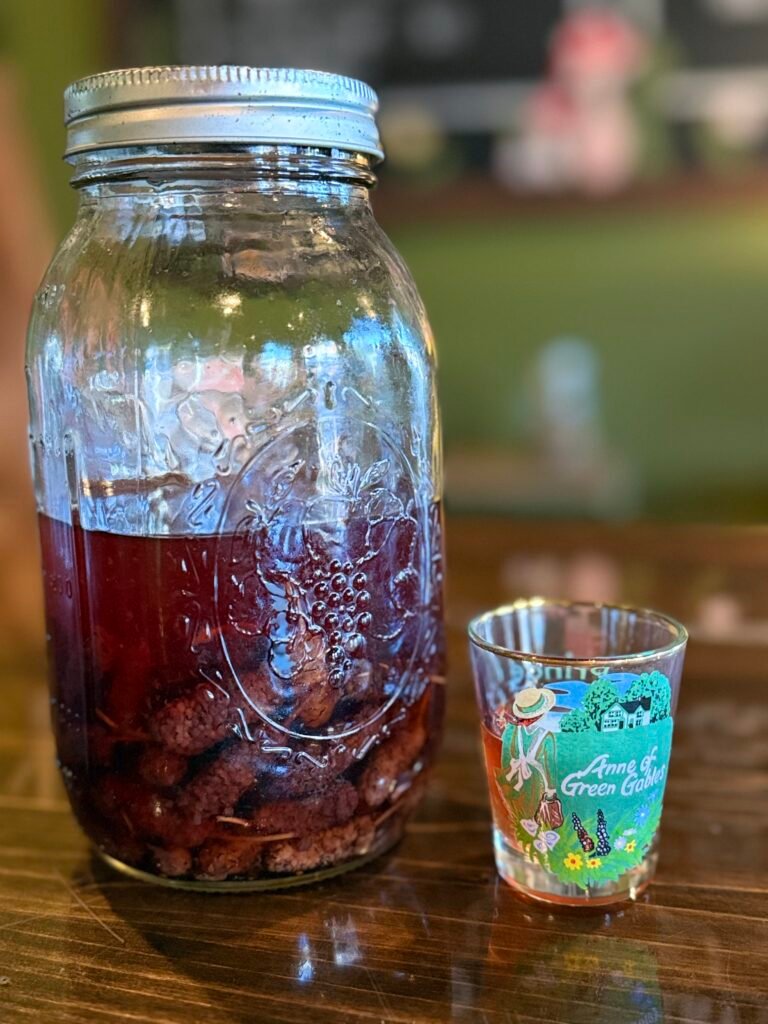
We also sampled several fruit-infused moonshines during my visit, including mulberry, cherry, and damson plum. The damson was my favorite of the group, offering a brighter, livelier fruit character than the cherry, which came across as comparatively muted.
It’s another example of how traditional fruiting and preserving techniques remain part of the area’s broader spirits culture.
The Hardship Behind the Heritage
It’s tempting to romanticize moonshine history. The stories of hidden stills, mountain ingenuity, and generations of families making liquor have an obvious appeal.
But the reality was often considerably more difficult.
For families like the Prillamans, the history includes government investigations, confiscated equipment, lost property, and the constant uncertainty that came with making an illegal product.
Anna also discussed the impact of later federal enforcement efforts, including Operation Lightning Strike, which brought significant consequences for people involved in the sugar liquor trade. Farms, vehicles, and livelihoods were affected.
These weren’t simply colorful stories from another time. They were real hardships that shaped families and communities for generations.
Even the modern distillery has faced its own challenges. A fire at the Fairham production property in 2023 was another significant setback.
As Anna put it, if you’re going to do something in life, it’s going to come with a lot of heartache.
That perspective helps explain the resilience behind Twin Creeks. The family isn’t preserving a tradition because it’s an easy or particularly convenient business model. They’re doing it because it’s part of who they are.
— Anna Prillaman, Owner of Twin Creeks
If you’re going to do something in life, it’s going to come with a lot of heartache.
Tradition and Progress Can Coexist
One of the most interesting parts of my conversation with Anna was how she views her place within Appalachian culture.
She has spent time outside the region, including in Colorado, and credits those experiences with giving her a broader perspective. At the same time, she feels a responsibility to preserve the traditions that shaped her family and community.
She described herself as somewhere between progressive and traditional. She wants to see the towns and communities around her grow, and she recognizes that some things need to evolve. But she also believes there’s value in the self-reliance, resourcefulness, and craftsmanship that have defined mountain life for generations.
It’s a balance that comes through in the way Twin Creeks operates.
Anna is helping guide the business into its next chapter while keeping the family history at the forefront. She’s also a working mother, balancing the responsibilities of running the tasting room and business with raising two young children. Family remains central to the operation, not something set aside for the sake of building a brand.
And that’s perhaps what separates Twin Creeks from some of the more conventional craft distillery stories.
There is no need to manufacture a connection to the past or build an elaborate narrative around a recipe. The family history is already there. The knowledge has been passed down. The traditions are still being practiced.
The challenge is figuring out how to carry them forward.
Anna hinted that some significant plans are in the works over the next year or two that could bring changes to Twin Creeks. For now, visitors can follow the distillery’s social media channels for updates as that next chapter takes shape.
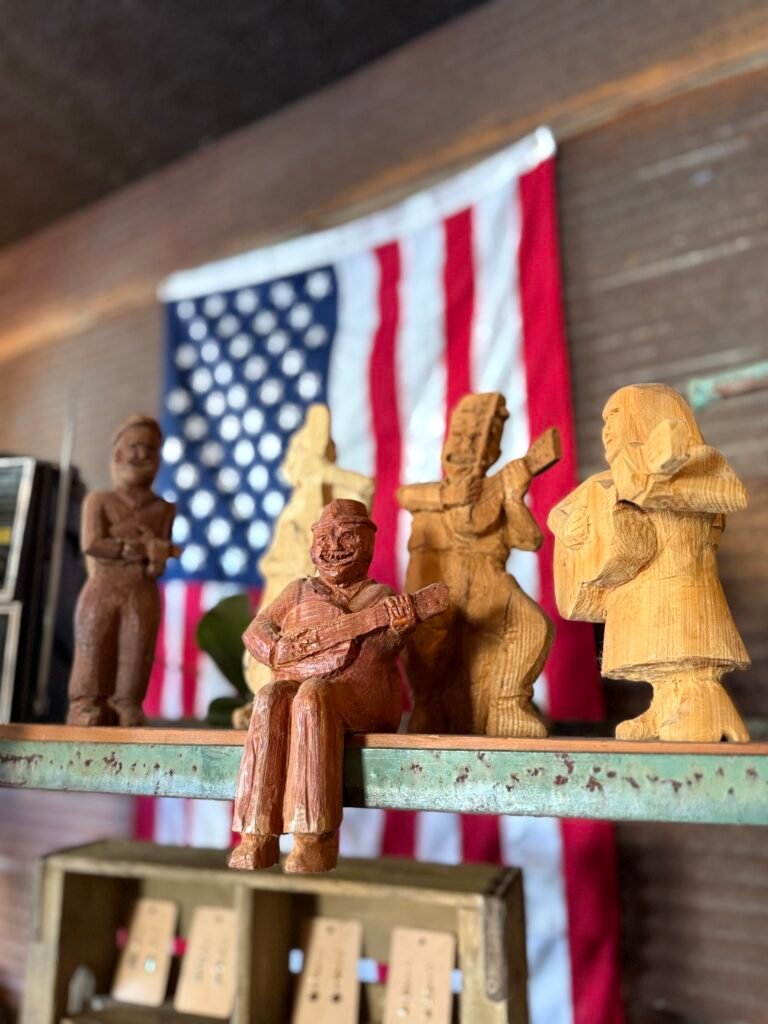
Visiting Twin Creeks Distillery
Twin Creeks is a worthwhile stop for anyone interested in Virginia’s distilling history, but particularly for visitors who want to understand the culture behind the spirits.
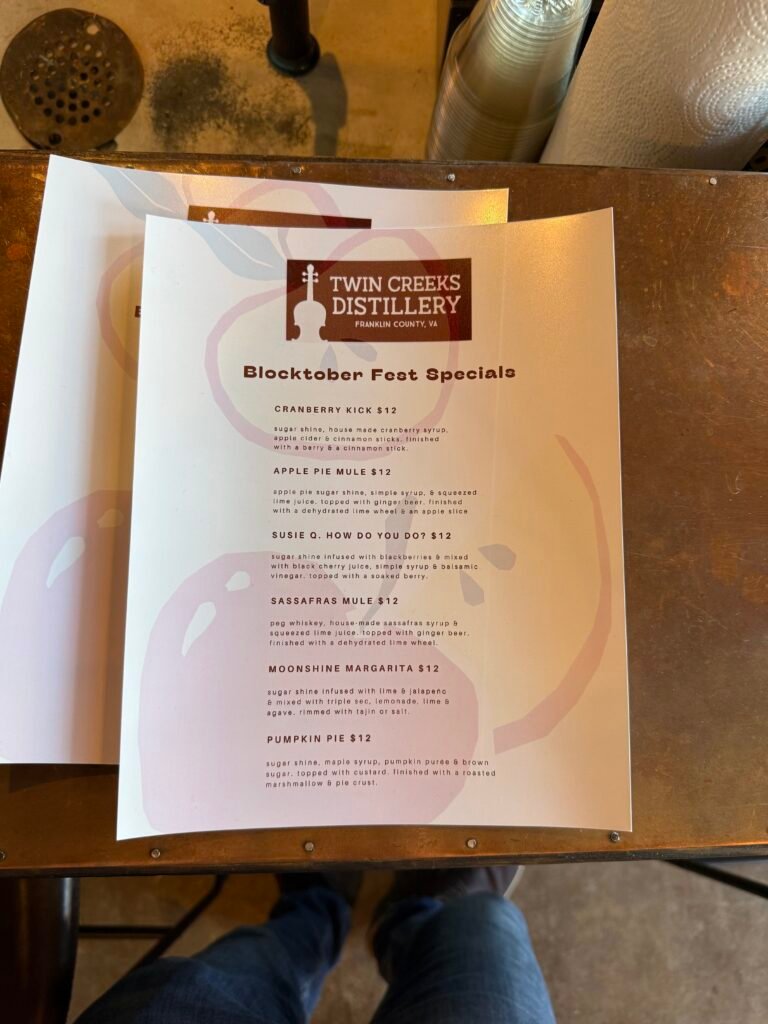
The tasting room offers an opportunity to sample the distillery’s sugar-based spirits, fruit brandies, and other offerings while learning about the family’s history and the region’s moonshine traditions.
If you’re fortunate enough to visit during one of the old-time music gatherings, you’ll get an even better sense of what makes the place special. The music, the people, and the spirits are all connected, and experiencing them together gives the visit a different kind of depth.
I would also encourage visitors to ask questions. The history behind the equipment, the family recipes, and the traditions surrounding moonshine are what make this more than a standard tasting room experience.
Bourbon Bishop Bottom Line:
Twin Creeks Distillery is a reminder that the best stories in American spirits aren’t always found in the newest releases, the biggest investments, or the most impressive production facilities.
Sometimes they’re found in the people who have been doing things the same way for generations, using the knowledge and resources available to them and passing those skills along to the next generation.
What stood out to me most wasn’t any single spirit or piece of equipment. It was the interconnectedness of everything at Twin Creeks. The fiddle in the logo isn’t just a design choice. The old stills aren’t just props. The moonshine history isn’t just a marketing angle. They’re all genuine pieces of a family and community identity that existed long before craft distilling became fashionable.
And while I appreciate the ingenuity behind the spirits, I appreciate the people behind them even more.
Anna and her family are navigating the difficult balance between preserving a way of life and making room for it to evolve. That’s not always an easy thing to do, particularly in an industry that often rewards bigger, newer, and louder.
But there’s something refreshing about a distillery that doesn’t need to invent its heritage.
Twin Creeks has a story worth hearing, a culture worth experiencing, and a place in Virginia’s spirits history that goes well beyond what’s in the bottle.
If you’re exploring Virginia’s whiskey country, make the trip to Rocky Mount. Just don’t leave without taking a little time to listen to the music and learn the story behind the spirits.
Additional Media
This piece was written in conjunction with my current Virginia Spirits project. Check out the Bourbon Bishop Virginia Craft Whiskey Starter Trail Here, only on the Virginia Spirits Trail App
If you enjoyed this piece, check out my past distillery visit articles here.
This visit was hosted by the distillery. All thoughts are my own and not influenced by the experience.
Related Distillery Visits
Visit Springfield Distillery in Halifax, Virginia. Discover award-winning bourbon, port-finished whiskey, family hospitality, and a peaceful countryside retreat.
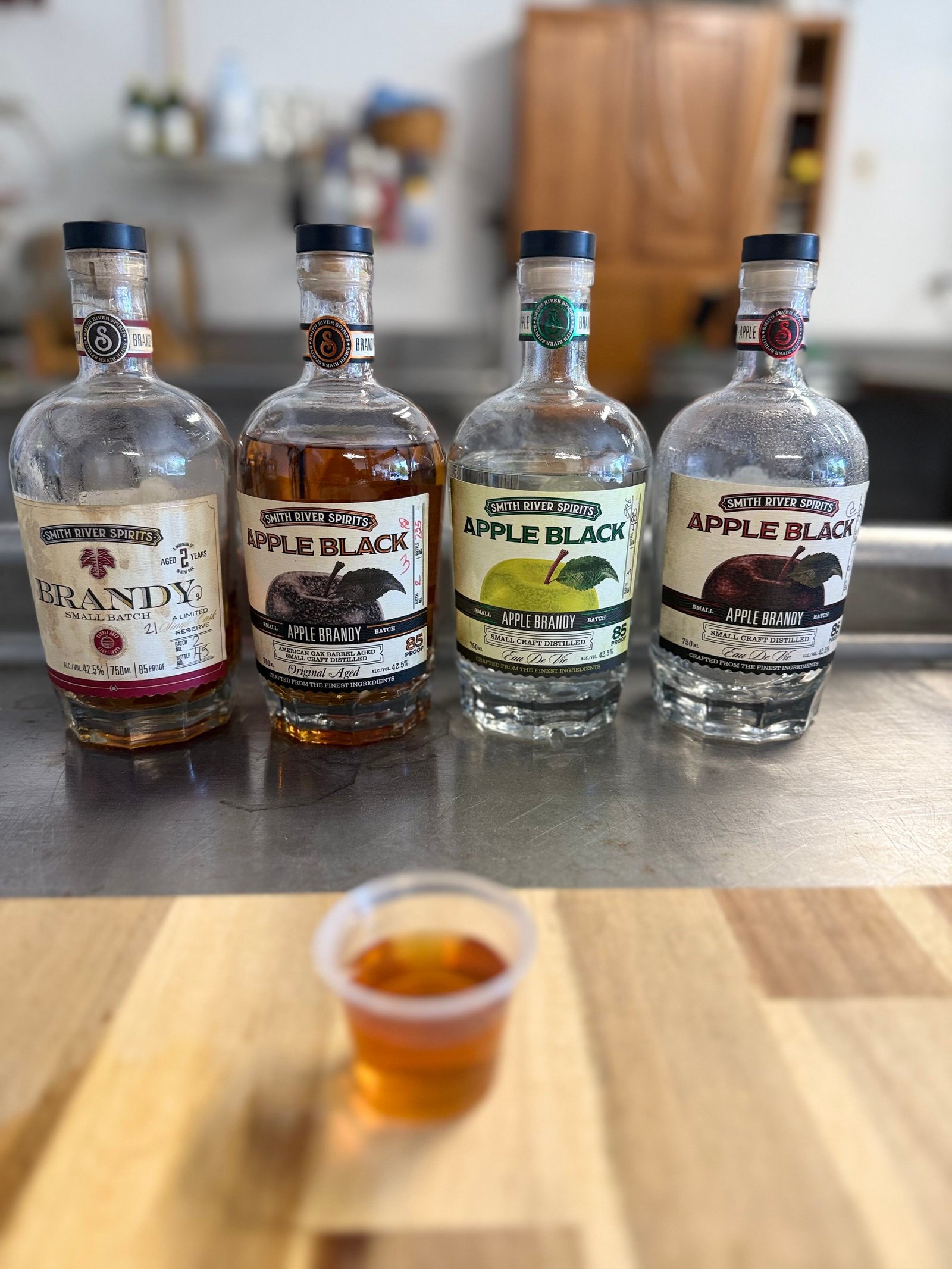
Visit Smith River Spirits in Ridgeway, Virginia, where Kevin Nelson turns Virginia-grown apples and wine into distinctive fruit-forward brandies.
Explore Reservoir Distillery in Richmond, Virginia, where single-grain whiskey, experimental distillation, barrel aging, and local grains challenge convention.
Visit Ironclad Distillery in Newport News, Virginia, to explore its four-grain bourbon, experimental whiskey finishes, historic home, and Virginia spirits.
Inside Virginia Distillery Company in Lovingston, Virginia, where 100% malted barley, a historic Boby Mill, Blue Ridge climate and adventurous cask finishes shape American single malt whisky.
Explore Ragged Branch Distillery in Augusta County, Virginia, from its new production facility and towering rickhouse to its farm-grown bourbon and next chapter.
A behind-the-scenes visit to MurLarkey Distilled Spirits in Manassas, Virginia, exploring Virginia-grown grain, award-winning whiskey, innovative flavored spirits, and one of the Commonwealth’s premier craft distillery experiences.
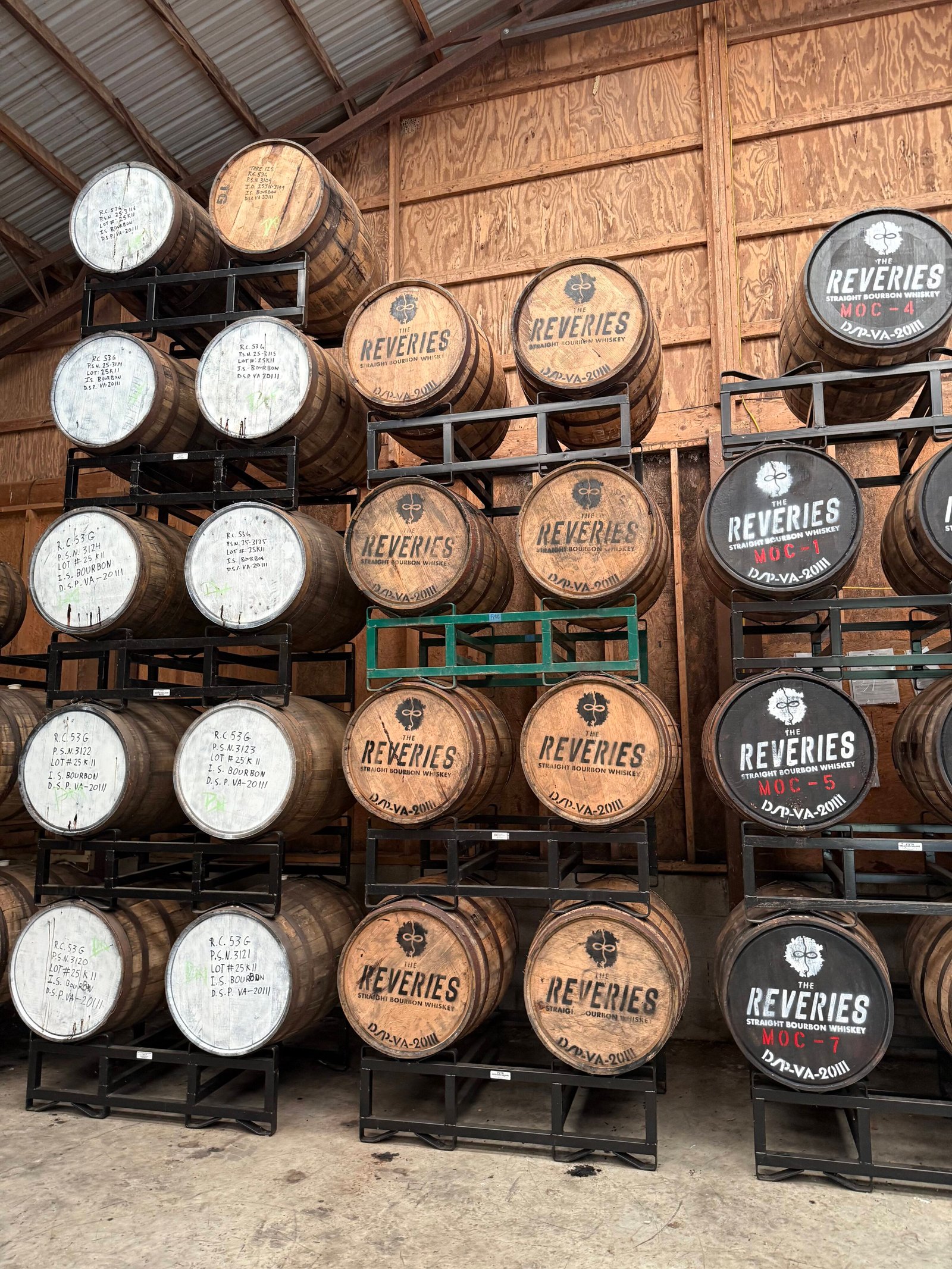
Explore Provenance with Jay West and discover the philosophy behind curated whiskey, Reveries single barrels, slow proofing, experimental finishes, and the Bottle Your Own experience.
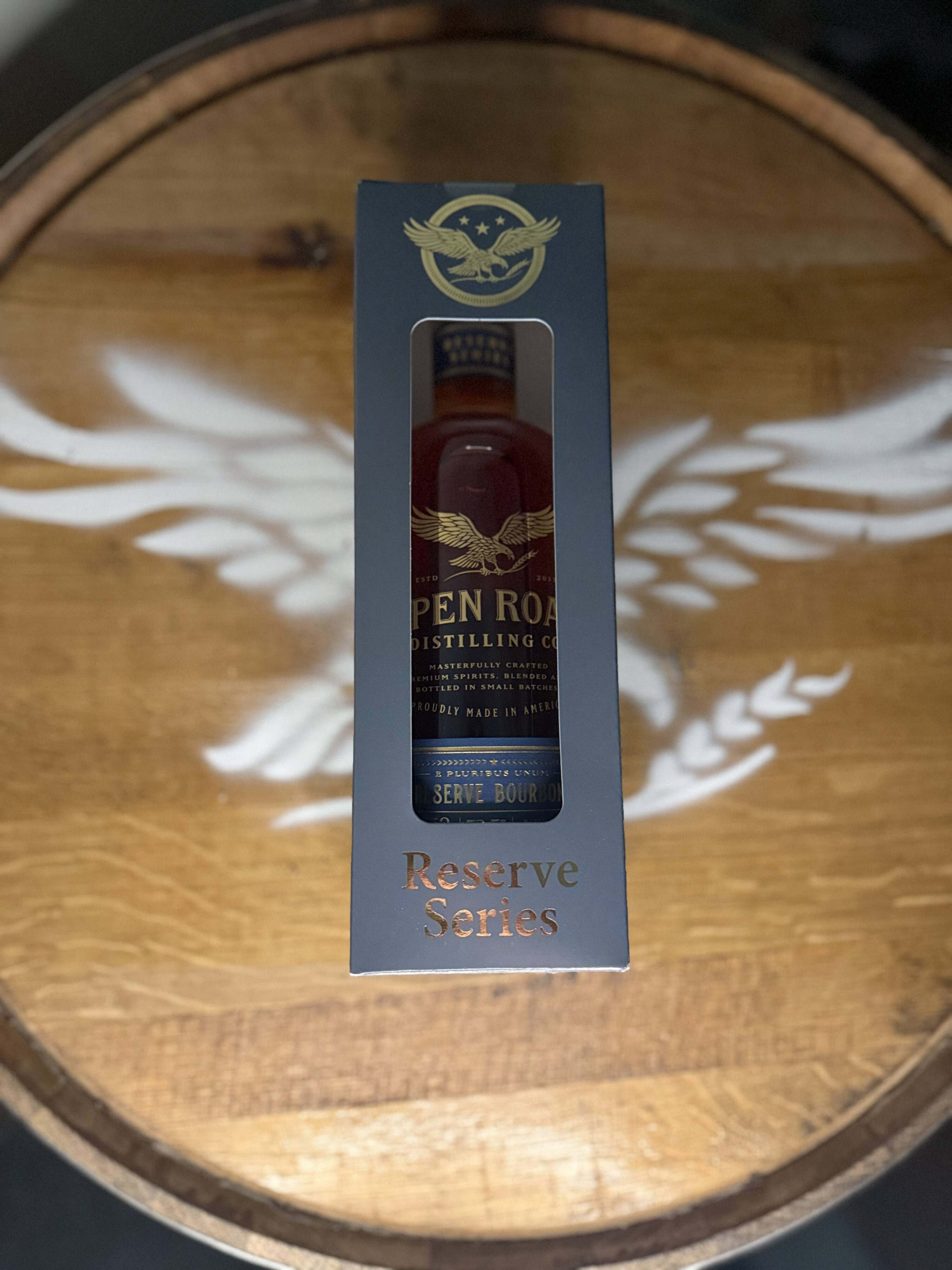
From the distillery and dining experience to the home glass — the quality sourced and blended whiskies of Open Road Open Road Distilling Co.