
The plain-English guide to the whiskey words you’ll hear in reviews, distillery tours, and comment sections—without pretending everyone was born knowing what “NDP” means.
Table of Contents
Last Updated: August 5th, 2026
If you’ve ever watched a whiskey review and thought, “I understood maybe six of those words,” welcome. You’re in good company.
Whiskey has a habit of turning perfectly normal conversations into alphabet soup. One minute someone is talking about mash bills, the next they’re debating NDPs, non-chill filtration, and whether a bottle is “hazmat.”
This isn’t meant to be an encyclopedia. It’s the guide I wish someone had handed me when I started getting serious about whiskey; a collection of the terms you’ll actually hear people use, explained in plain English.
Some are official industry terms. Others are whiskey internet slang. A few probably deserve to disappear forever.
Let’s translate.
Whiskey Basics
Bourbon
To legally be called bourbon, a whiskey must be made in the United States from a mash bill containing at least 51% corn. It must be aged in new charred oak containers and distilled and bottled within specific proof limits.
Contrary to popular belief, bourbon doesn’t have to come from Kentucky. It just happens to make a lot of it.
Wheated Bourbon
Instead of rye, wheat is the secondary grain.
Often called softer or sweeter, though much of that perception has been implanted in our brains by early Maker’s Mark ads.
Rye Whiskey
Rye whiskey is made from a mash bill containing at least 51% rye grain.
Compared to bourbon, rye often leans toward pepper, baking spices, herbs, citrus, and darker herbal notes. If bourbon is dessert, rye is usually the spice rack.
Single Malt
Single malt is whiskey made entirely from malted barley at one distillery.
Most people associate single malt with Scotland, but American Single Malt is rapidly becoming one of the most exciting whiskey categories in the country.
Mash Bill
Think of the mash bill as the recipe.
It’s simply the percentage of grains used to make a whiskey.
A mash bill might be:
- 70% Corn
- 20% Rye
- 10% Malted Barley
Swap rye for wheat and you’ll often end up with a softer, sweeter whiskey. Increase the rye and you’ll usually find more spice.
Proof vs. ABV
These two mean the same thing, just expressed differently.
ABV stands for Alcohol By Volume.
Proof is simply double the ABV.
60% ABV = 120 Proof
50% ABV = 100 Proof
💡 Bourbon Bishop Tip
Try blind tastings whenever possible.
Removing the label often removes your bias.
Production Terms
Small Batch
One of the most misunderstood labels in whiskey.
“Small Batch” simply means multiple barrels were blended together.
Here’s the catch: there is no legal definition for how many barrels count as “small.”
For one distillery, it might mean six barrels. For another, it could mean several hundred.
That’s why “Small Batch” tells you surprisingly little by itself.
Want to dive deeper? Read how NDPs are Redefining a True Small Batch
💡 Bourbon Bishop Tip
Small Batch has no legal definition.
Never assume it means “better.”
Single Barrel
Exactly what it sounds like.
Every bottle comes from one individual barrel instead of being blended with others.
That means each barrel develops its own personality. Some become legends. Others…well…build character.
Bottled in Bond
One of the oldest quality standards in American whiskey.
To qualify, the whiskey must:
- Be produced during one distilling season
- Come from one distillery
- Be made by one distiller
- Be aged at least four years
- Be bottled at exactly 100 proof
It’s one of the few labels that actually tells you something concrete.
Barrel Proof (or Cask Strength)
Both mean the same thing. Barrel Proof tends to be used more in the U.S. whereas Cask Strength tends to be more of an international term.
This whiskey is bottled at the proof it reached in the barrel, without adding water to lower the alcohol content.
Higher proof doesn’t automatically mean better whiskey, but it often means bigger flavors.
And occasionally, fewer eyebrows.
💡Bourbon Bishop Tip
Higher Proof doesn’t automatically equal better.
It can equal more complexity or flavor, but still… not always
Full Proof
Don’t confuse this with the two terms above (it’s hard, I know).
This usually means the proof that the whiskey entered the barrel, not its mature proof point in the barrel.
Finished Whiskey
After aging in its original barrel, the whiskey spends additional time in a second barrel that previously held another spirit or wine.
Popular finishes include:
- Sherry
- Port
- Rum
- Madeira
- Cognac
- Double oaked (used barrels, new charred barrels, toasted barrels, etc)
Think of it like adding another layer of seasoning after the main dish is already cooked.
Non-Chill Filtered
Many distilleries chill whiskey before filtering it to improve clarity, especially internationally.
Non-chill filtered whiskey skips that step, leaving behind more fatty acids and oils that some enthusiasts believe contribute to a richer mouthfeel.
You’ll often notice this phrase on premium bottles.
The “best” way to do it continues to be debated.
Char Levels
The inside of every bourbon barrel is burned before filling.
Generally:
- Char #1 = Light
- Char #2 = Medium
- Char #3 = Heavy
- Char #4 = “Alligator Char”
- Some companies like Shortbarrel are experimenting with more than #4…
More char doesn’t automatically mean better whiskey.
Buying Terms
MSRP
Manufacturer’s Suggested Retail Price.
The price the distillery intended you to pay.
The price your local secondary-market enthusiast intends to ignore.
💡 Bourbon Bishop Tip
MSRP is a much better benchmark than secondary prices.
Most whiskey isn’t worth paying double just because someone else said it was.
Allocated
An allocated whiskey is produced in quantities smaller than demand, so retailers receive limited shipments.
Allocation doesn’t automatically mean a whiskey is exceptional.
It does mean somebody somewhere is probably waiting in line for it.
💡 Bourbon Bishop Tip
A whiskey doesn’t become better because someone waited six hours in line for it.
Drink what you enjoy.
Store Pick
Also called a private barrel selection.
A retailer, whiskey club, or group samples several barrels and selects one to bottle exclusively for their customers.
Store picks can be some of the most unique bottles you’ll ever try.
Age Statement
If a bottle says “10 Years Old,” every drop inside must be at least 10 years old, though if it’s a blend, other parts may be older.
If it doesn’t display an age statement (NAS), that doesn’t automatically mean it’s young.
💡Bourbon Bishop Tip
Older whiskey doesn’t automatically mean better… and vice versa.
Choose a whiskey based on taste and if all else fails, trusted recommendations; not stats.
NAS
No Age Statement.
Instead of displaying an age, the producer chooses not to specify one.
That doesn’t mean the whiskey is young.
It simply means the distillery wants you to judge what’s in the glass rather than the number on the label.
Hazmat
Any whiskey bottled above 140 proof.
Originally a transportation classification because it exceeds hazardous shipping limits.
One of whiskey’s coolest nicknames.
Whiskey Nerd Terms
NDP
Short for Non-Distiller Producer.
An NDP purchases whiskey distilled elsewhere and bottles it under its own brand.
This isn’t a dirty word.
Some outstanding brands source whiskey.
The important question isn’t whether it’s sourced.
It’s whether the company is transparent about it and adds value through blending, finishing, aging, or curation (and not over-charging).
MGP
You’ll hear this one a lot.
MGP is a large Indiana distillery that produces whiskey used by dozens of brands.
For years, whiskey enthusiasts treated “MGP” like a secret.
Today, many brands openly celebrate sourcing exceptional whiskey from them.
💡Bourbon Bishop Tip
There’s nothing wrong with sourced whiskey or with whiskey coming from MGP. In fact, its some of the best.
Hiding a source when not required by NDA or overcharging when its significantly less from the distillery itself… now, that’s a problem.
DSP
Distilled Spirits Plant.
Every licensed American distillery receives a DSP number.
It’s essentially the whiskey world’s serial number.
Rickhouse
The warehouse where barrels spend years aging.
Where a barrel sits inside a rickhouse can dramatically influence how it matures.
Hot upper floors. Cooler lower floors. More or less airflow.
Different whiskey.
💡Bourbon Bishop Tip
Another false generalization is that higher in the rickhouse means better without fail (see Jack Daniel’s Coy Hill craze) – sometimes that’s true and sometimes it’s not.
More true is that you’ll get different barrel influence and flavors and that you can trace proof to rickhouse placement more often than consistent quality.
Angel’s Share
As whiskey ages, some evaporates through the barrel.
That’s called the Angel’s Share.
It’s a poetic way of saying nature charges storage fees.
Devil’s Cut
The darker cousin to the Angel’s Share – the whiskey that the barrel refuses to give up to the angel.
Part of what gives whiskey its color and flavor is how it goes in and out of the wood with heat/cold cycles. The whiskey that remains is called the Devil’s Cut and is visible if you were to take a cross-section of a used whiskey barrel stave.
Whiskey Review Terms
Nose
The aromas you smell before taking a sip.
Half the fun of whiskey happens before it ever reaches your mouth.
Palate
Everything you taste while drinking.
Sweetness. Spice. Fruit. Herbs. Oak. Candies. Leather.
The palate is simply the story unfolding while the whiskey is on your tongue.
💡Bourbon Bishop Tip
Giving tasting notes for a whiskey can be enjoyable for some, but it’s not key to enjoying whiskey. In fact, I’d argue it’s primarily for reviewers and brands trying to inform people on whether a whiskey will fit their preference without trying it first.
Be patient with yourself and don’t be discouraged if you don’t taste “a mandarin orange fresh off a southern Florida tree”.
If you are interested in increasing the words you can use to describe a whiskey, skip down to “Tasting Vocabulary”
Mouthfeel
(I combine this into Palate in my reviews)
How the whiskey feels physically.
Thin. Creamy. Robust. Silky. Oily. Chewy.
Texture matters just as much as flavor.
Finish
The flavors that remain after you swallow.
Some disappear in seconds.
Others hang around long enough to make you wonder if you should take another sip.
Kentucky Hug
That warm sensation that slowly spreads through back of your throat and into your chest after swallowing.
A good Kentucky Hug feels comforting.
A bad one feels like your esophagus filed a formal complaint.
Whiskey Internet Translator
Smooth
⚠️ Whiskey Internet Translation
“I like this whiskey, but I don’t know how to explain why.”
There’s absolutely nothing wrong with calling a whiskey smooth.
It’s just not very specific.
Try asking yourself why it’s smooth.
Low proof? Soft oak? Sweet flavors? Minimal alcohol burn?
Congratulations. You’ve already become a better taster.
Banger
Whiskey Instagram’s version of: “Trust me, bro”
⚠️ Whiskey Internet Translation
“This bottle is really, really good.”
Often accompanied by:
🔥, 💯, or “Need.”
Crushable
⚠️ Whiskey Internet Translation: Dangerously easy to drink.
Generally not something people say about a 136-proof barrel proof bourbon…although we’ve all met that one friend.
Neck Pour
The first pour from a newly opened bottle.
Some people insist neck pours taste different while others insist that’s impossible.
This debate will almost certainly continue longer than civilization itself.
Tater
Probably the most misunderstood term in whiskey.
A tater isn’t simply someone who likes Buffalo Trace. They’re someone who chases hype bottles simply because they’re hyped, often without caring much about what’s actually inside.
Every hobby has one. Whiskey just gave it a funny name (I usually attribute it to the “potato” shape of Blanton’s)
Unicorn
⚠️ Whiskey Internet Translation: A bottle that’s incredibly difficult to find.
Usually expensive. Usually overhyped.
Occasionally every bit as magical as people claim.
💡 Bourbon Bishop Tip
Don’t build your collection chasing unicorns.
Build it around bottles you’ll actually open.
Dusty
Older bottles that have sat on shelves for years or come from past releases.
Sometimes they’re incredible.
Sometimes they’re just…old.
Tasting Vocabulary
Sweet
- Toffee
- Caramel
- Vanilla
- Brown sugar
- Honey
- Maple
- Can be combined with other descriptors
- — Icing
- — Syrup
- — Candy
- Deep —
Fruit
- Apple
- Cherry
- Orange
- Raisin
- Peach
- Fig
- Date
- And what kind?
- Dried
- Fresh
- Overripe
Spice
- Black pepper
- Cinnamon
- Clove
- Nutmeg
- Baking spice
- And what kind?
- Hot
- Balanced
- Low-simmering
Oak
- Toasted oak
- Fresh oak
- Leather
- Tobacco
- Barrel char
Grain
- Cereal
- Malt
- Cornbread
- Graham cracker
- Biscuit
Finish
- Long
- Medium
- Short
- Warming
- Dry
- Lingering
💡 Bourbon Bishop Tip
Notice “smooth” isn’t on here.
Not because it’s wrong.
Because once you start using these words, you’ll rarely need it.
Final Pour
Nobody starts this hobby knowing all the terminology.
Every whiskey enthusiast has quietly Googled “What does bottled in bond mean?” or nodded along while someone enthusiastically explained warehouse floors and barrel entry proof.
The important part isn’t memorizing every term. Instead, focus on enjoying the journey (and the people accompanying you on it).
And if you hear a word that isn’t on this list, let me know. I’ll happily add it. The whiskey world invents new vocabulary almost as quickly as it invents new limited releases.
Still confused by a whiskey term?
Drop it in the comments below. If enough people are wondering the same thing, it’ll earn a spot in the dictionary.
Bookmark this page. You’ll probably need it again after your next whiskey YouTube rabbit hole.
Related Articles
Small Batch has no legal definition, but a growing number of independent bottlers and craft distilleries are redefining the term through transparency, intentional blending, and truly limited barrel counts.
A curated list of 10 whiskies for summer—from easy RTDs and bright small-batch pours to finished drams and bold cask strength sippers for warm nights.
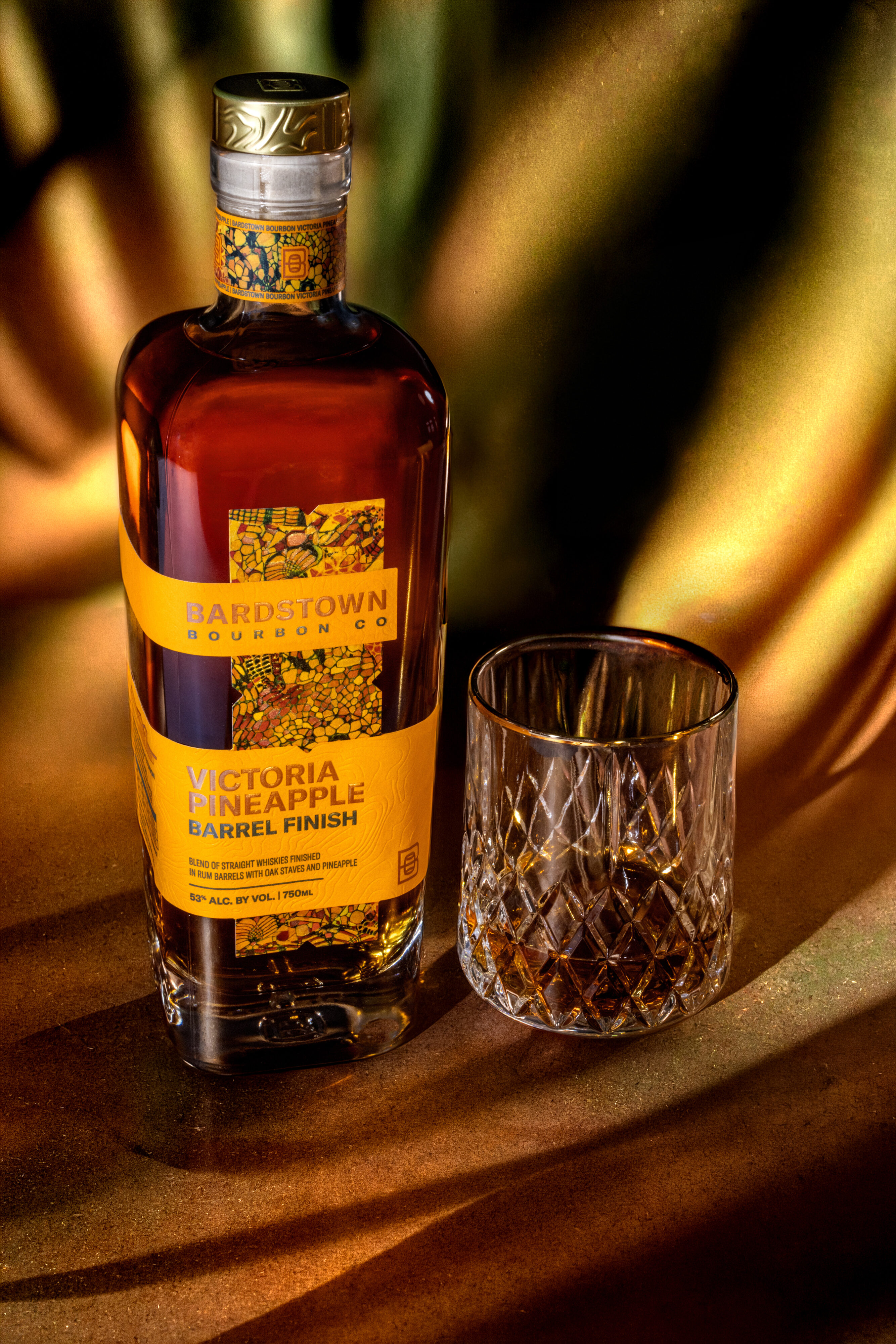
Bardstown Bourbon Company’s Victoria Pineapple Barrel Finish Whiskey blends 10- and 11-year-old bourbon with 11-year-old rye before a 27-month finish in pineapple rum casks. Learn about the Kentucky-exclusive 106-proof release, production process, availability, and what makes this experimental whiskey unique.
The Bourbon Bishop attended the Uncork Loudoun trade tasting to explore Virginia wine, meet local winemakers, and discover why craft and community matter more than what’s in your glass.
Explore Provenance with Jay West and discover the philosophy behind curated whiskey, Reveries single barrels, slow proofing, experimental finishes, and the Bottle Your Own experience.
Pingback: Redwood Empire "The Hyperion" Batch 001 Blends Bourbon, Rye, Wheat Whiskey and Single Malt Review | Bourbon Bishop
Pingback: Your Whiskey Brand Isn't the Hero. Your Customer Is. Review | Bourbon Bishop