
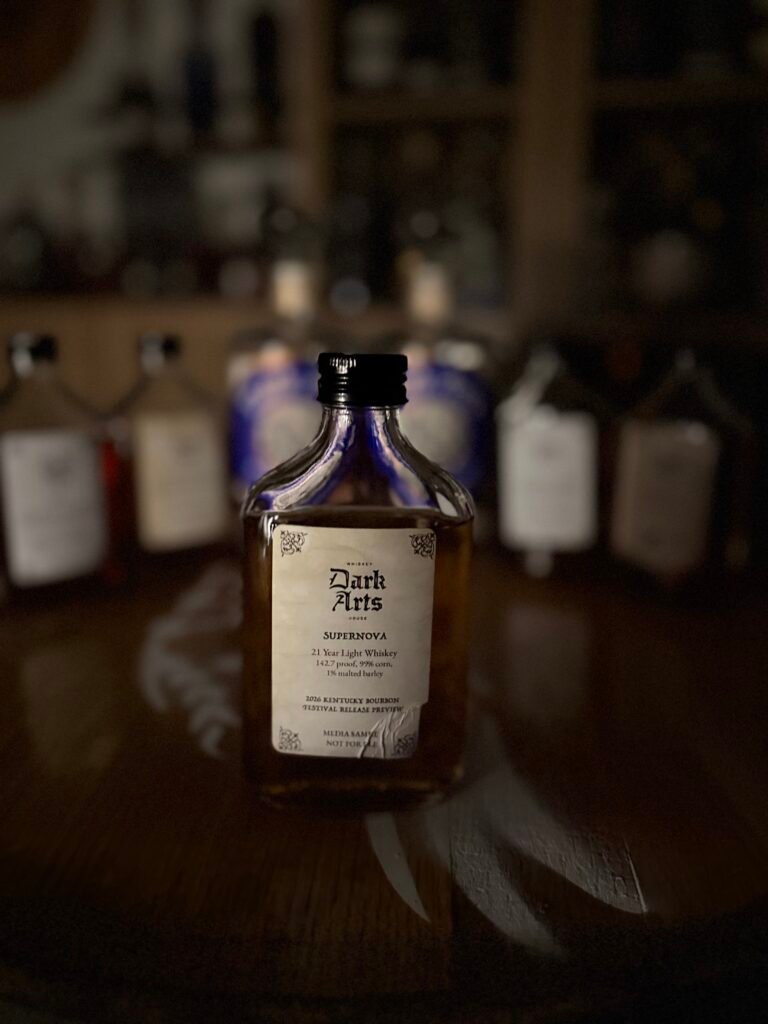
A 21-year, 142.7-proof Indiana light whiskey delivering butterscotch, pastry, toasted oak and vanilla with remarkable restraint for the proof.
Stats
- Type: American Light Whiskey
- Age: 21 Year
- Proof: 142.7 (71.35% ABV)
- Mashbill: 99% Corn │ 1% Malted Barley
- Origin: Ross & Squibb (MGP) — Lawrenceburg, Indiana
- Additional Aging: Dark Arts Whiskey House — Lexington, Kentucky
- Finish: Straight (unfinished)
- Release: Limited release, KBF Exclusive (Sept 10-13)
- MSRP: $199.99 / 750 mL (only available at Kentucky Bourbon Festival)
Tasting Notes
- Nose: The nose is immediately butterscotch and vanilla cream, followed by buttered biscuits. It’s rich, sweet and unmistakably indicative of seriously aged light whiskey.
- Palate: The texture is creamy and deeply sweet, with toffee and toasted oak building underneath. Despite the proof, the whiskey retains a decadent, confectionary quality.
- Finish: Waffle cone and butterscotch carry through a long finish. There’s plenty of heat, but remarkably little ethanol relative to the 142.7-proof strength.
Dark Arts at the 2026 Kentucky Bourbon Festival: Six Limited Releases
- You are Here: “Supernova” 21 Year American Light Whiskey
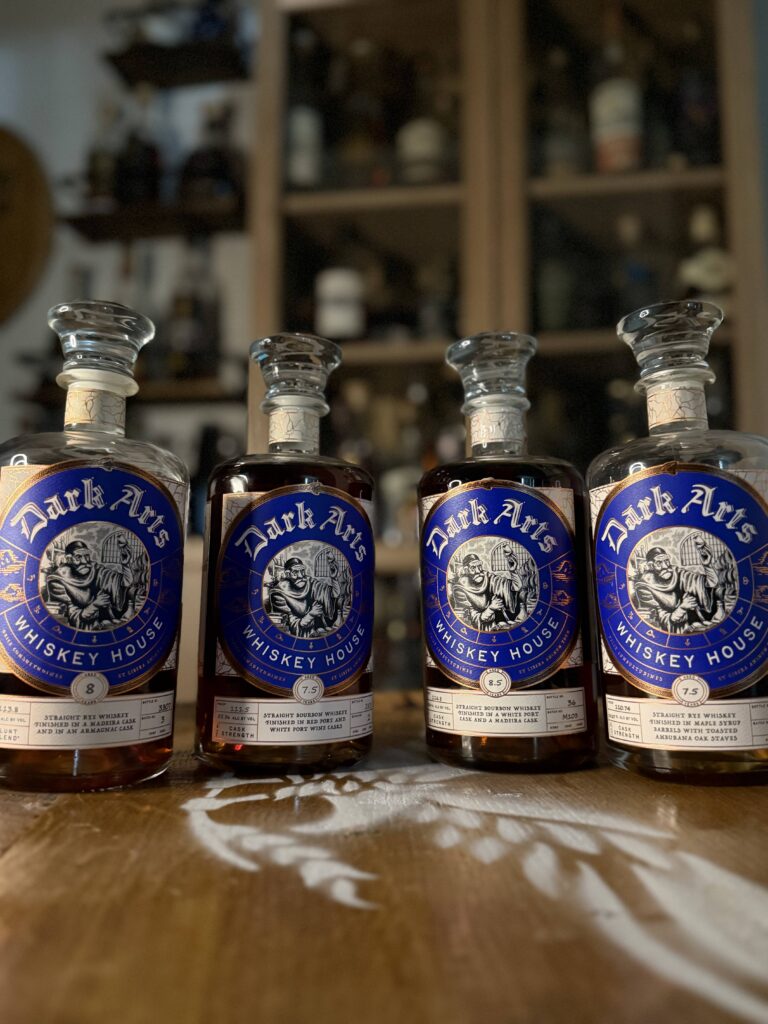
- 13 Year French Oaked Finished KY Bourbon
- Tres Vieux 15 Year MGP Rye
- “Chief Alchemist Reserve Cuvée” 19 Year Mizunara Finished KY Bourbon
- “Flight of Icarus” 11.5 Yr Hazmat Kentucky Bourbon
- KBF Oloroso Sherry Finished Single Barrel Kentucky Bourbon
Supernova is perhaps the clearest example in this lineup of Dark Arts doing what Dark Arts does best: finding unusual whiskey and letting age and proof become part of the experience. At 21 years and 142.7 proof, this is an extreme bottle on paper, but the actual whiskey is surprisingly inviting. The profile is rich, sweet and pastry-driven, with butterscotch and vanilla providing a remarkable amount of balance against the proof.
Distinctiveness
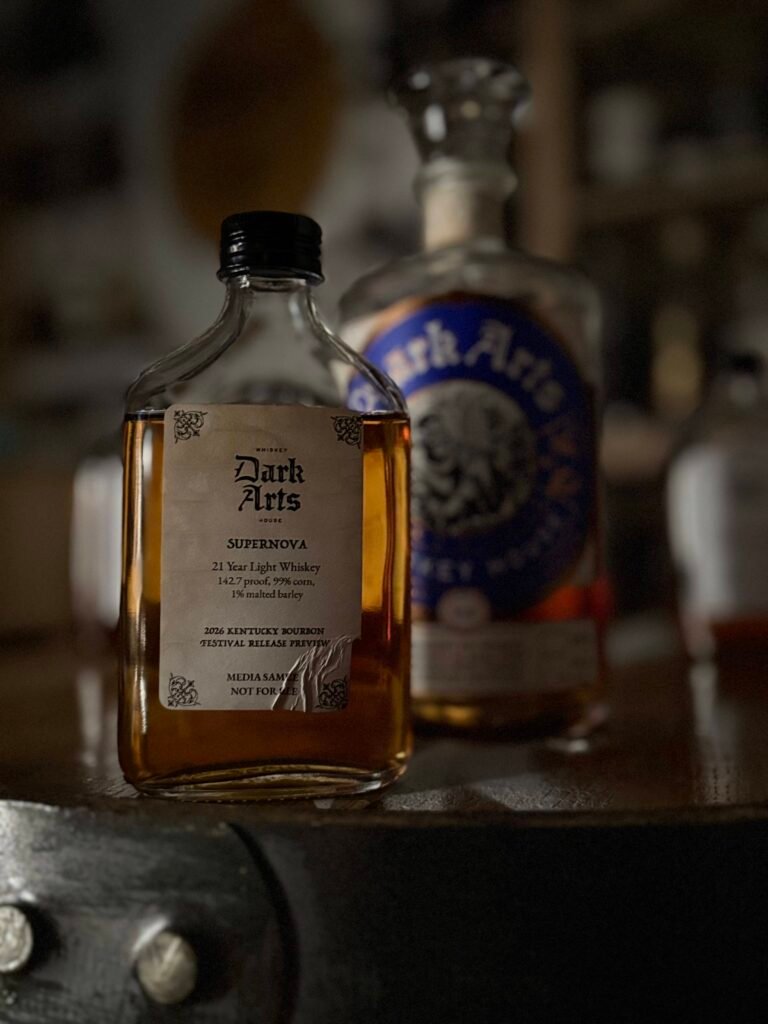
A 21-year-old American light whiskey at 142.7 proof is rare territory by itself.
With a 99% corn expression (as most well aged ALW tends to be, but doesn’t actually have to be), you’re looking at something very different from the bourbon-heavy releases surrounding it.
The flavor isn’t particularly experimental, it’s actually quite quintessential for an aged ALW, but the age and proof make this a particularly impressive example of the category.
For someone who already appreciates light whiskey, this is about as compelling a representation of the style as you’re likely to encounter.
(Author’s Note: Presentation is not judged when a small sample is provided)
“If you’re already a fan of this style, this is the kind of bottle that hits nearly every note you’re hoping for…”
Transparency
Supernova is one of the more straightforward bottles in the lineup from a provenance standpoint.
Dark Arts identifies it as 21-year Indiana light whiskey, gives the 99/1 mashbill and provides the 142.7-proof bottling strength.
There’s considerably less mystery here than with some of the Kentucky bourbon releases. That clarity is useful because light whiskey remains unfamiliar to many consumers, and knowing exactly what you’re drinking makes it easier to appreciate the category.
Value
At $199.99, Supernova actually makes a pretty good argument for itself.
Twenty-one-year whiskey at this proof is unusual enough that the price doesn’t feel completely detached from the product.
There are certainly cheaper ways to experience light whiskey (I can think of only one company who has offered this age statement at less of a price), but there aren’t many ways to experience it at this age and intensity in general.
If you already know you like aged ALW, I think this is one of the easier $200 bottles in the lineup to justify.
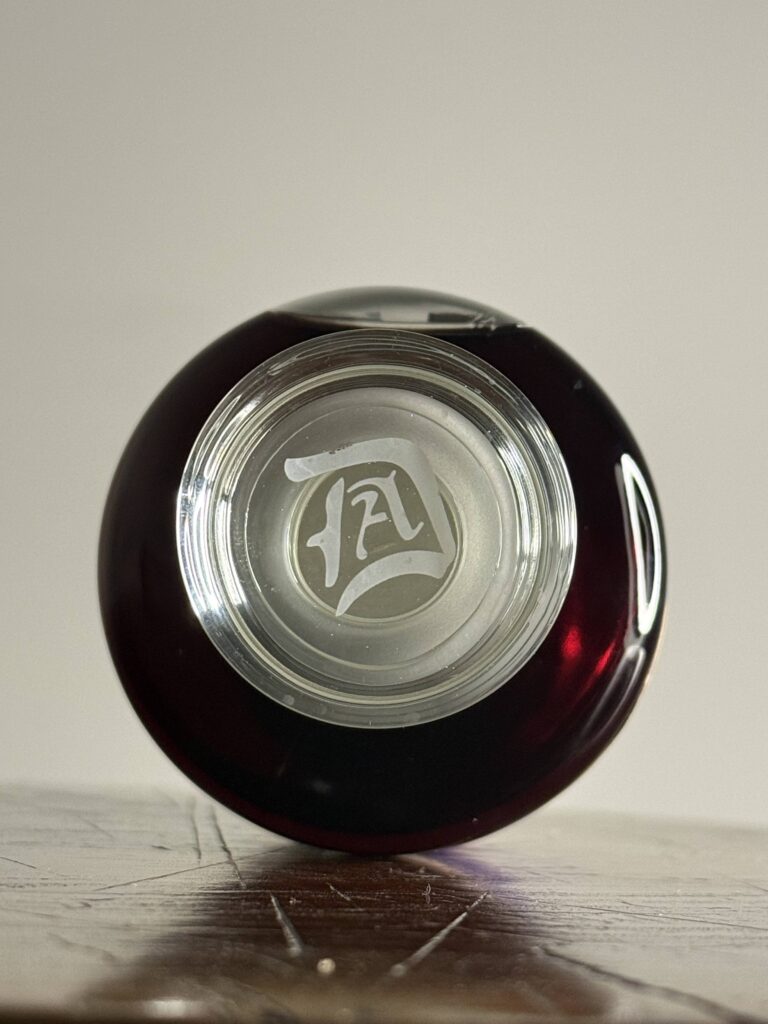
Buy if:
- You love aged light whiskey
- You enjoy high-proof pours
- Butterscotch and vanilla are your thing
- You value rare age statements
Skip if:
- You prefer traditional bourbon
- You dislike sweet oak
- You don’t enjoy high proof
- $200 is out of your budget
Verdict
Supernova doesn’t reinvent American light whiskey. Instead, it does something arguably more difficult: it gives you a quintessentially old example of the style and lets the age speak for itself.
The butterscotch, vanilla cream, buttered biscuit and waffle cone notes are exactly what I want from an aged ALW. It isn’t the most complex whiskey of the six, but it doesn’t need to be. If you’re already a fan of this style, this is the kind of bottle that hits nearly every note you’re hoping for and somehow does it without drinking like 142.7 proof.
Bourbon Bishop Bottom Line:
An exceptional example of what very old light whiskey can be.
For those who prefer numbers, here’s the full score breakdown:
- Nose: 6 / 7
- Palate: 6 / 7
- Finish: 6.25 / 7
- Presentation: N/A
- Distinctiveness: 4.5 / 7
- Transparency: 7 / 7
- Value: 6 / 7
Bourbon Bishop Rating: 5.96 / 7 – Divine
Top-shelf. Must-buy for fans of the style.
| Score | Descriptor | Notes |
|---|---|---|
| 0–1 | Hell No | Drain pour. Seriously undrinkable. |
| 1.1–2 | Purgatory | Bad, but could be worse. Only in extreme cases. |
| 2.1–3 | Only Earthly | Just okay. Best used as a mixer. |
| 3.1–4 | Bliss | Passable to Good sipper. Works well in cocktails. |
| 4.1–5 | Angelic | Good to great. Often high value for the price. |
| 5.1–6 | Divine | Top-shelf. Must-buy for fans of the style. |
| 6.1–7 | Holy Heaven | Out-of-this-world. A true unicorn. |
Disclosure: This sample was provided to me free of charge for review. All opinions are my own.
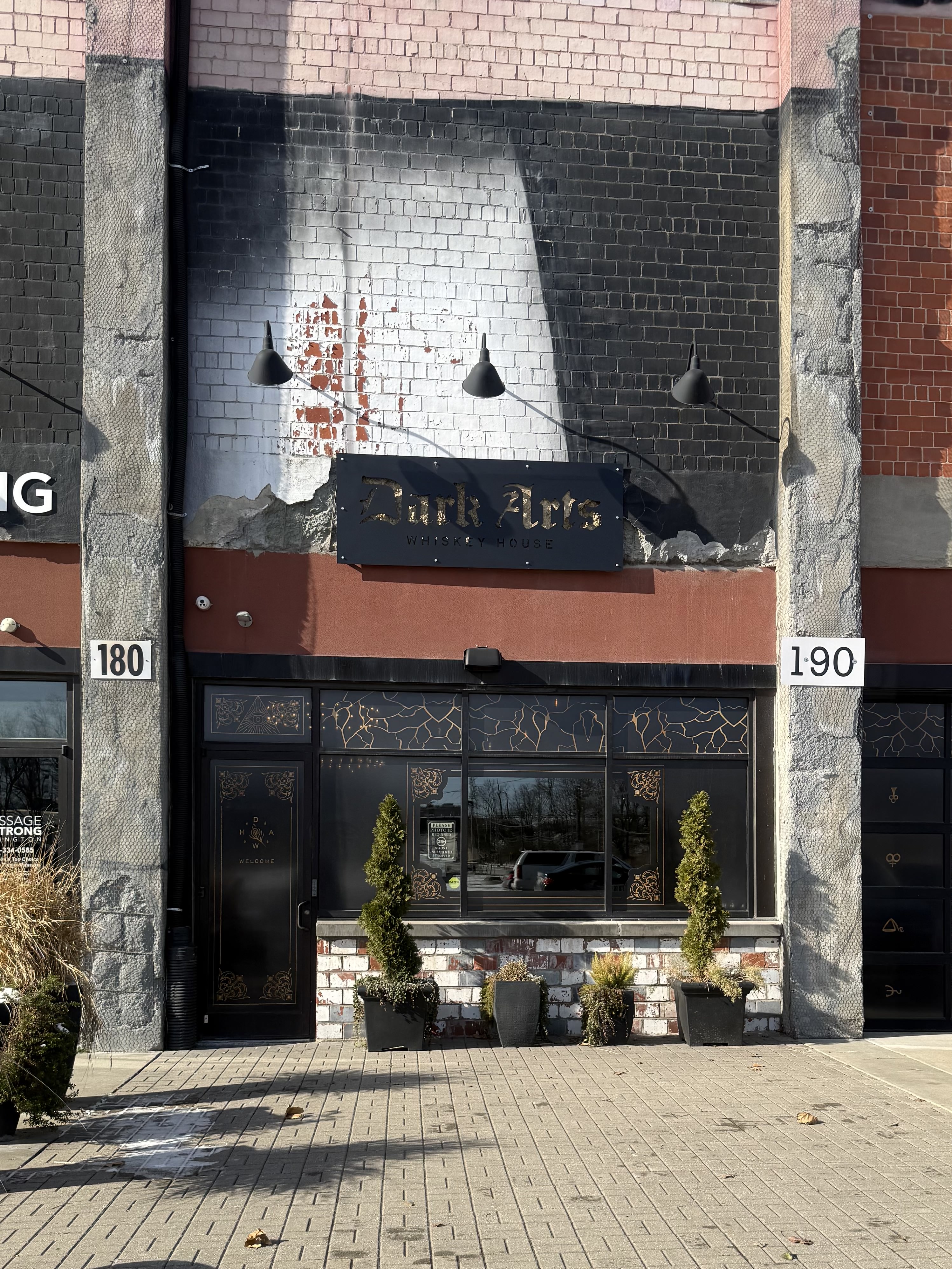
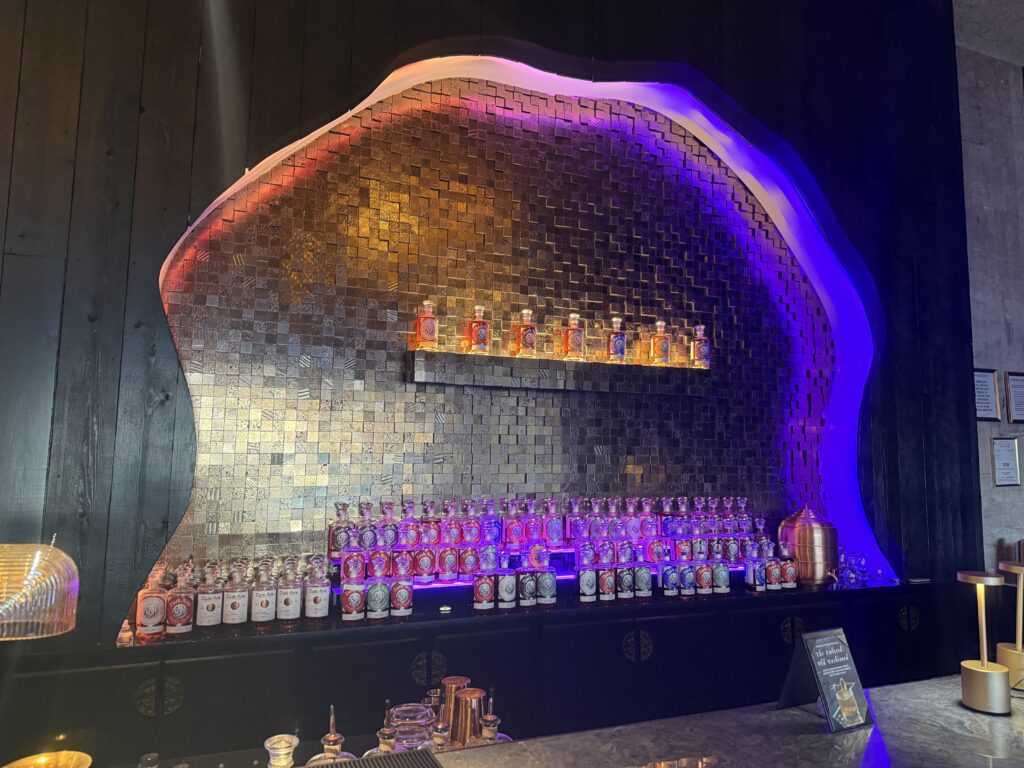
About Dark Arts Whiskey House
Alchemy over convention. Flavor over formula.
Dark Arts doesn’t position itself as a distillery in the traditional sense. It’s a blending, rebarreling, and finishing house built around a single idea: good whiskey can become something more.
Their philosophy leans heavily into the language of alchemy, not just as branding, but as process. Wood, fire, grain, and water aren’t endpoints; they’re starting materials. Through unconventional finishing techniques and deliberate blending, the goal is transformation into what they call “liquid gold.” It’s equal parts technical control and willingness to push into less-charted territory.
At the center of that identity is the figure of Damos, a mythologized ancient alchemist who represents curiosity taken to its edge: the pursuit of meaning over mere knowledge. It’s a narrative device, sure, but it mirrors the brand’s ethos. Not just making whiskey, but trying to redefine what it can be.
That mindset shows up in their process. Dark Arts sources high-quality barrels, then applies non-traditional maturation and finishing methods, often layering casks or using less common wood profiles, to create blends that prioritize flavor impact over category expectations. In a region defined by heritage and consistency, they’ve carved out space by leaning the other direction: experimentation with intent.
Related Articles
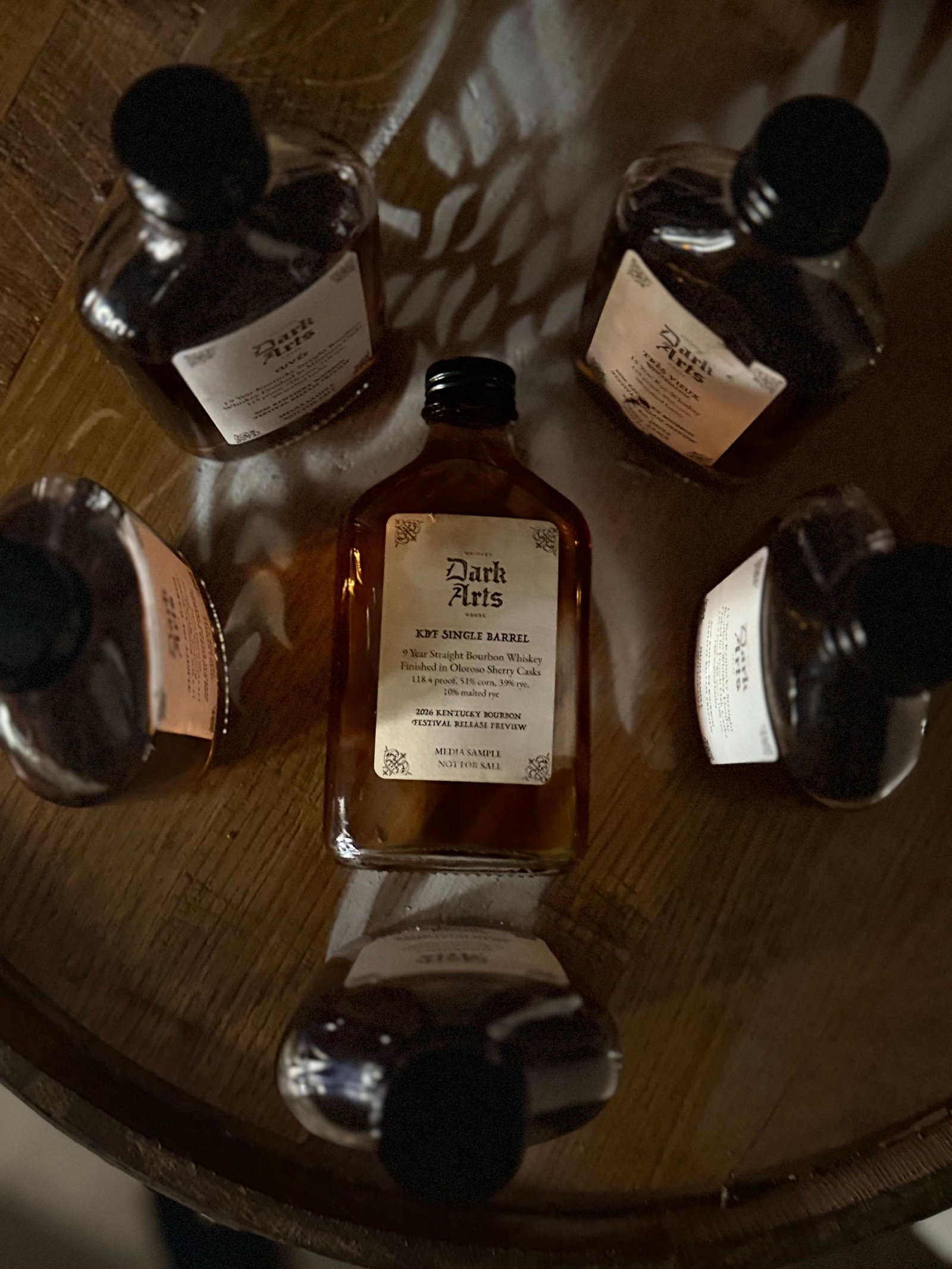
Dark Arts’ KBF-exclusive 9-year bourbon is finished in Oloroso sherry casks, combining dark fruit, nuttiness, smoke and high-rye spice at 118.4 proof.
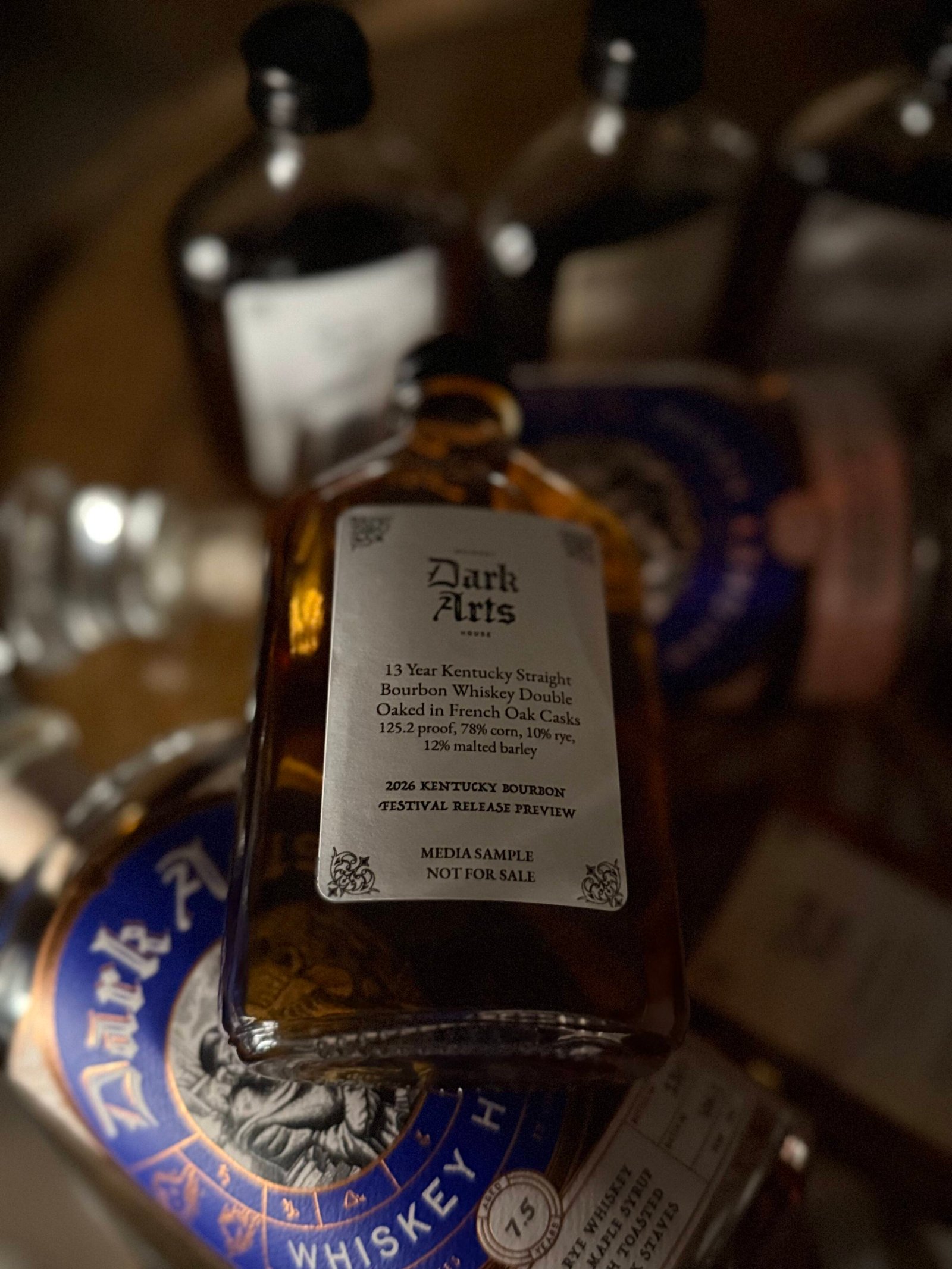
Dark Arts’ 13-year French oak-finished Kentucky bourbon delivers gingerbread, chocolate, vanilla, oak and white pepper at 125.2 proof.
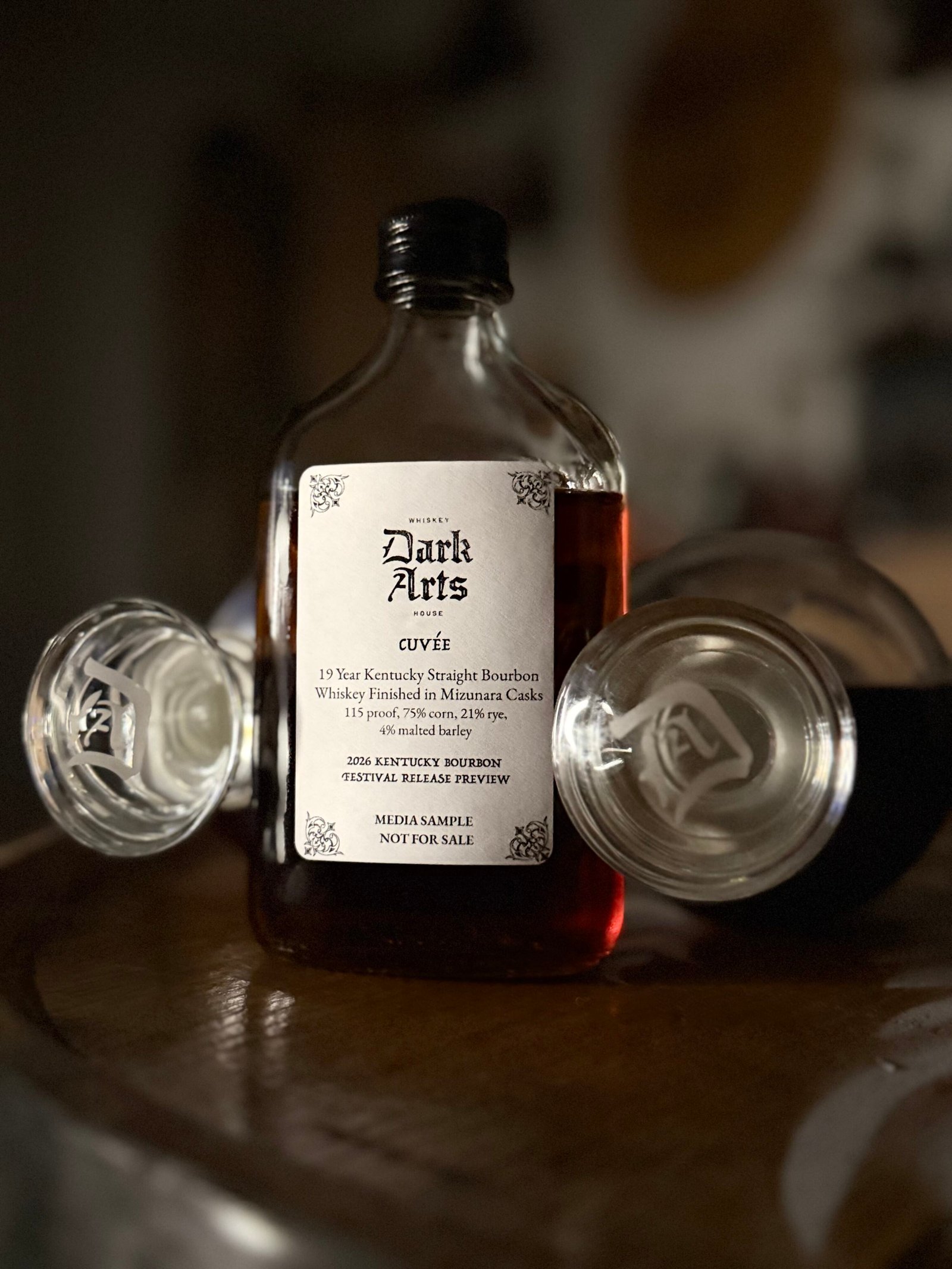
Dark Arts’ 19-year Mizunara-finished Kentucky bourbon combines profound oak, dark sweetness, tropical notes and spice at 115 proof.
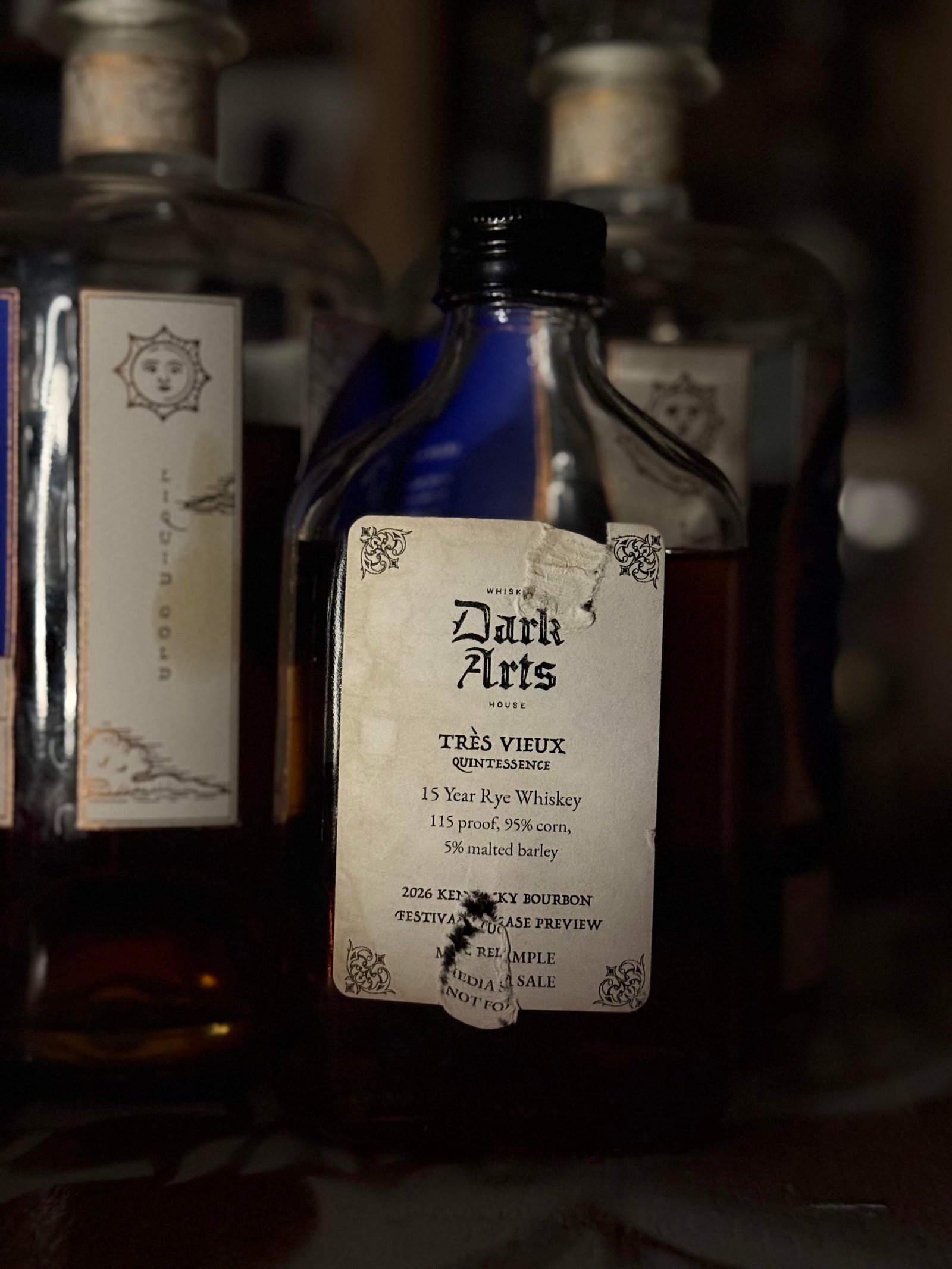
Dark Arts Tres Vieux Quintessence is a Kentucky Bourbon Festival Exclusive release, 15-year, 95% rye Indiana whiskey with herbal complexity, maple sweetness and a huge baking-spice finish.
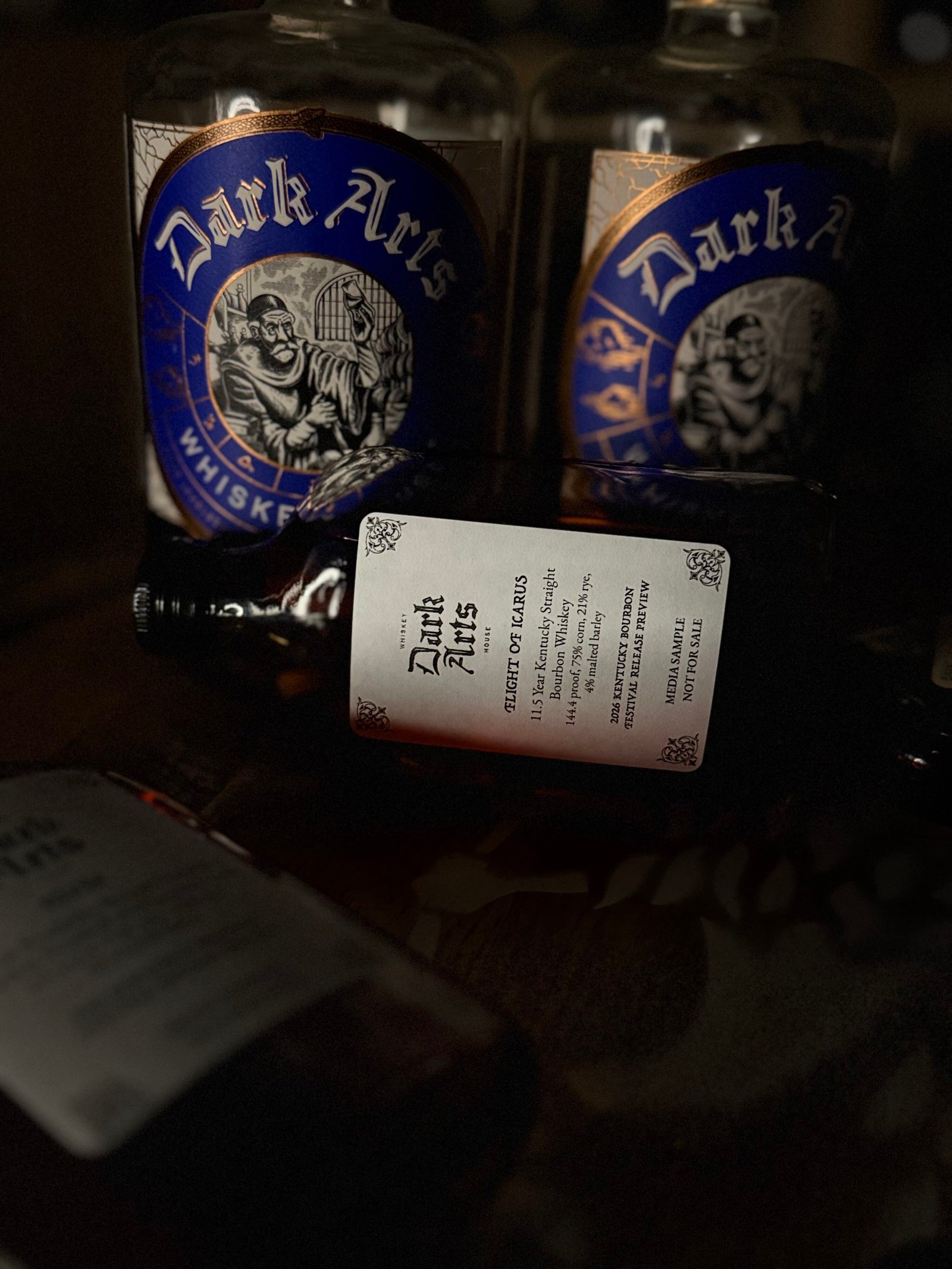
Dark Arts Flight of Icarus is an 11.5-year Kentucky bourbon bottled at 144.4 proof, with caramel, maple, cinnamon and intense baking spice.

Most whiskey brands tell stories about themselves. The best brands make the customer the hero. Here’s why that changes everything.
Bardstown Bourbon Company’s Lochs of Jura blends 10–12-year-old bourbon and rye before a 32-month Isle of Jura cask finish. Here’s how it drinks.
Confused by whiskey terms like small batch, bottled in bond, NDP, cask strength, or mash bill? Here’s a plain-English whiskey dictionary that defines common whiskey words and actually makes sense.
Discover the best budget whiskey releases of 2026 so far. From Blue Bolt 107 to Keeper’s Heart Pot Still Whiskey and Wheel Horse Rum Finished, these five bottles under $50 offer outstanding flavor, value, and character.
Small Batch has no legal definition, but a growing number of independent bottlers and craft distilleries are redefining the term through transparency, intentional blending, and truly limited barrel counts.
Pingback: Dark Arts — Kentucky Bourbon Festival Single Barrel: Oloroso Sherry Meets High-Rye Heat Review | Bourbon Bishop
Pingback: Dark Arts — Tres Vieux Quintessence: 15-Year Indiana Rye, Herbs and Baking Spice Turned to 11 Review | Bourbon Bishop
Pingback: Dark Arts — Flight of Icarus 11.5-Year Hazmat Bourbon: Classic Kentucky Bourbon at Full Throttle Review | Bourbon Bishop
Pingback: Dark Arts — Chief Alchemist Reserve Cuvée 19-Year Mizunara: An Oak Bomb With More Going On Than Meets the Glass Review | Bourbon Bishop