
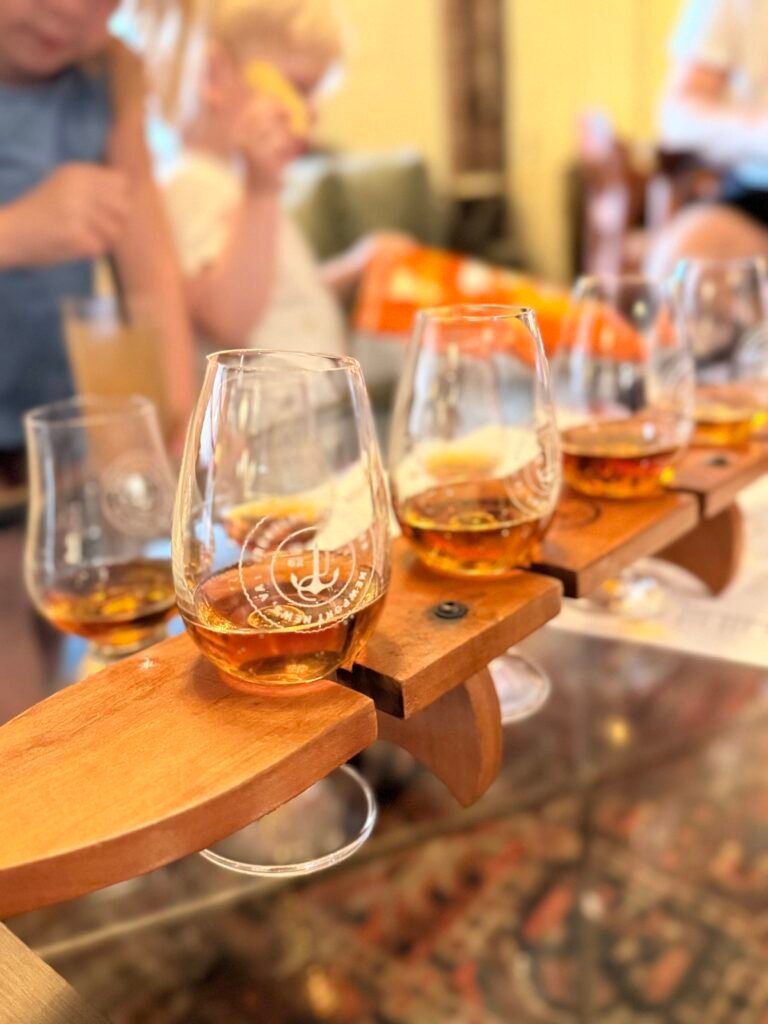
Historic brick, four-grain bourbon, unexpected finishes, and a single barrel chosen to represent Virginia whiskey on the other side of the Atlantic.
Part of the Bourbon Bishop Virginia Craft Whiskey Starter Trail
This distillery is featured on my Bourbon Bishop Virginia Craft Whiskey Starter Trail in the Virginia Spirits Trail app, a curated way to explore some of the Commonwealth’s craft distilleries.
Ironclad is the kind of place where the building becomes part of the whiskey story.
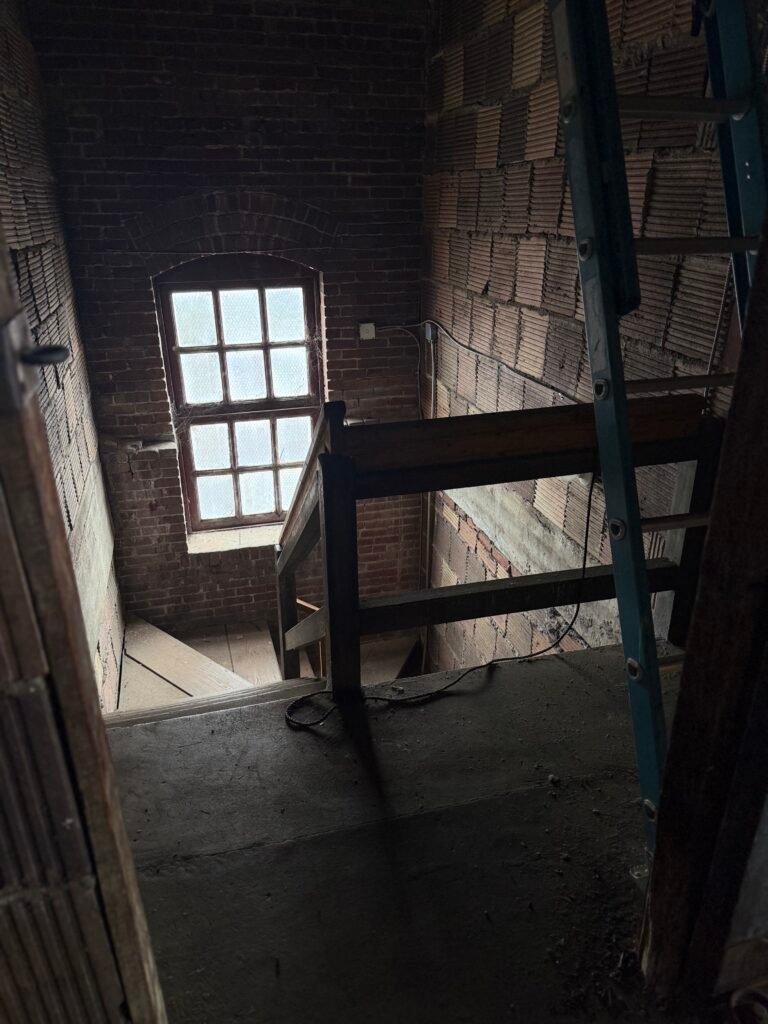
Tucked inside an old brick building in Newport News, Virginia, Ironclad Distillery is aging whiskey in a setting that feels particularly appropriate for a Virginia distillery. Barrels occupy the third floor, temperatures move with the seasons, and an old metal lift still carries people and supplies between floors.
The history here isn’t just decoration, either.
The name Ironclad is a nod to Newport News’ naval heritage and shipbuilding history. If this building had been around in 1862, it would have had a front-row seat to one of the most famous naval battles in American history: the clash between the USS Monitor and the CSS Virginia, then known as the Merrimack.
Today, the building has a different kind of Virginia history taking shape inside it.
Whiskey.
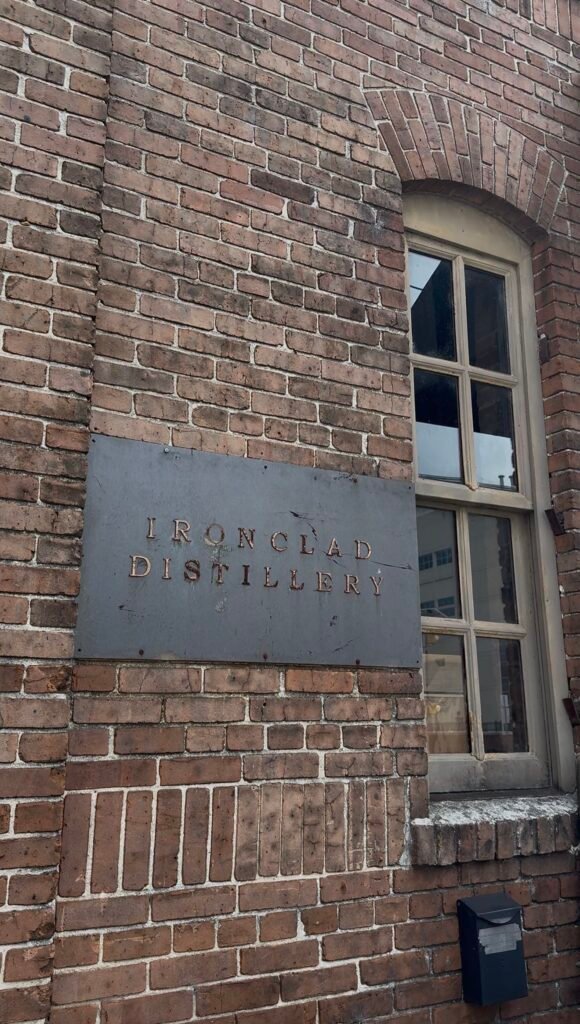
- Distillery: Ironclad Distillery
- Location: Newport News, Virginia
- Opened: 2015
- Known for: Four-grain bourbon, experimental finishes, single barrels, and Virginia-made spirits
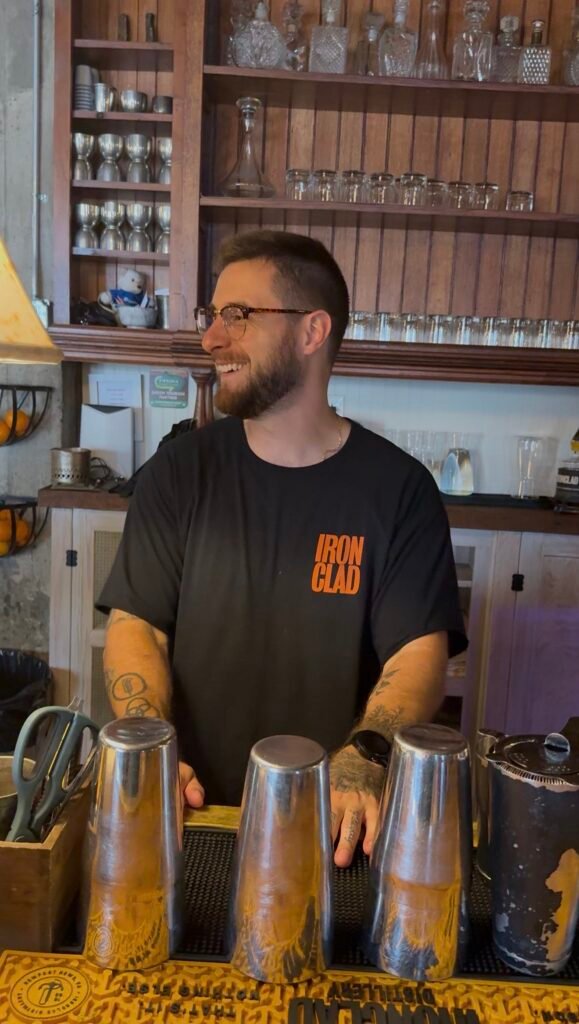
- Hosted by: Owen King (head distiller)
From Home Distilling to Ironclad
Ironclad’s story didn’t start with Owen deciding that he wanted to become a distiller.
He went to Lancaster without plans to enter the spirits business. Around that same time, his father purchased a still with the intention of trying his hand at home distilling.
What started as an experiment eventually became an education, and that education eventually became Ironclad.
Owen also spent time learning from Colin Spoelman of Kings County Distillery, adding another valuable piece of experience to the distillery’s development.
That background helps explain some of what I found interesting about Ironclad. There’s a real sense of curiosity behind the operation. They’re willing to taste, experiment, finish, blend, and see where an idea goes rather than deciding too early that the distillery has to fit neatly into one particular style.
That mindset comes through pretty clearly in the whiskey.
Ruth Has a Story of Her Own
Every distillery has equipment with a story.
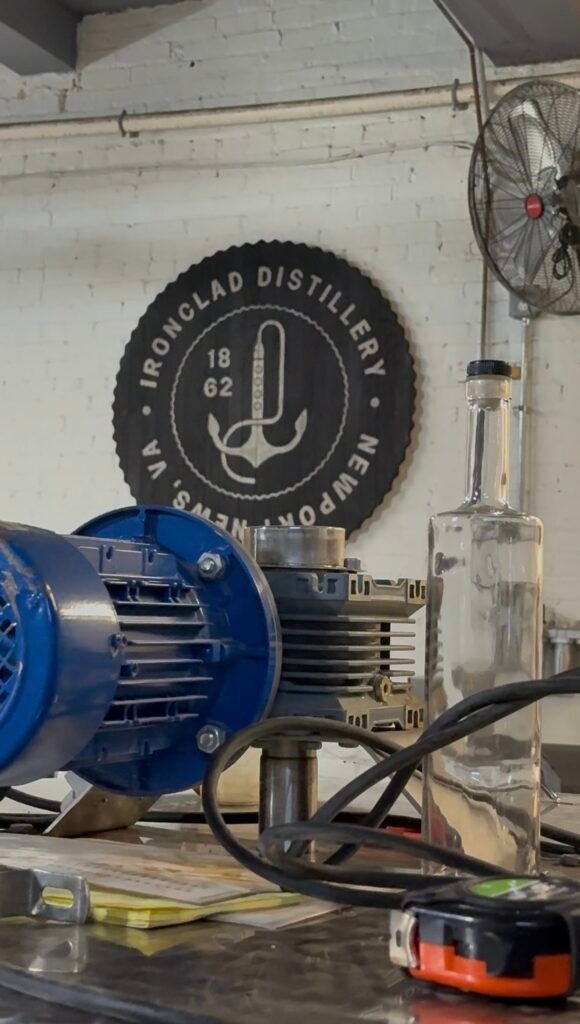
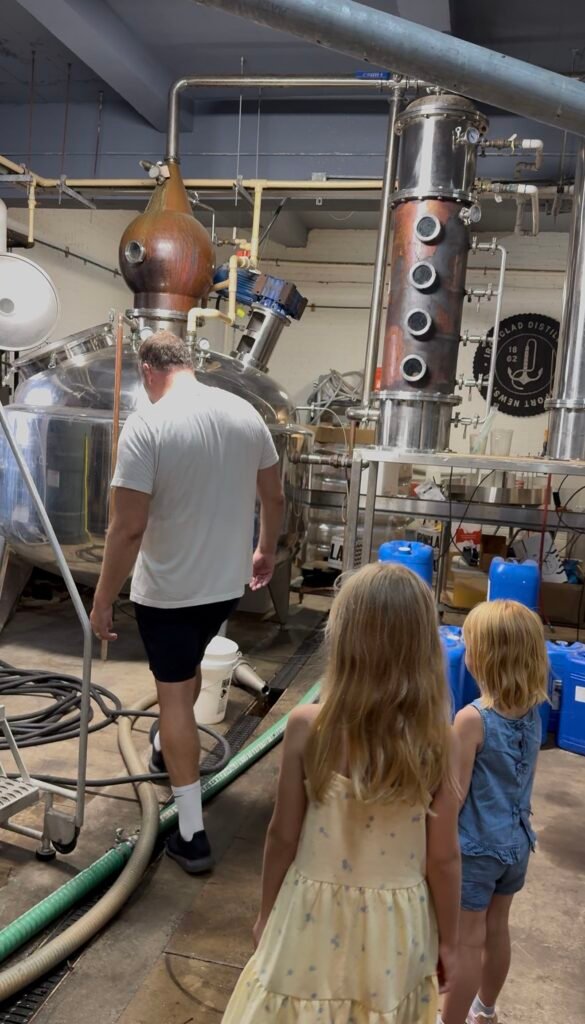
At Ironclad, the still is named Ruth.
Ruth was Owen’s grandmother, and she apparently had a fondness for the original Old Crow.
It’s a small detail, but it’s one of those things I enjoy discovering during a distillery visit. A piece of equipment can simply be another part of the production process, or it can carry a little bit of the family’s history with it.
At Ironclad, Ruth feels like the latter.
Aging Whiskey in a Piece of Newport News History
Before tasting through the whiskey, Owen took my family and me upstairs to see where much of Ironclad’s whiskey is aging.
The third floor is packed with barrels, and the age of the building is impossible to miss once you’re up there.
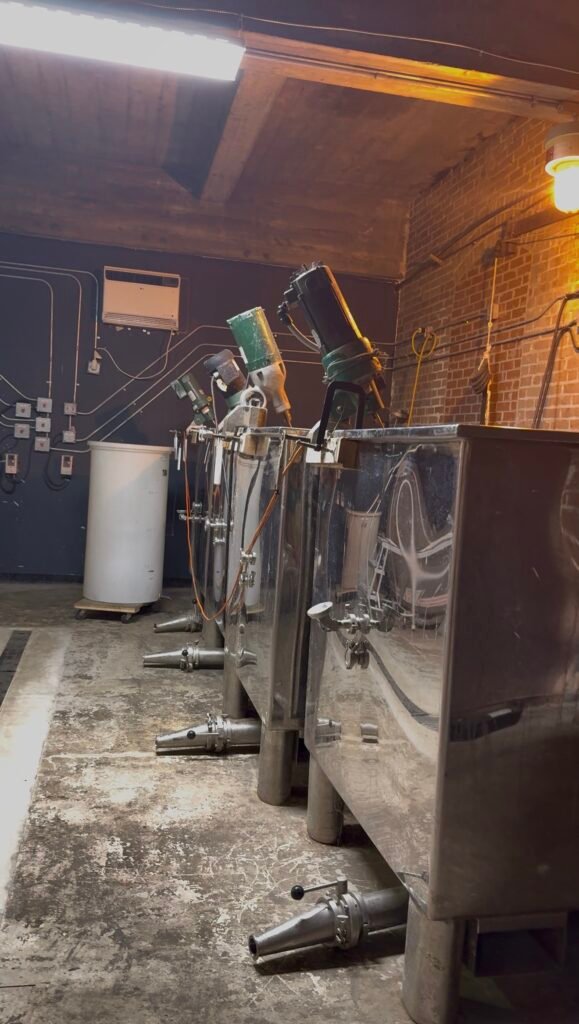
The temperature changes significantly throughout the year, creating natural seasonal fluctuations as the whiskey ages. Ironclad also ages its barrels standing upright.
The distillery is making use of the building however it can. With the third floor filling up, the second floor, which is currently used for storage, will eventually need to become part of the aging operation as well.
That gives you a pretty good idea of where Ironclad is headed.
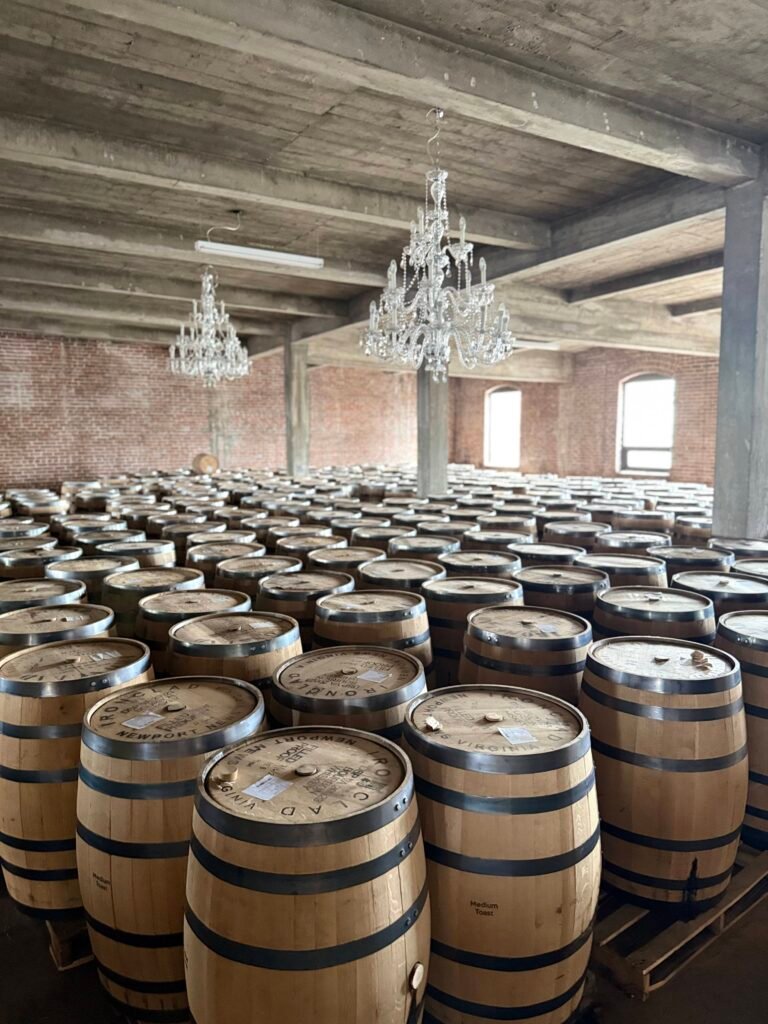
More barrels will require more space, and more whiskey will continue to make this old Newport News building part of the story.
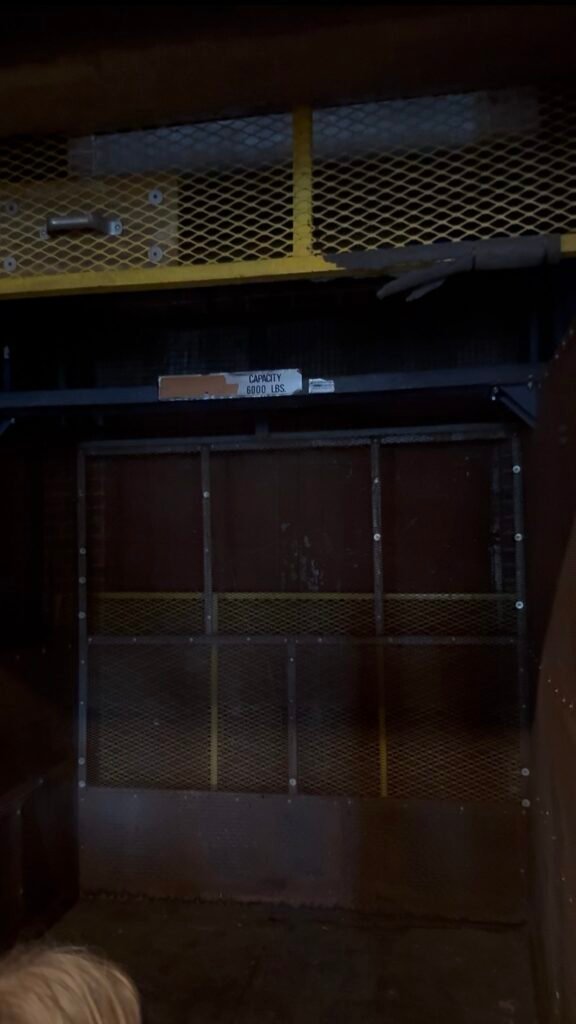
Owen also took my family and me for a ride in the building’s old metal lift.
It isn’t what you’d expect from a modern distillery. It’s an old piece of the building that has remained useful, and riding it between floors was one of those little experiences that you probably wouldn’t get at a brand-new production facility.
My kids certainly weren’t complaining.
“The distillery is making use of the building however it can.”
Four Grains, One Virginia Signature
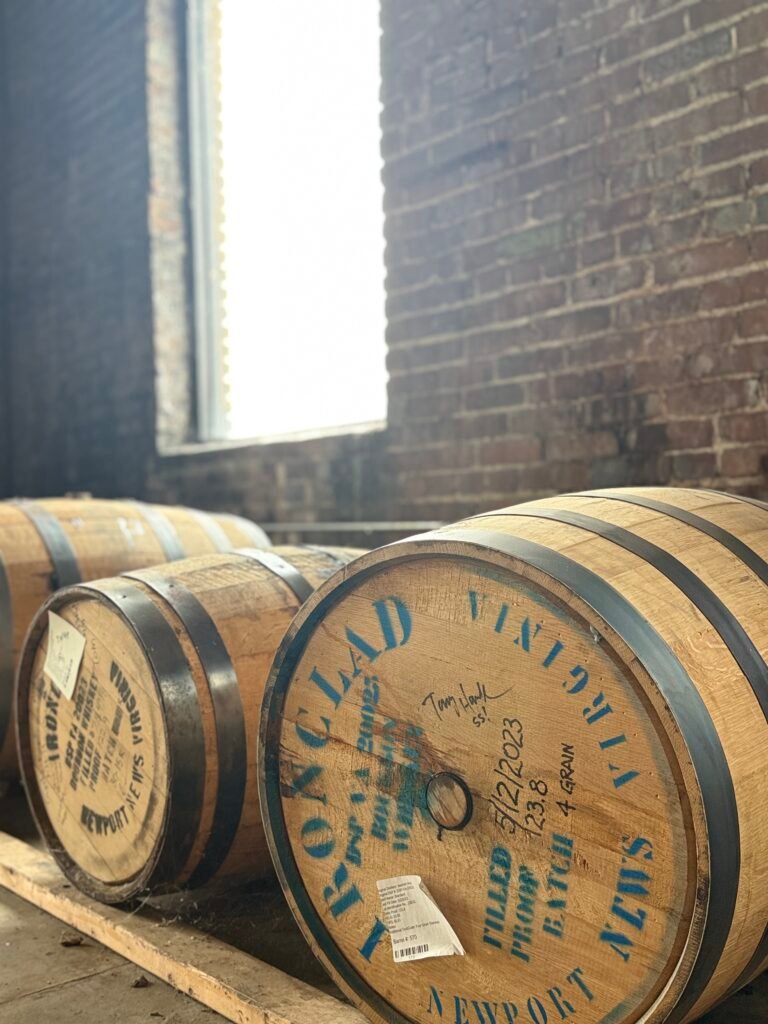
Ironclad’s primary mash bill is a four-grain recipe. Owen told me some of the thinking behind it was influenced by one of his favorite everyday bourbons, Weller 107.
The goal wasn’t to recreate Weller. Instead, the idea was to build a balanced and versatile whiskey that could work in several different directions.
That versatility became especially apparent when I tasted through the lineup.
The four-grain bourbon has enough character to stand on its own, while still giving Ironclad room to experiment with different finishes and barrel treatments. Wine, coffee, and other finishing influences can bring something new to the whiskey without completely burying what was there in the first place.
That’s one of the things I look for in a finished whiskey. The finishing barrel should contribute something meaningful while still leaving you with a sense of the original whiskey.
Ironclad seems to have a good handle on that balance.
Tasting Ironclad
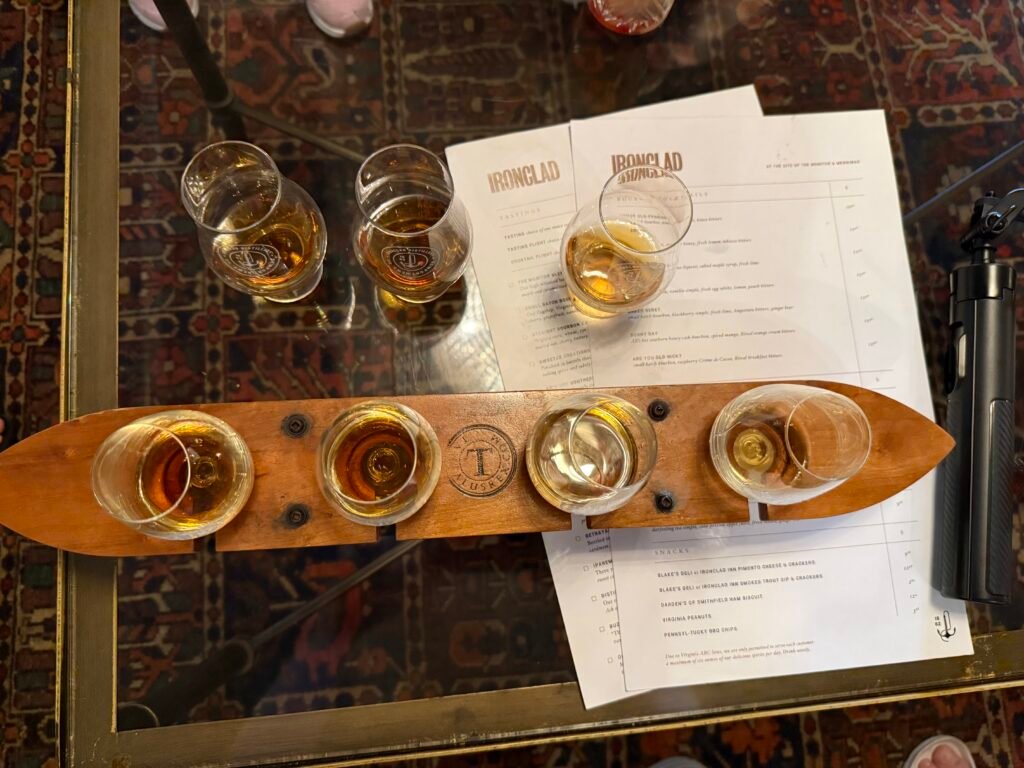
The most interesting part of any distillery visit eventually comes down to what is in the glass.
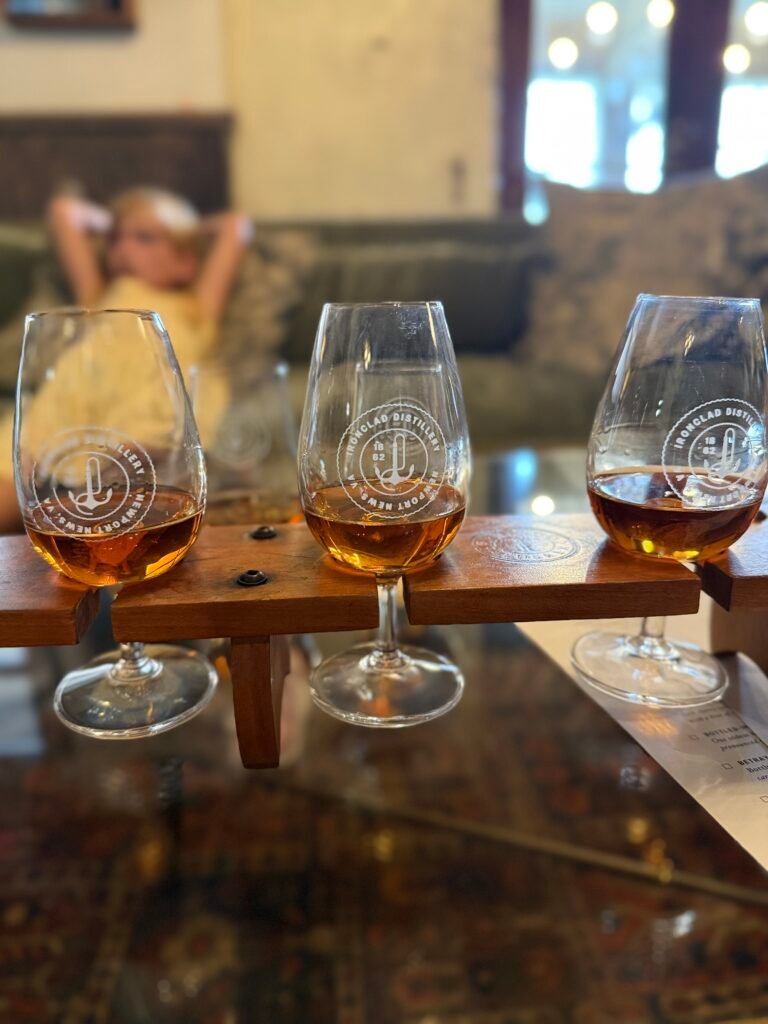
Ironclad gave me quite a bit to work through.
Rye Four Grain
The rye four-grain opened with maple sweetness before moving into a surprisingly malty palate.
Deep chocolate and cherry carried through the finish, with a layered grain character that made the whiskey more interesting than the initial sweetness might suggest.
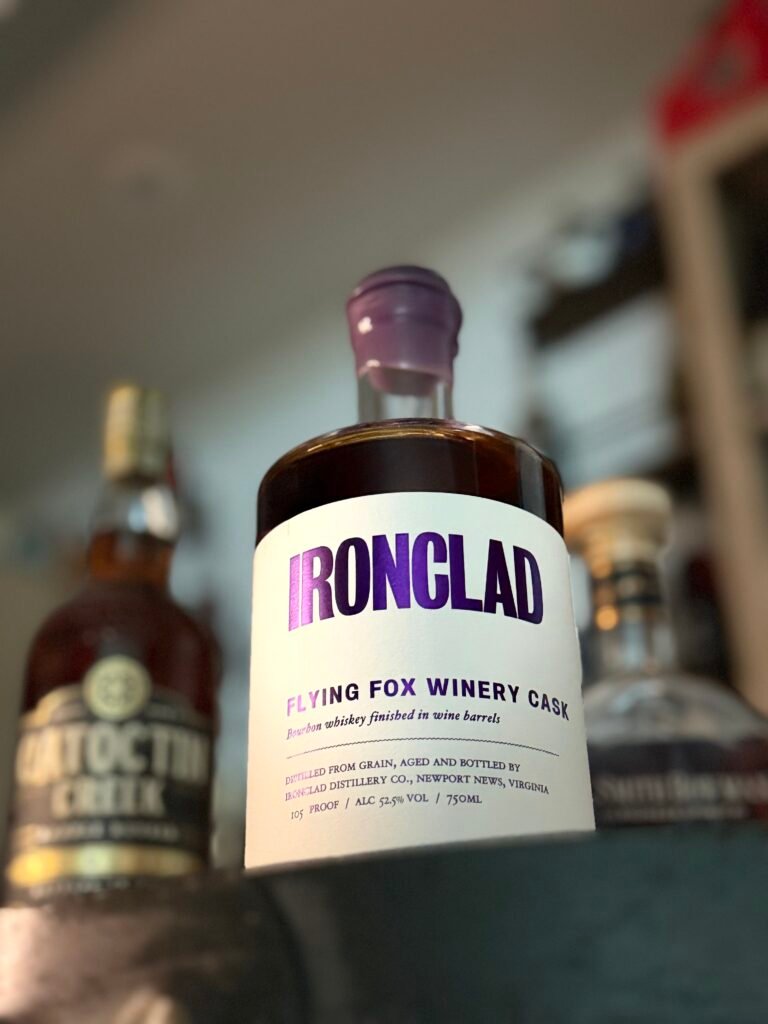
Flying Fox Petite Verdot
The Petite Verdot-finished whiskey brought considerably more fruit to the table.
Deep, jammy fruit showed up immediately on the nose and palate, but the whiskey still maintained a good amount of spice underneath it. That contrast gave the finish some structure instead of turning the whiskey into a wine-barrel showcase where the bourbon gets lost.
It’s a good example of what Ironclad can do with its base whiskey.
Ironclad Single Barrel
The four-grain single barrel was a very different pour.
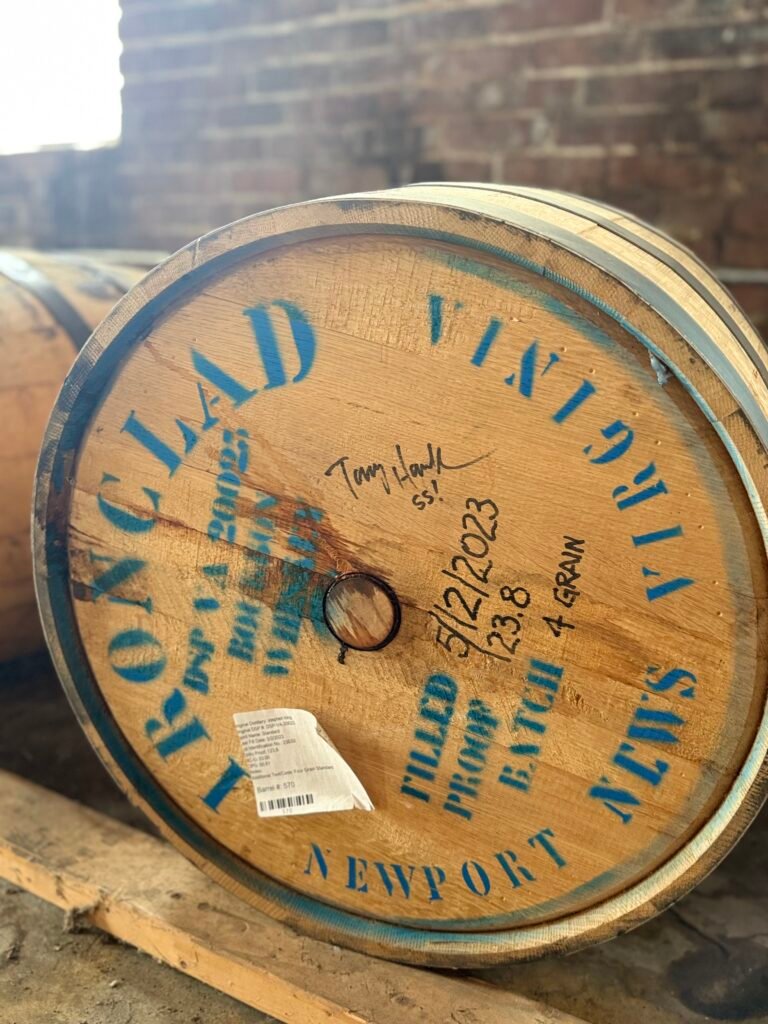
Pulled from a 30-barrel batch at 131 proof and around 6½ years old, it delivered a deep, almost molasses-like sweetness alongside a pronounced cinnamon-driven barrel spice.
This was big whiskey, and the proof certainly contributed to that impression. More importantly, though, there was plenty of flavor behind the proof.
Coffee Cask
The Coffee Cask may have been the most unusual pour of the visit.
The whiskey began life in a roughly 53-gallon vessel from Vessel Craft in Norfolk before spending approximately three months in that vessel and another three months in a 15-gallon barrel.
The result was immediately different.
Green pepper and almost salsa-like notes appeared alongside the coffee on the nose. On the palate, it became creamy, dense, and oily, bringing dark chocolate and vanilla while retaining a respectable amount of spice.
It was the kind of pour that made me stop for a second and reconsider what I was tasting.
For an experiment, that’s a pretty good result.
VA ABC Pick
The ABC pick moved back toward a more traditional bourbon profile.
At 129 proof, the mash bill was 55% corn, 35% wheat, and 10% malted barley.
Deep Werthers-style caramel and vanilla came through first, followed by cracked pepper on the finish.
There were some similarities to the 250th release I had tasted previously: rich sweetness, plenty of structure, and enough spice to keep the whiskey from becoming overly heavy.
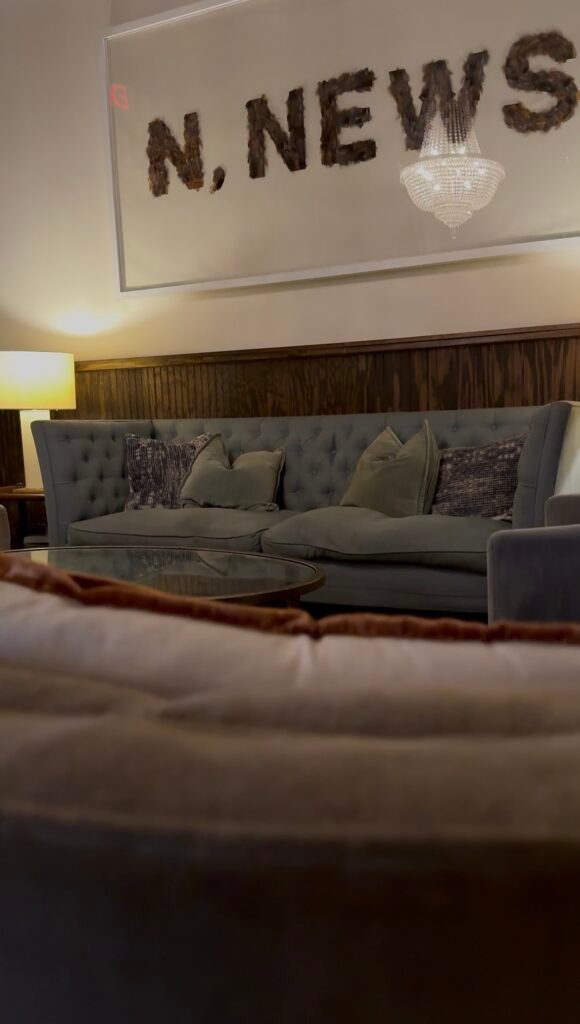
Choosing Ironclad for Germany
The most memorable part of my visit wasn’t necessarily the whiskey I liked best.
It was getting to help choose a barrel.
Ironclad was preparing to bring a single barrel to an expo in Hamburg, Germany, and Owen had narrowed the candidates down to two.
Both were excellent, but they offered very different expressions of what Ironclad can do.
One was more traditional and immediately recognizable as Ironclad. The other was more distinctive and had a profile that stood out from the rest of the lineup.
I chose the latter.
It opened with incredibly deep caramel and a fantastic mouthfeel before moving into malted barley, waffle cone, butterscotch, cardamom, and cinnamon.
The flavors continued to shift as I spent more time with it, which was probably what ultimately won me over.
Even better, Owen told me afterward that it was the barrel he had been leaning toward as well.
Being asked to weigh in on something like that is a pretty special part of getting to visit smaller distilleries. You’re not simply being handed a bottle and told why it’s good. You’re getting a chance to talk through what makes one barrel different from another and why a particular whiskey might represent the distillery well.
Now that barrel is headed to Hamburg.
I can’t wait to find out what German whiskey drinkers think of it.
“The goal wasn’t to recreate Weller. Instead, the idea was to build a balanced and versatile whiskey that could work in several different directions.”
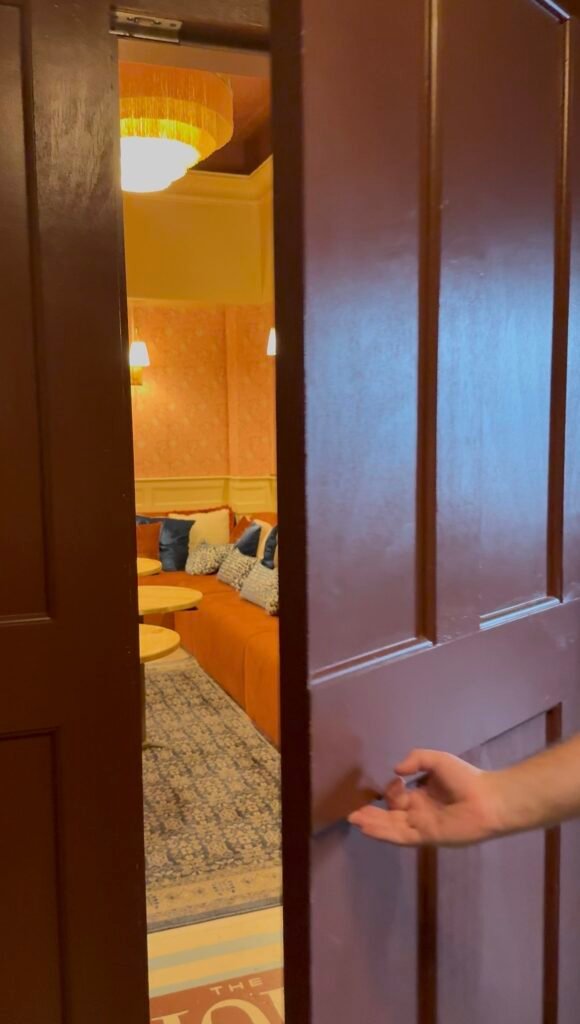
Find the Secret Door
Owen eventually gave my kids another mission:
Find the secret door.
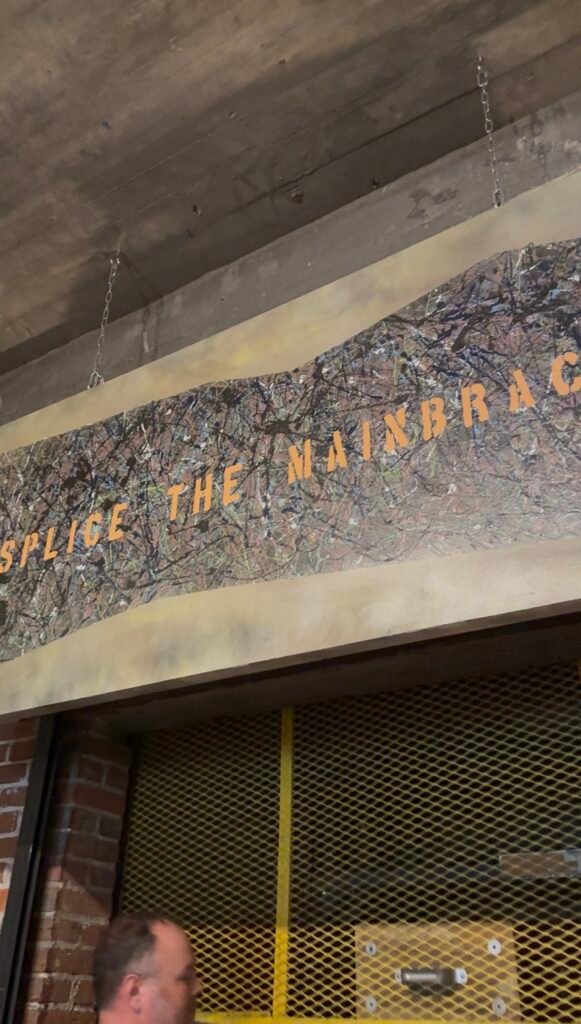
After the tour of the “rickhouse” space, they searched around until they found it.
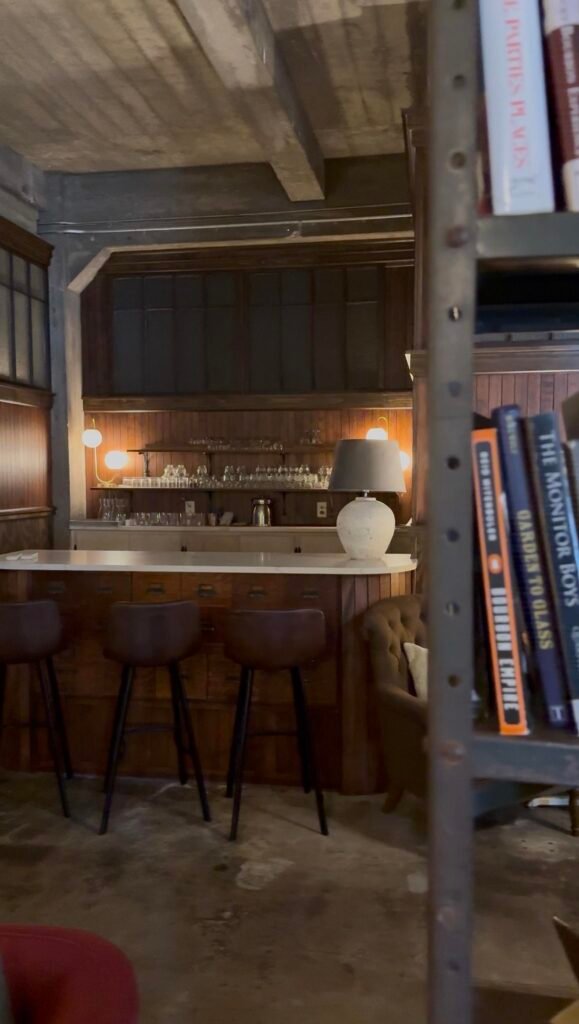
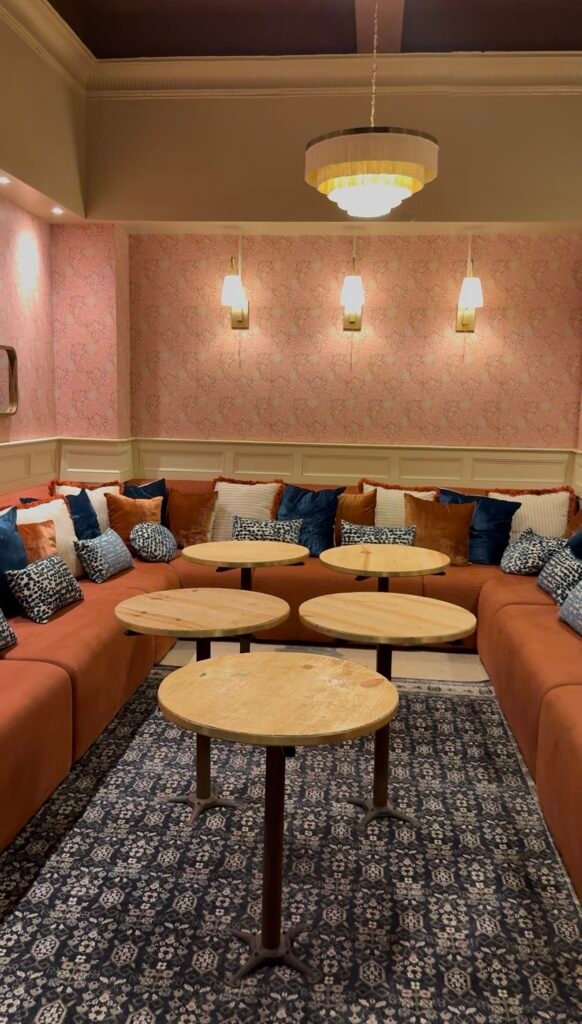
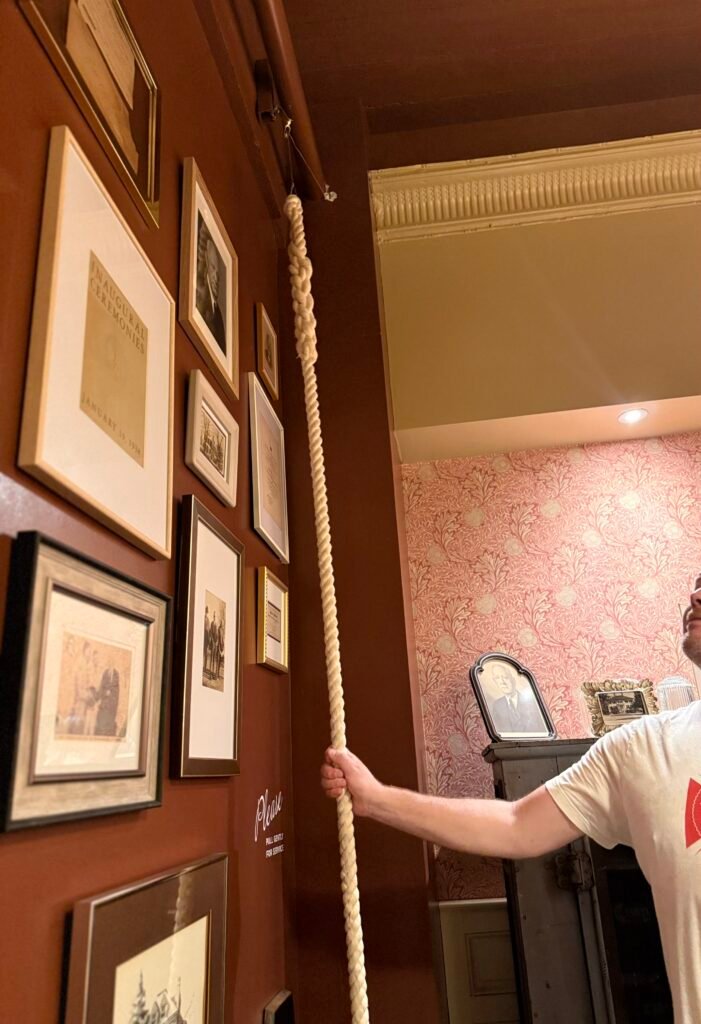
Behind the door was a cozy, speakeasy-style room available for private events. There’s even a ship’s bell inside that rings all the way to the bar when you need another round.
Naturally, my kids had to test it.
Once.
Then again.
And, with Owen’s permission, several more times than were probably necessary.
I’m pleased to report that the bell works.
Thoroughly tested.
By professionals.
A New Gin Takes Shape
Ironclad’s experimentation isn’t limited to whiskey.
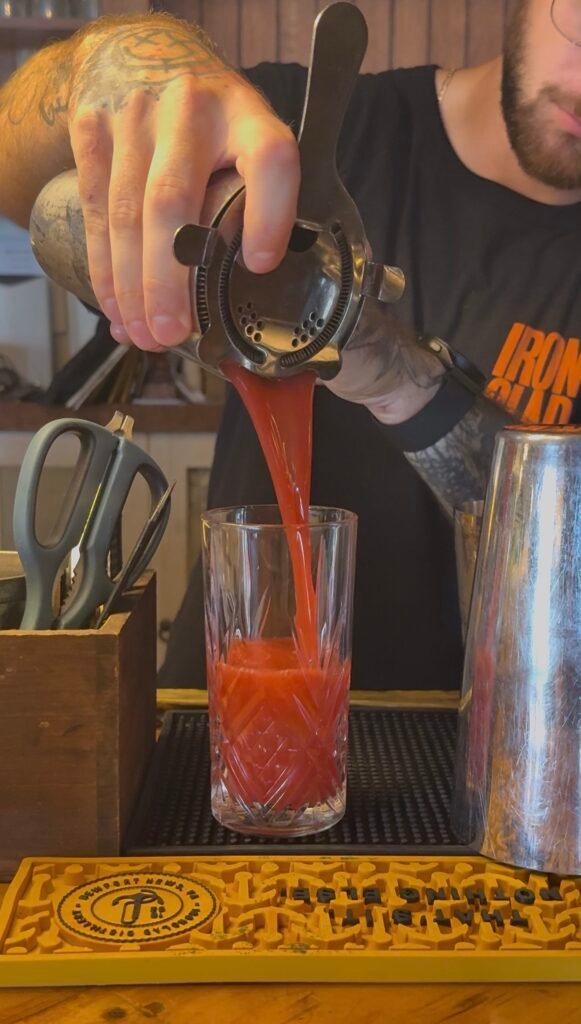
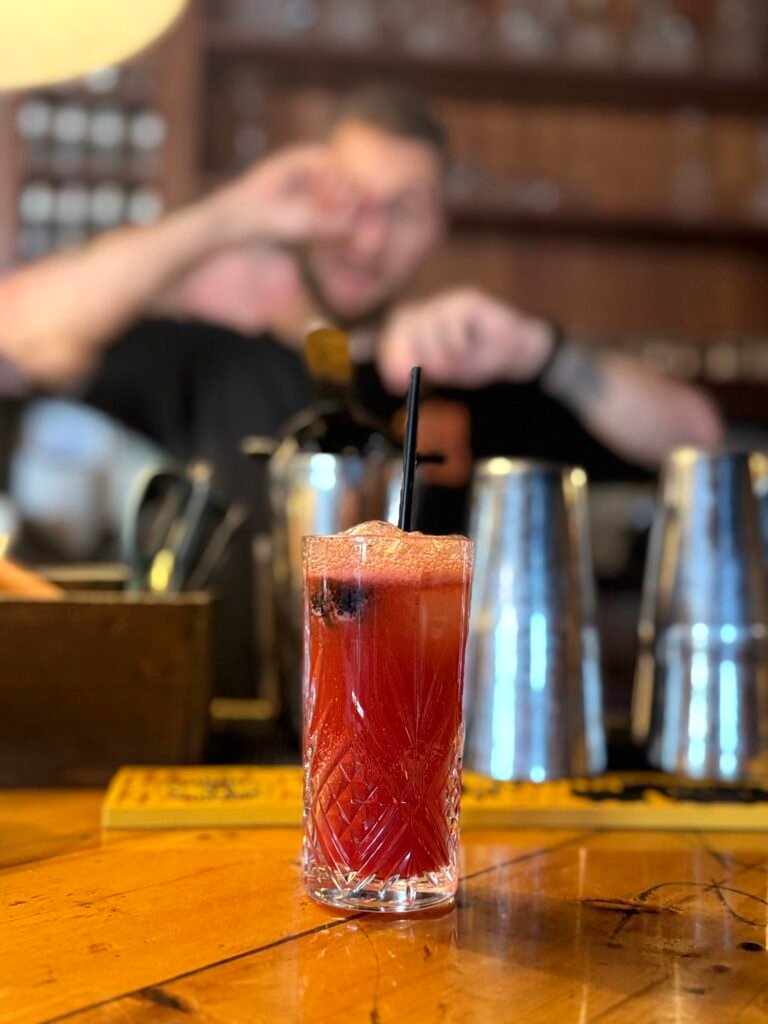
Owen also let me taste a new gin he’s developing in partnership with Barry from Virago Spirits.
The botanical profile includes juniper, coriander, lemon peel, orange peel, spearmint, licorice root, black pepper, sumac, black tea, and ginger.
The interesting part is how they’re developing it.
Rather than simply taking one existing recipe and putting it into production, Owen and Barry brought their respective gin recipes together and blended them to find the balance Owen was looking for.
For now, the gin will be contract distilled through Virago because Ironclad doesn’t have the equipment needed for gin production and doesn’t necessarily need to add another production process to its whiskey operation.
The finished product will still be an Ironclad spirit.
There’s also an effort to source as many of the botanicals locally as possible, potentially even working with a local botanical garden.
It’s a good example of how collaboration can make sense for a small distillery. You don’t have to do every part of the process yourself if working with someone who has specialized expertise can help make the final product better.
Whiskey With a Purpose
Ironclad’s connection to the local whiskey community extends beyond the distillery, too from non-profits like Whiskey Valor to local vendors like those they source their finishes from (coffee, honey, wineries, etc)
Whiskey Valor is an incredible nonprofit founded by my friend Luis that supports veterans and their families.
I particularly appreciate Whiskey Valor’s focus on safe consumption, responsible driving, and building genuine community around the people who enjoy spirits.
That philosophy lines up closely with the kind of whiskey community I want to help build.
Good whiskey is worth celebrating, and so are the people who make the community around it worthwhile.
“There’s a consistent interest in seeing what the underlying whiskey can do when you give it another set of tools to work with.”
What Makes Ironclad Interesting
There are plenty of Virginia distilleries making whiskey, so simply being a Virginia whiskey producer isn’t enough to make a place stand out.
What caught my attention at Ironclad was the way experimentation is built into what they’re doing.
The Petite Verdot finish is one example. The Coffee Cask is another. Then there are the different grain combinations, high-proof single barrels, and the new gin being developed through collaboration with Virago.
And now there’s a single barrel headed to Hamburg to represent the distillery in Germany.
None of that feels like experimentation for the sake of being different. There’s a consistent interest in seeing what the underlying whiskey can do when you give it another set of tools to work with.
That’s an exciting place for a young distillery to be.
Final Pour
My favorite part of visiting a distillery isn’t always finding the bottle I want to take home.
It’s getting to understand the people behind the bottles.
Ironclad gave me plenty of whiskey to taste and plenty of reasons to pay attention to what they’re doing next. I found some traditional bourbon profiles I really enjoyed, some genuinely unusual experiments, and a better appreciation for what that four-grain foundation can do with different finishing barrels.
But the highlight was being trusted to help choose the barrel heading to Germany.
That’s a small moment in the life of a distillery, but it’s also the kind of experience that makes these visits memorable.
You get to see the building, meet the people, taste the whiskey, hear the stories, and occasionally have a small role in what happens next.
For me, that was Ironclad.
Bourbon Bishop Bottom Line:
Ironclad is a Virginia distillery worth watching. The whiskey already has enough substance to stand on its own, but the real excitement comes from seeing how Owen and the team continue to experiment with it. Add in a historic Newport News building, a genuine connection to the local community, and now a barrel making its way to Germany, and Ironclad feels like a distillery with a lot of room to grow and plenty worth tasting along the way.
Additional Media
This piece was written in conjuction with my current Virginia Spirits project. Subscribe to the newsletter for weekly updates and reveals.
If you enjoyed this piece, check out my past distillery visit articles here.
This visit was hosted by the distillery. All thoughts are my own and not influenced by the experience.
Related Distillery Visits
A behind-the-scenes visit to MurLarkey Distilled Spirits in Manassas, Virginia, exploring Virginia-grown grain, award-winning whiskey, innovative flavored spirits, and one of the Commonwealth’s premier craft distillery experiences.
Explore Provenance with Jay West and discover the philosophy behind curated whiskey, Reveries single barrels, slow proofing, experimental finishes, and the Bottle Your Own experience.
From the distillery and dining experience to the home glass — the quality sourced and blended whiskies of Open Road Open Road Distilling Co.
A visit to Lost Whiskey Club in Virginia — exploring their sourced whiskey program, evolving maturation approach, and a philosophy rooted in community, storytelling, and shared pours.
Explore the farm-to-glass operation in the Agricultural Reserve, reviews of their bourbon and an exclusive rye blending experience with head distiller Kristian Naslund
A behind-the-scenes look at Litchfield Distillery in Connecticut, including production insights, tasting notes, local sourcing, and the quietly growing stock of well-aged whiskey resting in their rickhouses.