
Local grain, hybrid stills, and quietly aging whiskey that may define the distillery’s future.
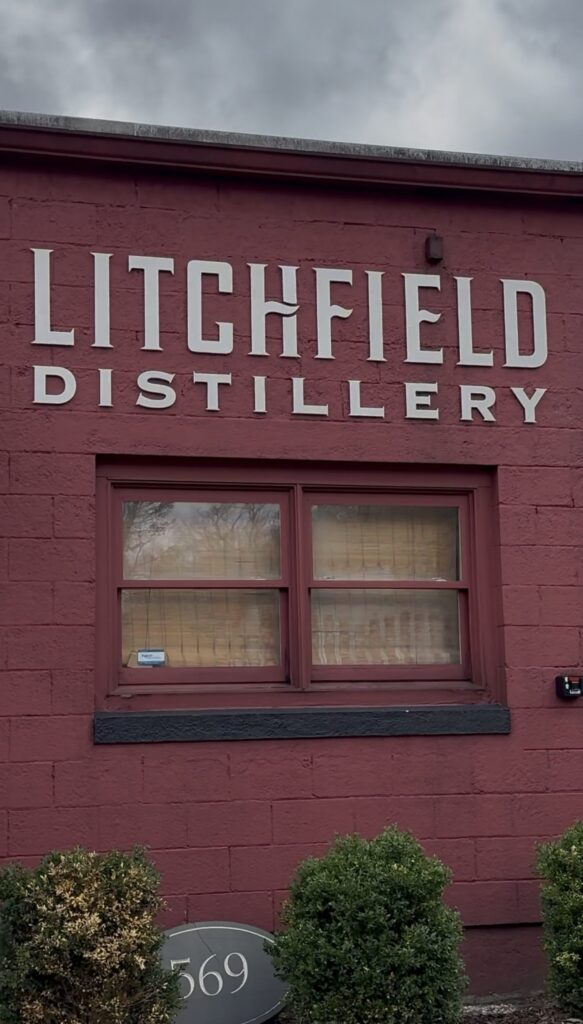
Set on a property with roots stretching back to 1957 which was once home to a knitting operation and working farmland, Litchfield Distillery blends quiet New England history with a distinctly modern, family-driven operation.
Founded by the Baker brothers, the distillery carries forward a legacy built on water, precision, and long-term thinking. That background still shows up everywhere, from their approach to purification to the control they maintain across production.
What began as a small, locally grounded operation has grown into a full-scale distillery producing a wide range of spirits, all anchored by a simple but fitting identity: “Spirit of Hard Work.”
- Distillery: Litchfield Distillery
- Location: Litchfield, Connecticut
- Opened: 2014
- Known for: Connecticut-grown grain, bourbon, rye, American single malt, and a growing inventory of well-aged whiskey
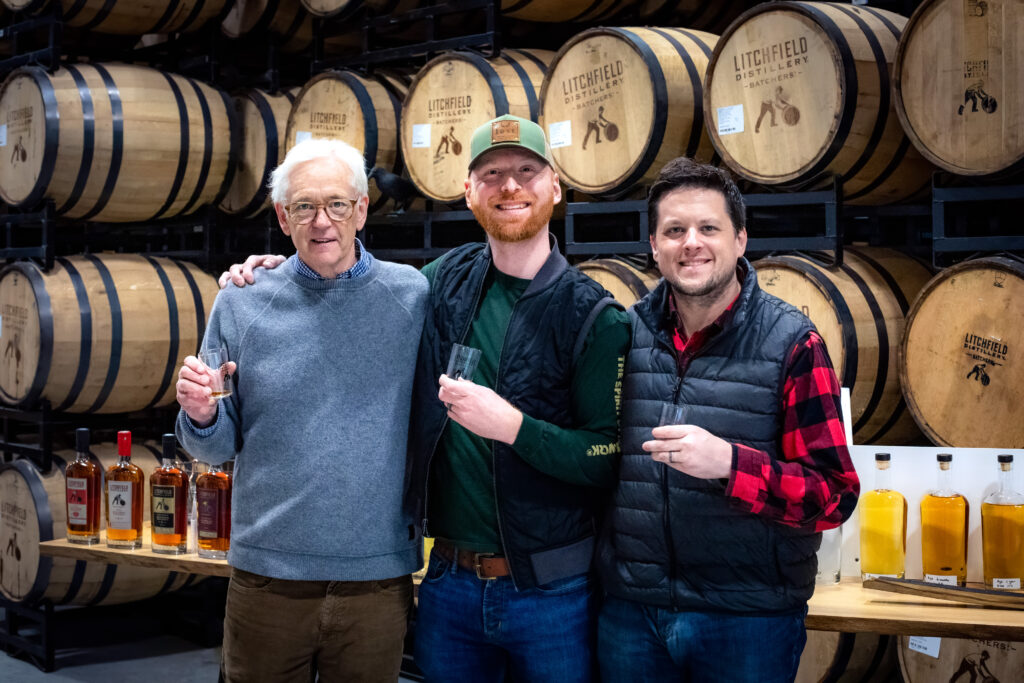
- Visit Type: Hosted by owner Jack Baker & jack-of-all-trades Tony Vengrove
The People Behind It
Long before Litchfield Distillery existed, the Baker family had already built a deep connection to production, logistics, and scale through their work in the bottled water industry.
The distillery itself officially began in 2014, marking a new chapter for the family — one that was built independently around whiskey, craft production, and long-term aging programs.
That earlier experience came through their work with the family business, Crystal Rock Water Company, which had been operated by Jack, his brothers, and their father as a multi-generational business. The eventual sale of the company reflected broader consolidation trends in the bottled water industry and allowed each of the brothers to pursue separate paths moving forward.
That operational background still shows up everywhere at Litchfield — from production discipline to their unusually strong focus on water quality and process control.
And then there’s Tony Vengrove.
Joining the team in 2015, Tony helped shape much of the modern identity of the distillery, including the now central “Spirit of Hard Work®” ethos. What stood out most from conversations on-site was how naturally that phrase connects back to how the team actually operates: not as branding, but as a reflection of process, repetition, and patience.
Nothing here feels accidental.
A Distillery Built to Last
Some craft distilleries feel designed for the next release.
Litchfield feels designed for the next decade.
Located on a property with roots stretching back to 1957, the distillery carries a quiet sense of continuity. The buildings don’t feel staged. The atmosphere isn’t over-curated. It simply feels lived in.
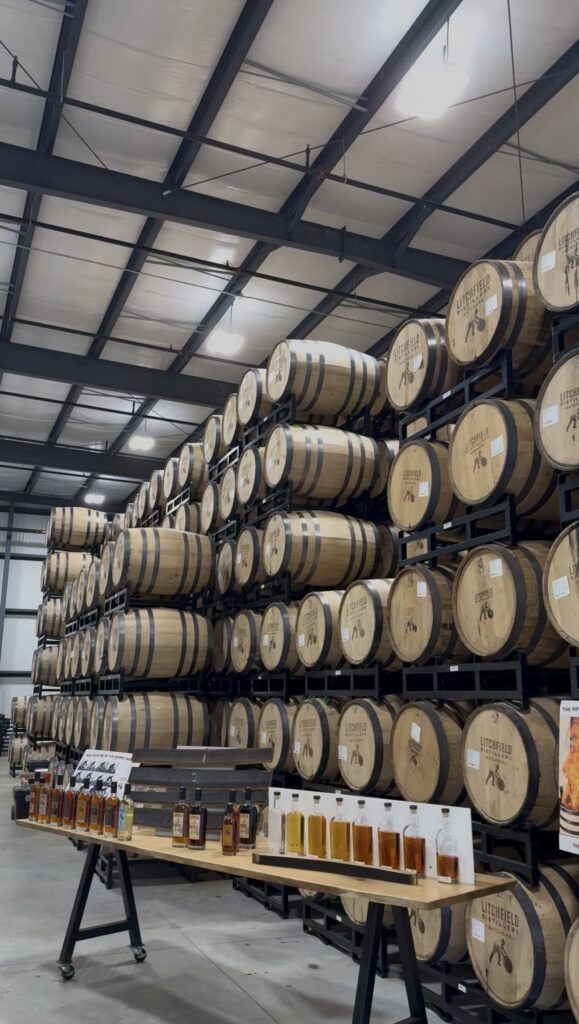
And increasingly, filled with barrels.
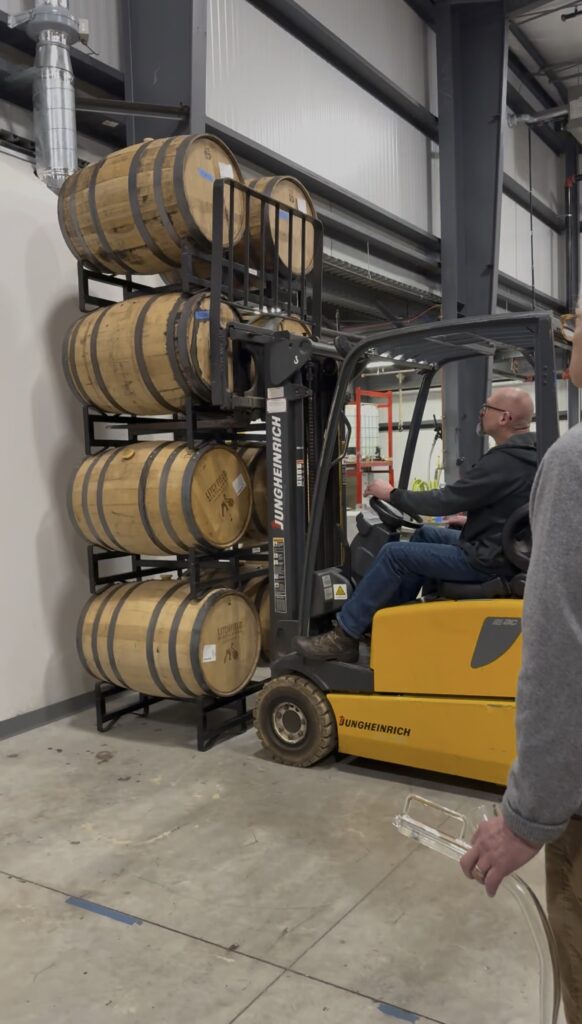
Within the last few years, Litchfield expanded into a new rickhouse that now reportedly holds over 1,800 barrels. According to Jack, some whiskey resting there has already surpassed the 10-year mark, simply waiting for the right release window.
Not rushed.
Not forced out early.
Just waiting.
Hybrid Stills & Connecticut Grain
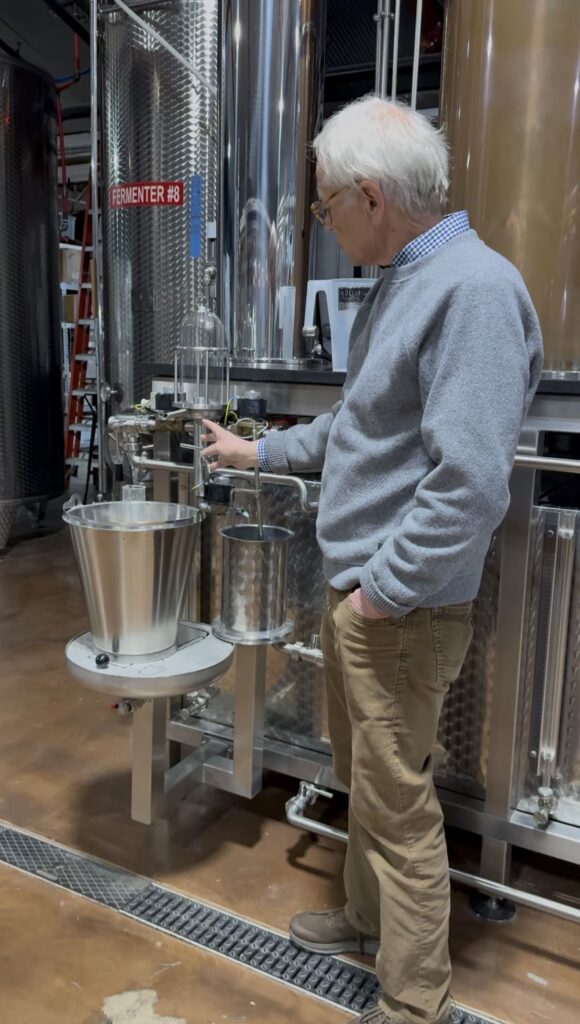
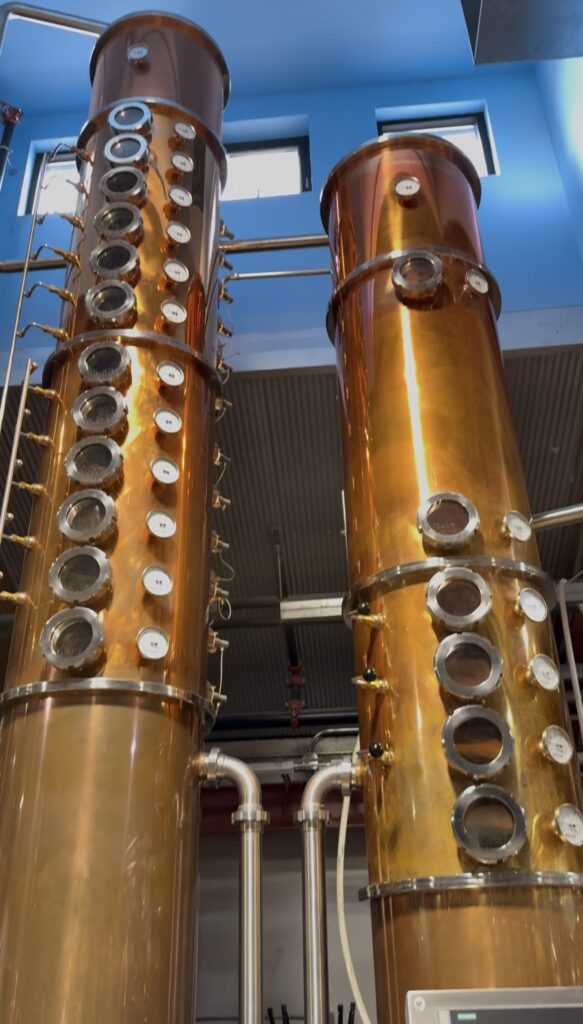
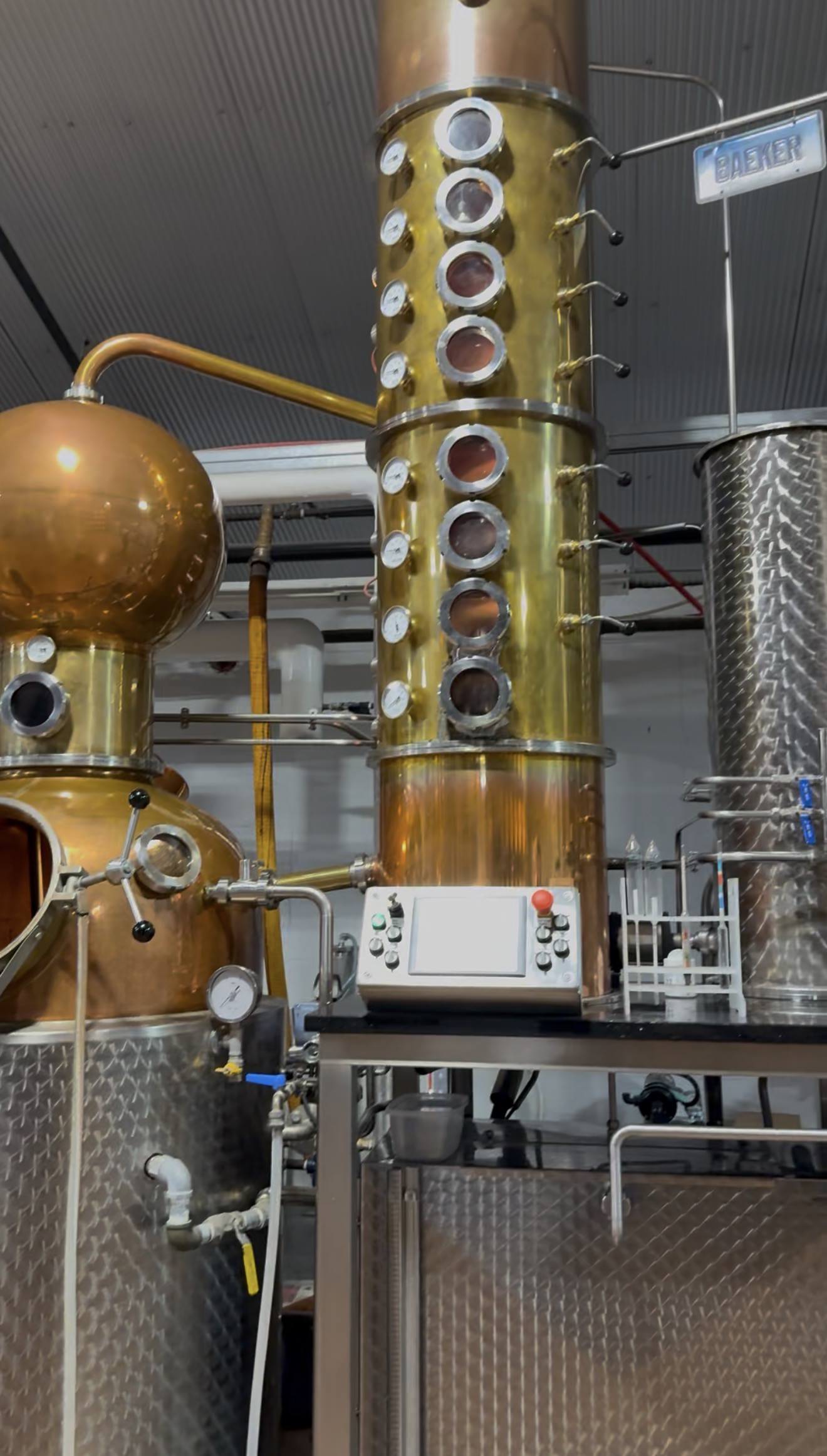
Litchfield’s production setup sits between traditional pot distillation and modern column efficiency.
Their hybrid still allows them to strip whiskey with only a few plates when they want to retain character, while also offering the flexibility to run a full column for cleaner spirits like vodka.
That flexibility shows throughout the lineup.
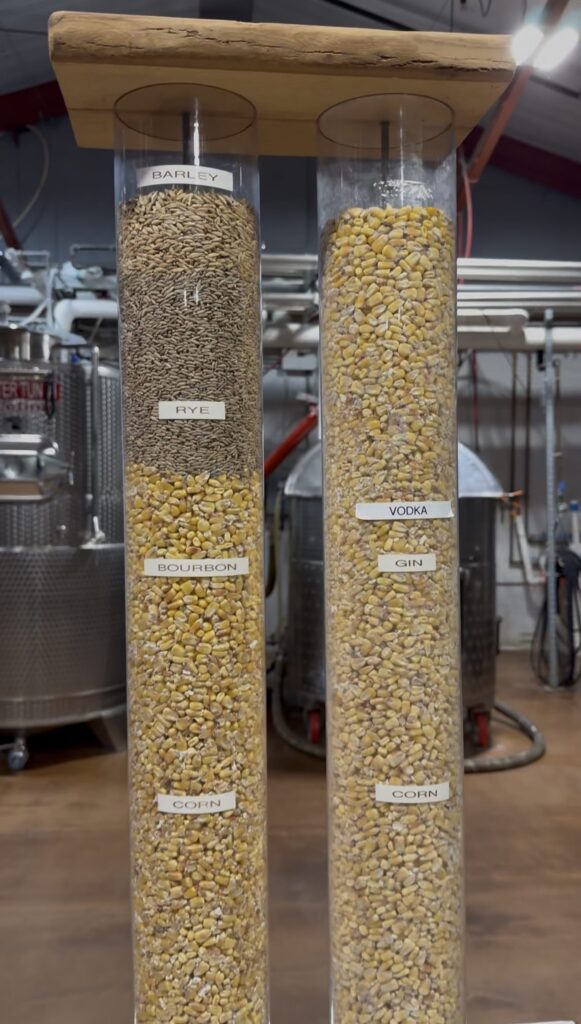
More importantly, the grain is entirely Connecticut-sourced:
- Corn: Pleasantview Farms (Somers, CT)
- Rye: Loque Farm (Woodbury, CT)
- Malted Barley: Thrall Family Farm (Windsor, CT)
The core mashbills remain grounded in structure:
- Bourbon: 70% corn, 25% rye, 5% malted barley
- Rye: 70% rye, 30% malted barley
- American Single Malt: 100% malted barley
Simple on paper. Increasingly expressive in practice.
Quietly Building Depth
One of the more surprising parts of the visit wasn’t the equipment or the expansion.
It was the breadth of the lineup.
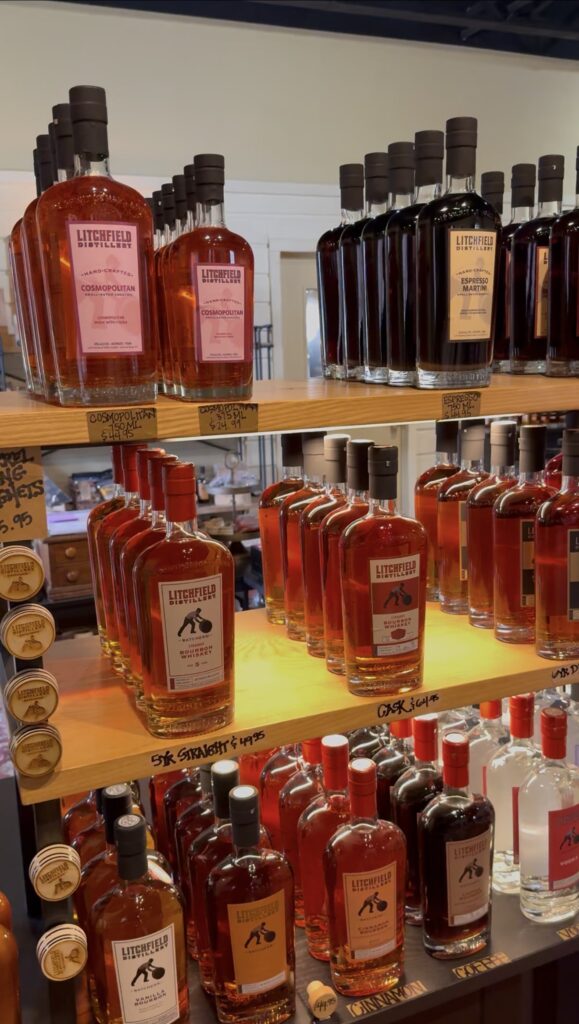
Litchfield produces far more than just a flagship bourbon. The shelves now include multiple finished expressions, cask strength releases, flavored offerings, vodka, gin, agave spirits, and American single malt, all while continuing to age older whiskey in the background.
The current lineup includes:
- Straight Bourbon
- Straight Rye
- Double Barrel Bourbon
- Port Finished Bourbon
- American Single Malt
- Cask Strength Bourbon
- Rum Finished Bourbon
- Sauternes Finished Rye
- Maple, Vanilla, Cinnamon & Coffee Bourbons
- Gin, Vodka & Flavored Vodkas
- Agave Spirits
It’s ambitious without feeling chaotic.
The through-line is still clearly whiskey.
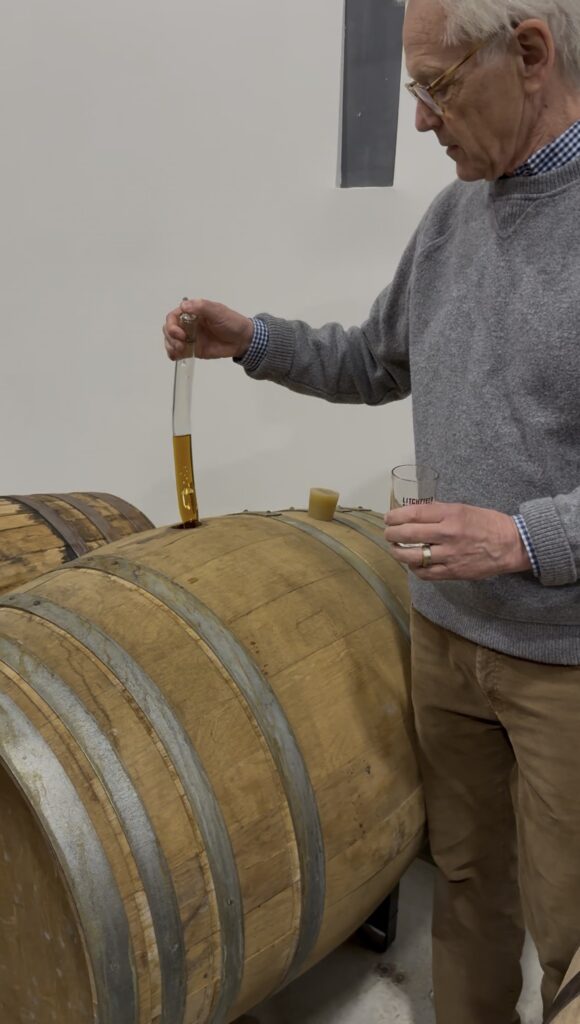
Tasting Through a Few Special Barrels
6 Year Cask Strength Bourbon (~124 Proof)
Classic high-corn bourbon profile done well.
Rich caramel, mature oak, and enough proof to carry texture without overwhelming the palate. This feels like the kind of bottle designed for people who still want intensity without sacrificing balance.
7 Year 100% Corn Whiskey
Unexpectedly restrained.
Sweet, but not syrupy, with a softer profile that showed significantly more structure and balance than the category often gets credit for.
One of the quiet surprises of the tasting and probably all of our favorite.
Look for this one in their upcoming 250th anniverary release.
Sauternes Finished Rye
A younger rye aged roughly three years total, finished in Sauternes casks.
The rye influence leads immediately—heavy dill, herbal spice, and grain-forward character—before shifting into a deeper tannic finish shaped by the wine cask influence.
More angular than sweet.
And probably the most divisive pour of the lineup in a good way.
Rum Cask Finished Bourbon
Still evolving.
The rum influence currently sits more underneath the bourbon than on top of it, offering softer texture and subtle sweetness rather than a fully transformed profile.
A release that feels intentionally patient.
The Story Behind the Logo
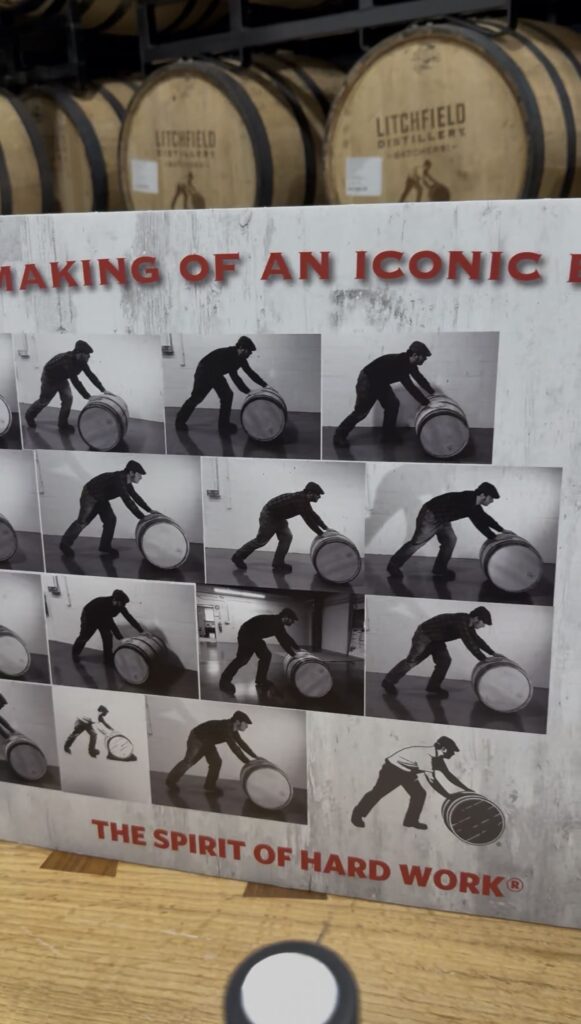
Once the team locked into The Spirit of Hard Work® as its guiding ethos, they set out to design a label that visually captured that idea.
Tony proposed a simple concept: a person rolling a whiskey barrel: an image that immediately communicated effort, labor, and process.
Rather than designing a fictional figure, the team photographed their original head distiller, James McCoy, extensively, taking roughly a hundred photos until they captured the right posture and movement.
From there, Tony and his team transformed that image into the final black-and-white logo that remains on the bottles today.
Simple. Direct. Intentional.
Final Pour
Litchfield Distillery doesn’t feel interested in chasing hype.
It feels interested in building infrastructure.
Local grain. Technical flexibility. Long-term aging. Quiet expansion. A lineup broad enough to experiment, but grounded enough to stay recognizable.
And somewhere inside over 1,800 barrels, the next chapter is already waiting.
If the older whiskey lives up to the foundation currently being built around it, Litchfield may not stay overlooked for very long.
This visit was hosted by the distillery. All thoughts are my own and not influenced by the experience.
Love craft whiskey? Explore the full collection of reviews and distillery visits to discover more small-batch gems and high-proof favorites.
Related Distillery Visits
Explore the farm-to-glass operation in the Agricultural Reserve, reviews of their bourbon and an exclusive rye blending experience with head distiller Kristian Naslund
A visit to Lost Whiskey Club in Virginia — exploring their sourced whiskey program, evolving maturation approach, and a philosophy rooted in community, storytelling, and shared pours.
From the distillery and dining experience to the home glass — the quality sourced and blended whiskies of Open Road Open Road Distilling Co.
Pingback: Litchfield — Cherry Bourbon Review Review | Bourbon Bishop