A behind-the-scenes look at creating The Bourbon Bishop Blend with Barrel King and why four very different whiskies became something far better together.
9/24/2026 UPDATE: The Barrel King x Bourbon Bishop Collaboration Blend No. 1 — The King’s Confessor is officially available. Only 75 bottles were produced, bottled at 124.8 proof, and the blend is available for $150 per bottle while supplies last.
Barrel King x Bourbon Bishop
The King’s Confessor
Collaboration Blend No. 1 · 124.8 Proof · 75 Bottles
GET THE KING’S CONFESSORThis is a collaboration I helped develop with Barrel King, from component selection and tasting through the final blend. I’m proud of where we landed and especially excited about the way the 9-year OZ Tyler bourbon, blackstrap molasses-finished bourbon, Southern Distilling bourbon and tiny amount of port-finished rye come together in the finished whiskey.
I went into my Barrel King blending experience with a pretty good idea of what I wanted to do.
I wanted to blend.
That didn’t mean I wasn’t going to keep an open mind about a single barrel. If one of the samples knocked me over, I’d happily abandon the plan and take the best whiskey in the room. But when I was given the opportunity to select six samples, I deliberately chose whiskey that could serve a purpose in a blend if none of them proved compelling enough to stand alone.
As it turned out, that was exactly the right approach.
I didn’t leave with a single barrel.
I left with the beginnings of something that became my first official, sellable blend.
See my articles on blending a bourbon with Open Road and a rye with Song Dog to see previous experiences.
Six Whiskies and a Blank Canvas
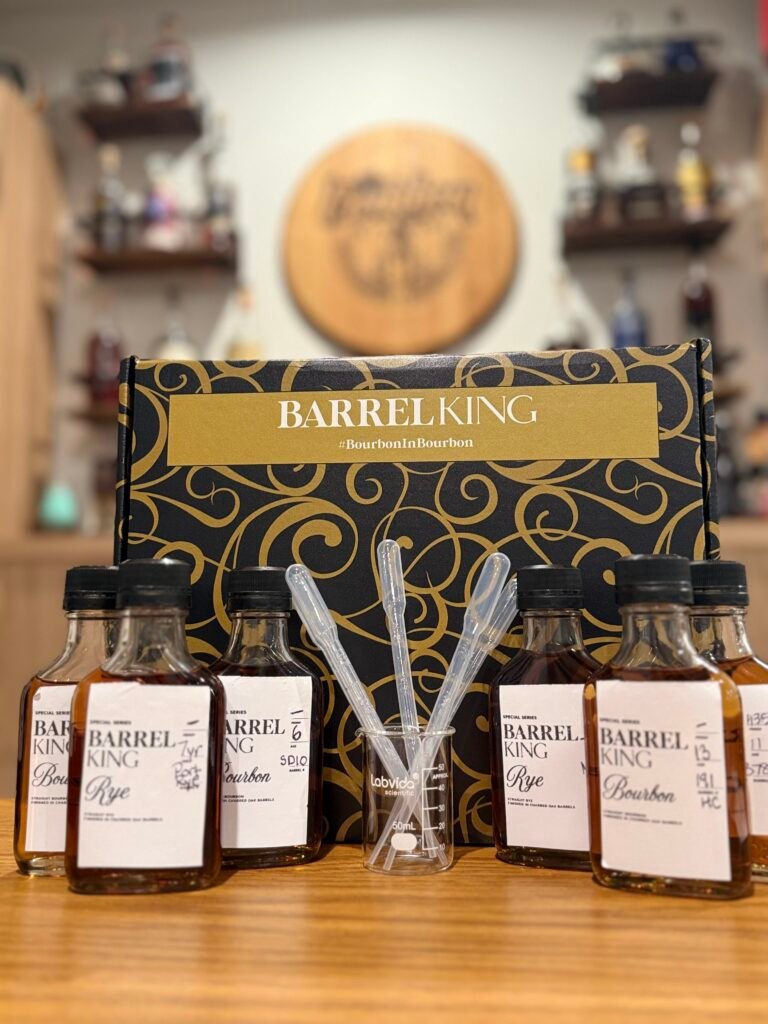
The tasting brought together six very different samples:
9-year OZ Tyler (Green River) Bourbon
70% Corn │ 21% Rye │ 9% Malted Barley
127 Proof
8-year port-finished MGP rye
95% Rye │ 5% Malted Barley
117.7 Proof
8-year blackstrap molasses finished MGP rye
95% Rye │ 5% Malted Barley
118.2 Proof
11-year high-rye MGP bourbon
60% Corn │ 36% Rye │ 4% Malted Barley
113.5 Proof
13-year high-corn (MGP) bourbon
99% Corn │ 1% Malted Barley
107.3 Proof
5-year Southern Distilling bourbon
60% Corn │ 36% Rye│ 4% Malted Barley
137 Proof
There was plenty of good whiskey on the table.
The 9-year OZ Tyler immediately showed the cinnamon and high-rye spice I love from that profile, with enough oak and age to make it a particularly compelling blending component.
The 13-year high-corn bourbon was floral and interesting, but I’ve had enough high-corn whiskey to know that age alone doesn’t necessarily make it work as a single barrel. It was another potential component rather than the finished product.
The 11-year high-rye MGP bourbon was exactly what you want from MGP at that age: custard, vanilla, creamy caramel, dark brown sugar and a little nuttiness. Delicious, but it didn’t quite have the distinction I was looking for in a standalone selection.
The port-finished rye had some beautiful red-fruit potential, but there was also a slightly off note that made me hesitant to use it on its own.
Then there was the blackstrap molasses rye. That one was different.
It was huge, sweet and viscous, with so much molasses character that it nearly covered up the rye beneath it. My first note was essentially gingerbread. Cinnamon and baking spice showed up on the finish, but the dominant impression was homemade gingerbread and molasses cookies.
The Southern Distilling bourbon was my favorite of the straight whiskey samples. At a very high mid-130s proof, it packed a serious punch, but underneath that proof was deep sweetness, dark cola and tannic notes that gave it plenty of character.
Still, I didn’t think any of the six was quite there as a single barrel. So we started blending.
Good Whiskey Doesn’t Always Make Good Whiskey
This is where the experience got really interesting.
I initially wanted Southern Distilling to be the base. We tried it at 50% with the 13-year high-corn bourbon, then at 50% with the 11-year MGP. Neither combination worked. In fact, the MGP took on an almost metallic quality once it was blended with the Southern Distilling.
It was a good reminder that blending isn’t simply a matter of taking two good whiskies and assuming they’ll become an even better whiskey. The interaction between components can completely change what you perceive in the glass. So we scrapped it and started over.
The Green River became the new foundation.
That made sense to me. Nine years had given it plenty of character, and that high-rye cinnamon and baking-spice profile gave us a strong base with enough sweetness and oak to support something more experimental. Then I added the blackstrap molasses rye.
The First “Oh, This Is Good” Moment
We went 50/50. And suddenly that gingerbread character exploded.
Clove. Apple pie. Gingerbread cookies. Molasses cookies.
It was fantastic.
It was also probably too sweet for the whiskey drinker who doesn’t share my particular sweet tooth. So we started looking for balance.
I still wanted Southern Distilling in the blend. I liked what it brought to the table, particularly those darker cola and tannic notes. We settled on a 40/40 split between the Green River and blackstrap molasses rye, then added 20% Southern Distilling. That was the first blend I really couldn’t stop drinking.
I blended it. I drank it. Then I blended it again because I wanted to find the hole in it. I couldn’t.
At that point, we probably could have called it finished. Instead, I made one more suggestion.
“Suddenly there was red fruit. Apple pie. Cherry pie. Almost a little cherries jubilee.“
Just One More Layer
The blend had plenty of depth. It had spice, sweetness, oak and those dark molasses notes. What it didn’t have was much fruit.
I was thinking about adding one more layer of complexity when Matt Bunch suggested trying just a small amount of the port-finished rye. That was exactly what I had been thinking.
So we added a little.
Not enough to turn the whiskey into a port-finished rye. Just enough to see what it could do. And that tiny addition changed the blend again.
Suddenly there was red fruit. Apple pie. Cherry pie. Almost a little cherries jubilee.
The rye spice from the molasses-finished component also became more apparent once it had the Green River underneath it. What had tasted like a very sweet, two-note whiskey on its own suddenly had more dimension.
That was it. We had our blend.
The People Around the Table
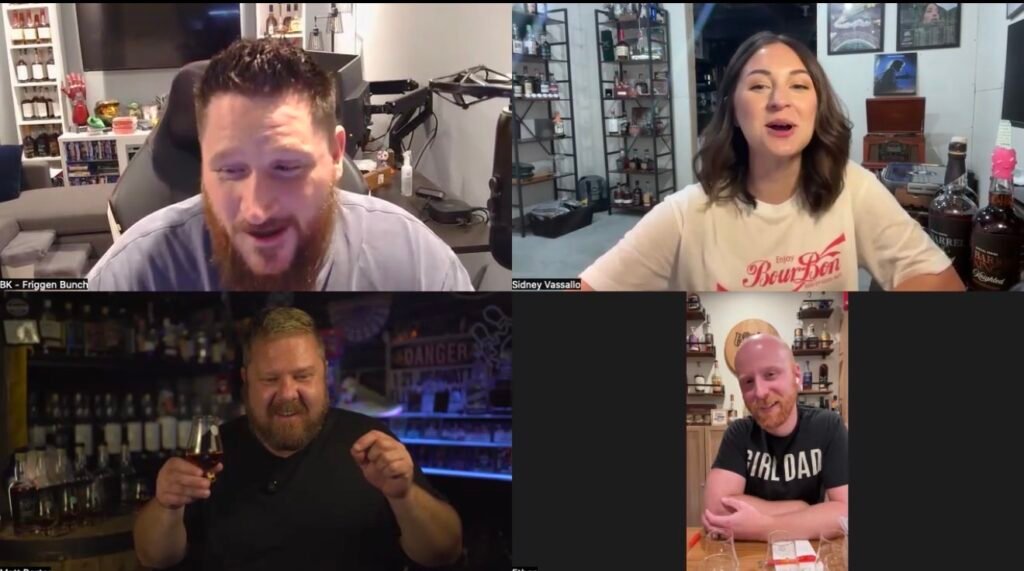
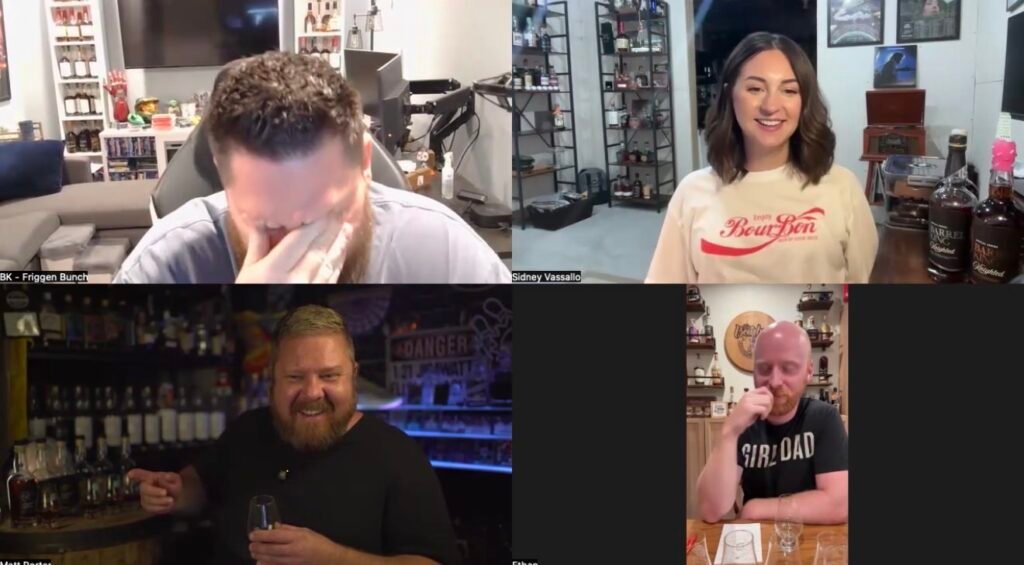
I did this tasting with Sidney Vassallo, Matt Bunch and Matt Porter.
Sidney, Barrel King’s Private Pick Experience Manager, was kind, hospitable and incredibly knowledgeable throughout the process. She did a fantastic job keeping the experience moving while giving me room to make the decisions.
Bunch was the artist of the group. He knows whiskey, but more importantly, he understands how individual components can be used to build something greater than any one of them. He wasn’t afraid to experiment when the obvious path wasn’t working.
And then there was Matt Porter, whose “ADHD Whiskey” personality is pretty much exactly what you’d expect live: energetic, funny and constantly keeping you on your toes.
But what I appreciated most was how patient he was.
He had already tasted all six samples and had a pretty good idea of where he thought things could go. But he didn’t simply hand me the recipe. He let me lead.
I’d ask what he thought, and he’d give me a perspective without taking the decision away from me. That’s exactly what I wanted from the experience. I’m comfortable balancing a lot of different opinions and information when I’m working through a barrel pick or blend, and Matt was an excellent sounding board.
At one point, he basically looked at me and said that he had blended the Green River with the MGP and thought that was where we were going to end up.
Instead, we went somewhere completely different. And he loved it.
That might have been my favorite part of the whole experience.
What We Ended Up With
The final blend went somewhere I didn’t expect when I walked into the room.
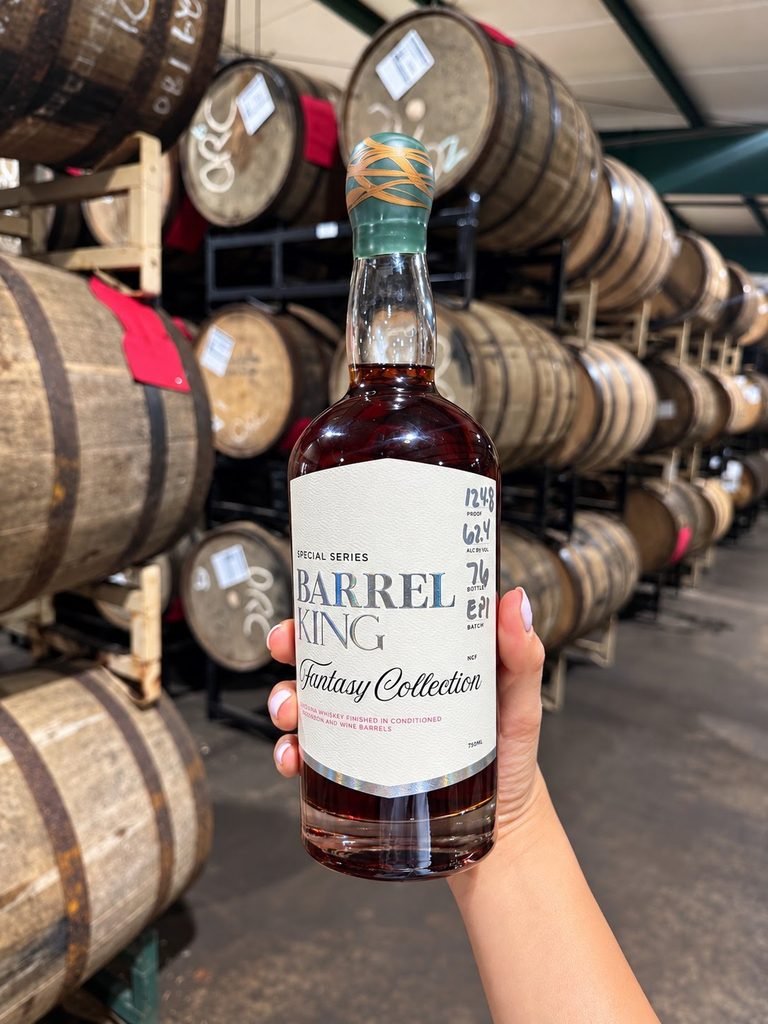
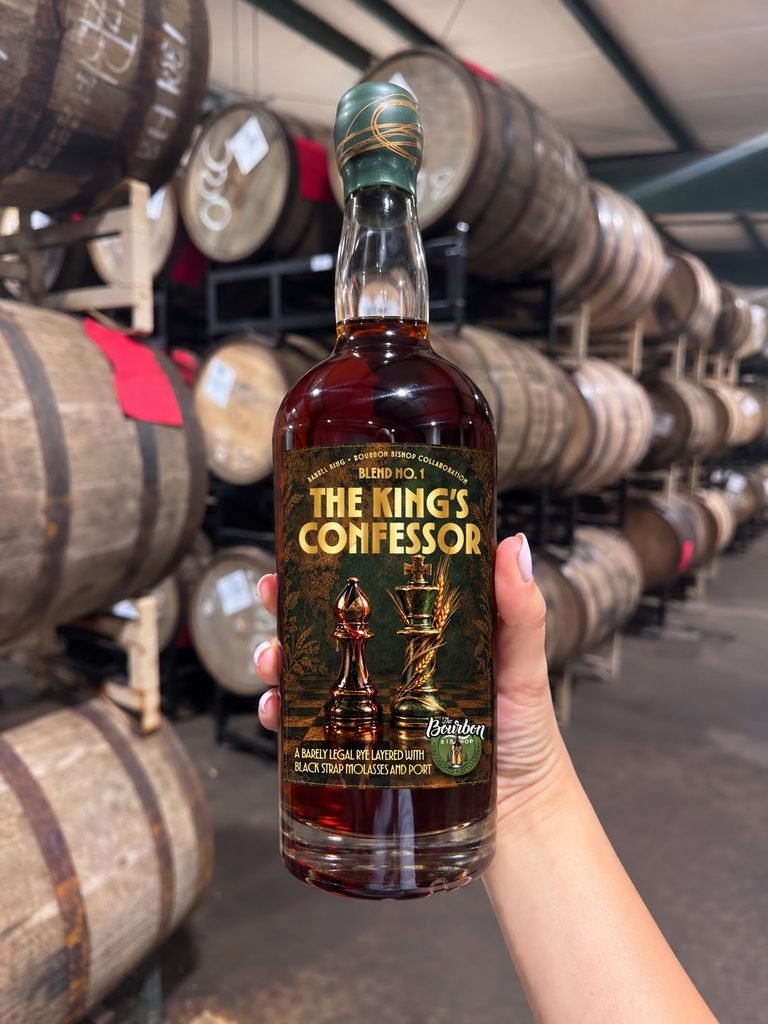
Barrel King x Bourbon Bishop Collaboration Blend No. 1 — The King’s Confessor
124.8 proof · 75 bottles
The final recipe:
- 40% 8-year 95/5 bourbon finished in blackstrap molasses barrels
- 40% 9-year OZ Tyler 70/21/9 bourbon
- 20% 5-year Southern Distilling bourbon
- Less than 1% 8-year 95/5 rye finished in port
That works out to approximately 37% corn, 56% rye and 6% malted barley across the blend.
We called it The King’s Confessor because, well, this whiskey has a few things to confess.
A barely legal rye layered with blackstrap molasses & port.
The OZ Tyler bourbon gives the blend its backbone: nine years old, rich and substantial, with enough character to stand up to everything else happening in the glass.
The blackstrap molasses-finished bourbon brings darker sweetness and depth. The Southern Distilling bourbon adds a distinctive high-proof, craft-driven character. And then there’s that tiny amount of port-finished rye.
Less than one percent.
It sounds insignificant on paper. In the glass, it isn’t.
The result is a big, spicy, layered whiskey with dark sweetness, red fruit and plenty of rye character, without any one of those elements completely taking over.
Tasting Notes
Nose: Dark maple syrup, apricot jam, strawberry ice cream, vanilla cream and smoked cinnamon.
Palate: Caramel and dark sweetness lead into masala chai, cinnamon, clove and pronounced rye spice. The 124.8 proof brings plenty of heat, but there’s enough sweetness and fruit to keep the whiskey layered.
Finish: Lingering rye spice gives way to darker fruit, molasses, strawberry and fig. The tiny amount of port-finished rye adds another layer of fruit without turning the whiskey overtly wine-like.
Overall: Big, spicy and unusually layered, with the blackstrap molasses and port adding unexpected depth to the high-rye bourbon foundation.
Family Feel
The first thing I wrote down after the tasting wasn’t a tasting note.
Family feel.
That’s what the whole experience felt like.
Four people who genuinely enjoy whiskey sitting around a table, talking through what worked, what didn’t, what might work better and what crazy idea we should try next.
There was expertise in the room, but there wasn’t a need to prove who knew the most. That made it easy to experiment. And blending really is an experiment.
You can have a whiskey you love on its own and discover that it completely falls apart when you add it to something else. You can have a component that seems too sweet, too weird or too unusual and discover that five or ten percent of it is exactly what the final whiskey needed. That’s what happened here.
“That was it. We had our blend.“
Now We Wait
The blend we’ve created will be married by Barrel King for at least a couple of weeks before I receive a final sample. Then comes the part I’m both excited and slightly nervous about: I have to approve it.
The whiskey we created at the table tasted fantastic. But blending whiskey is a process, and the final married whiskey needs to deliver what we found in those individual glasses.
If it does, The Bourbon Bishop Blend will move into the next stage: final tasting notes, bottle art, wax and eventually a release. And somewhere in there, we’re going to have to figure out what to call this thing.
I’m still working on that part. If you have a name in mind, I’d genuinely love to hear it. Because the whiskey itself already has a story.
Now it needs a name.
“I completely vouch for what’s in the bottle.“
A Note on Value
I’ll be upfront about the $150 price tag.
That’s a lot of money for a bottle of whiskey, and value matters to me. I don’t want to tell you a bottle is worth its price simply because I had a hand in making it.
I’m also not going to pretend I’m unbiased here. I helped build The King’s Confessor.
But I can tell you what makes me excited about this particular bottle.
You’ve got an excellent 9-year OZ Tyler bourbon as the foundation, a distinctive 8-year bourbon finished in blackstrap molasses barrels, a special high-proof craft component from Southern Distilling, and a small amount of 8-year port-finished rye that adds another dimension to the finished blend.
Those components are interesting individually. What I like most is what happens when they come together.
So yes, I’m biased.
But having tasted these components throughout the process and helped make the decisions that brought us to this final blend, I completely vouch for what’s in the bottle.
Barrel King x Bourbon Bishop
The King’s Confessor
Collaboration Blend No. 1 · 124.8 Proof · 75 Bottles
GET THE KING’S CONFESSORRelated Articles

Most whiskey brands tell stories about themselves. The best brands make the customer the hero. Here’s why that changes everything.
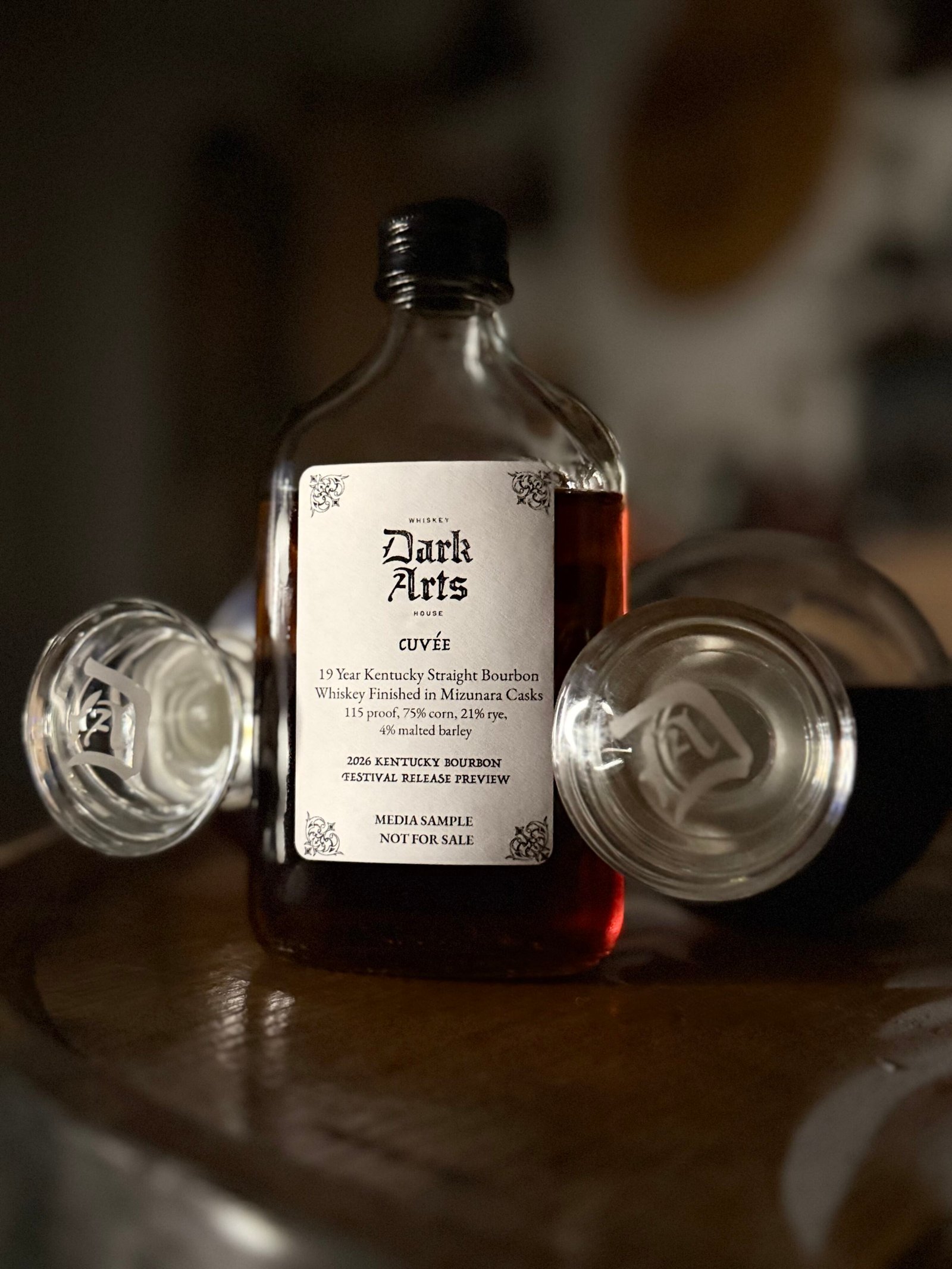
Dark Arts’ 19-year Mizunara-finished Kentucky bourbon combines profound oak, dark sweetness, tropical notes and spice at 115 proof.
Confused by whiskey terms like small batch, bottled in bond, NDP, cask strength, or mash bill? Here’s a plain-English whiskey dictionary that defines common whiskey words and actually makes sense.
Bardstown Bourbon Company’s Lochs of Jura blends 10–12-year-old bourbon and rye before a 32-month Isle of Jura cask finish. Here’s how it drinks.
Discover the best budget whiskey releases of 2026 so far. From Blue Bolt 107 to Keeper’s Heart Pot Still Whiskey and Wheel Horse Rum Finished, these five bottles under $50 offer outstanding flavor, value, and character.
Small Batch has no legal definition, but a growing number of independent bottlers and craft distilleries are redefining the term through transparency, intentional blending, and truly limited barrel counts.