
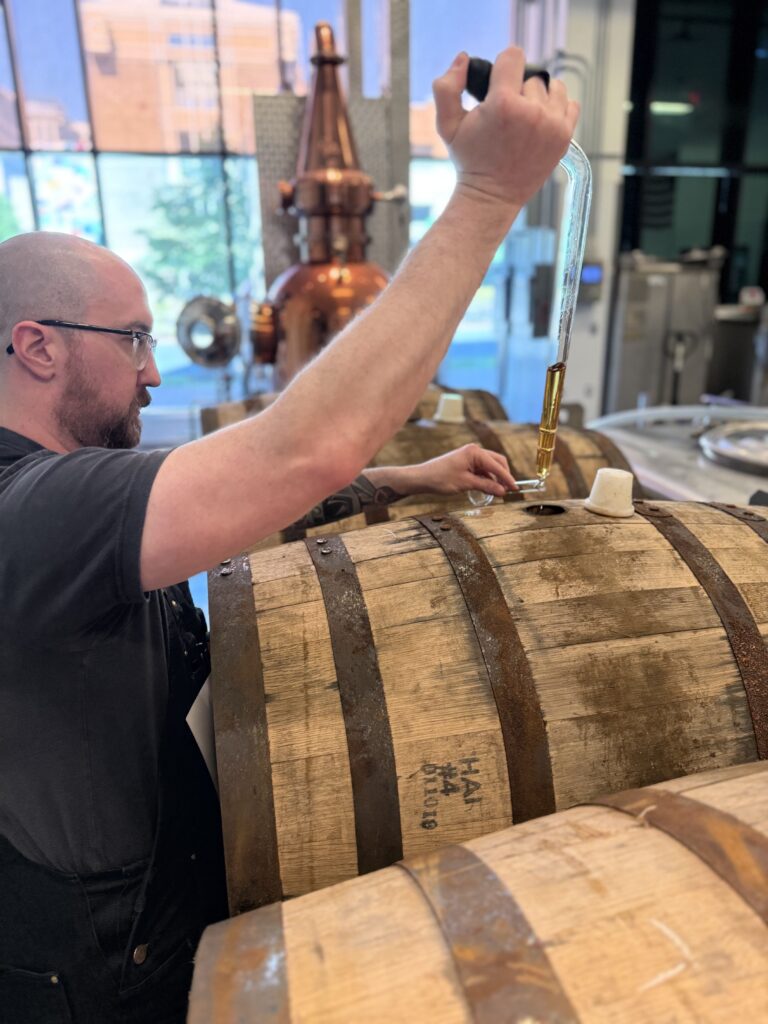
Inside a hands-on blending session with Michael McElroy and the Open Road team — where sourced whiskey becomes something distinctly their own.
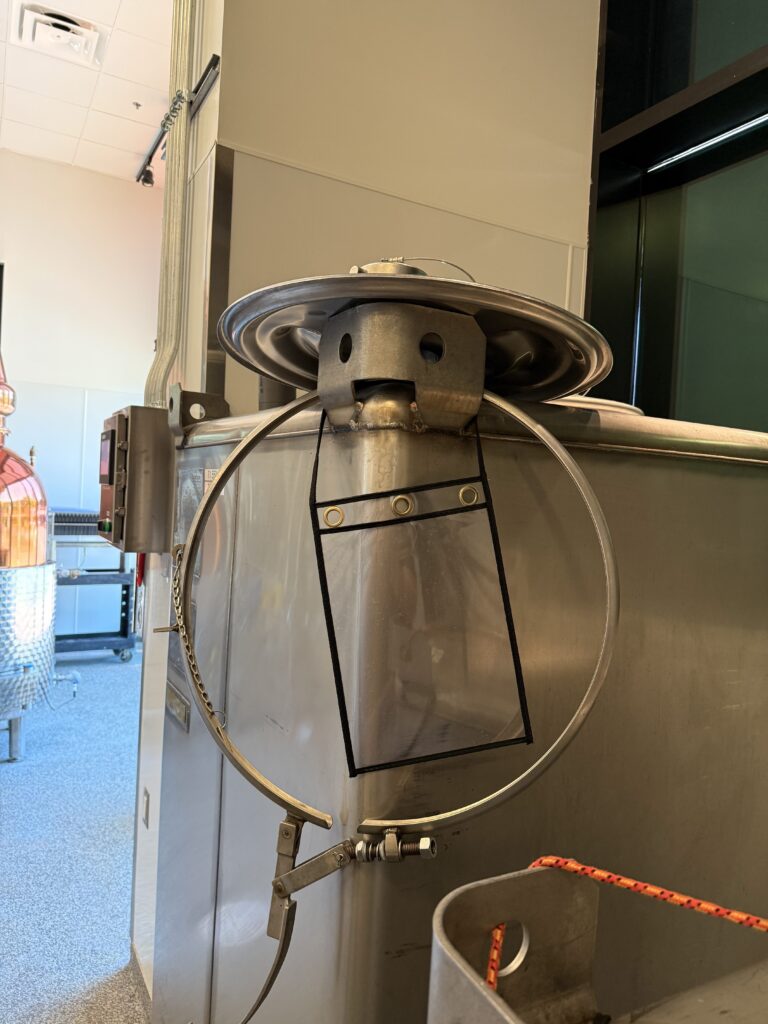
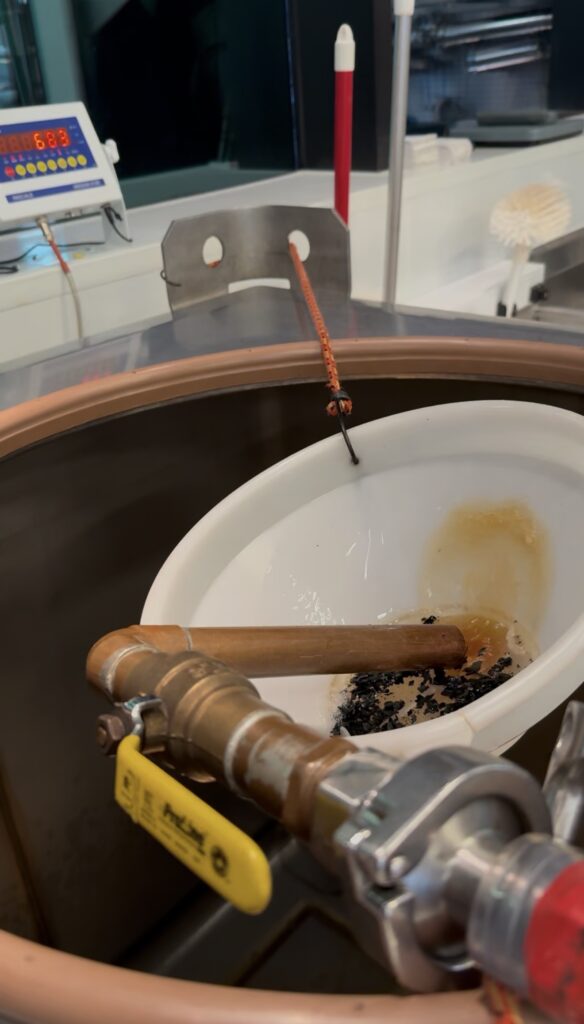
The tank had to go on the scale first.
Not because it was glamorous.
Because once it was full, it would weigh over 2,000 pounds.
And at Open Road Distilling, there’s no forklift quietly gliding barrels into place. No sprawling Kentucky rickhouse built around efficiency. Everything happens inside a working restaurant and entertainment complex where space is constantly borrowed, adapted, and negotiated in real time.
Four hundred pounds is manageable up a ramp.
Two thousand is not.
That’s how blending day started.
Not with tasting notes.
Not with romance.
With logistics.
The Reality of “Sourced Whiskey”
There’s a persistent idea in whiskey culture that sourcing and blending are somehow the “easy way” — as though buying mature barrels replaces the labor, creativity, or technical skill involved in making whiskey.
Spend one afternoon inside Open Road’s distilling room and that illusion disappears quickly.
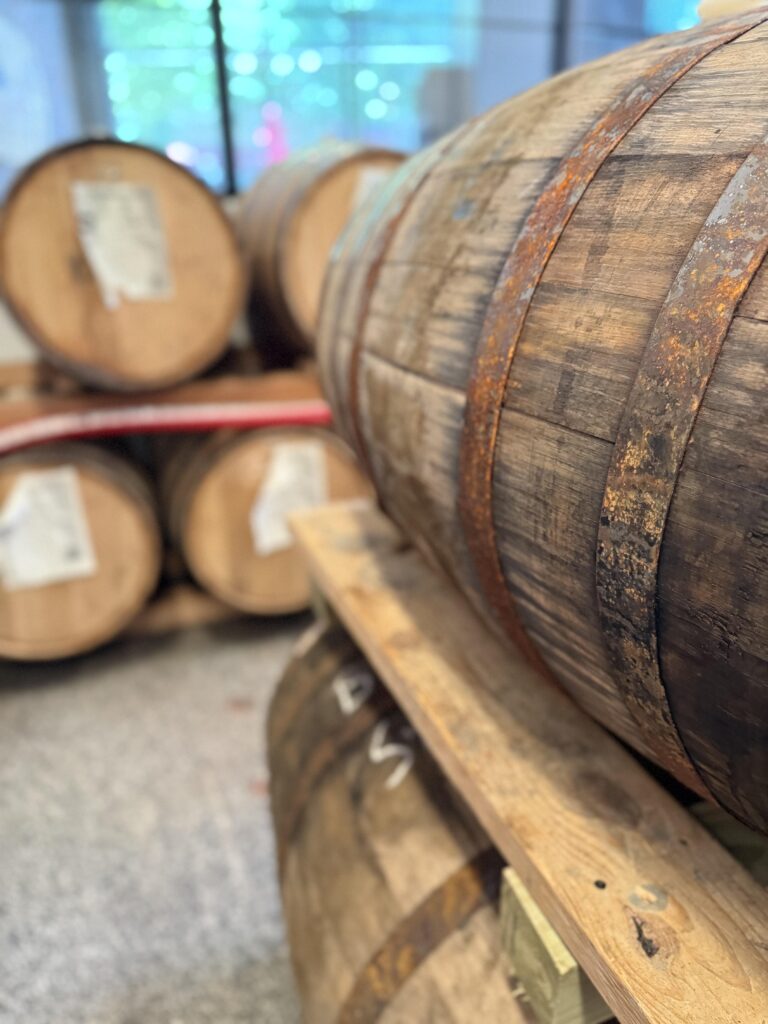
At one point during the day, distilling assistant Kirby was literally running between deliveries, coordinating with a barrel driver outside while maneuvering pallets through back hallways because another truck had blocked access to the garage. Full barrels were hand-moved through the restaurant itself before finally reaching the distillation space.
The setup forces creativity.
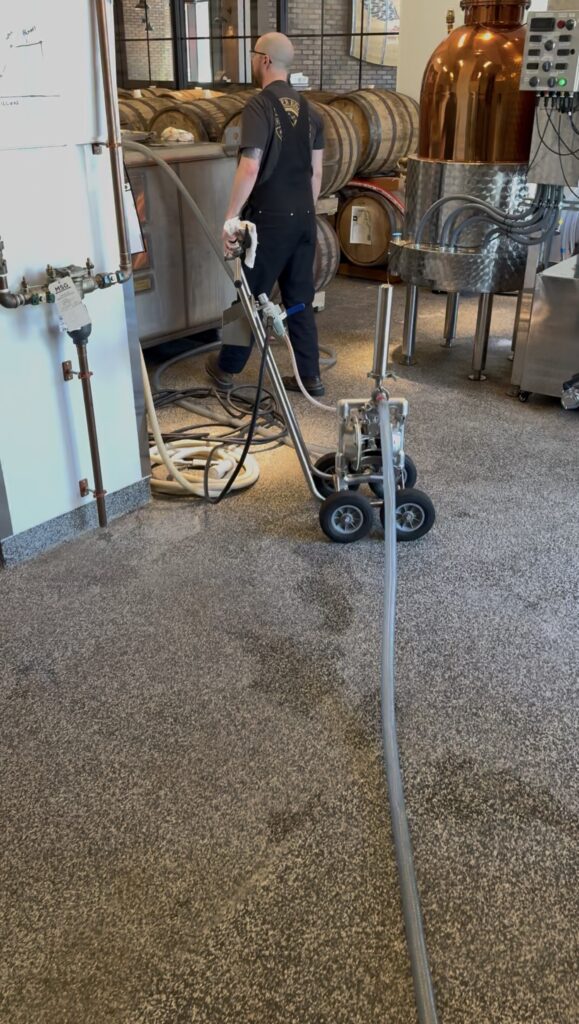
Metal caging wrapped around shrink heaters to improve efficiency.
Long hose runs stretching across the room because there isn’t enough space for a true barrel dump station.
Barrels drained wherever they physically can be drained.
Everything feels adapted in real time by people who care more about making it work than making it look elegant.
And somehow, that almost makes the whiskey more impressive.
Building the Blend
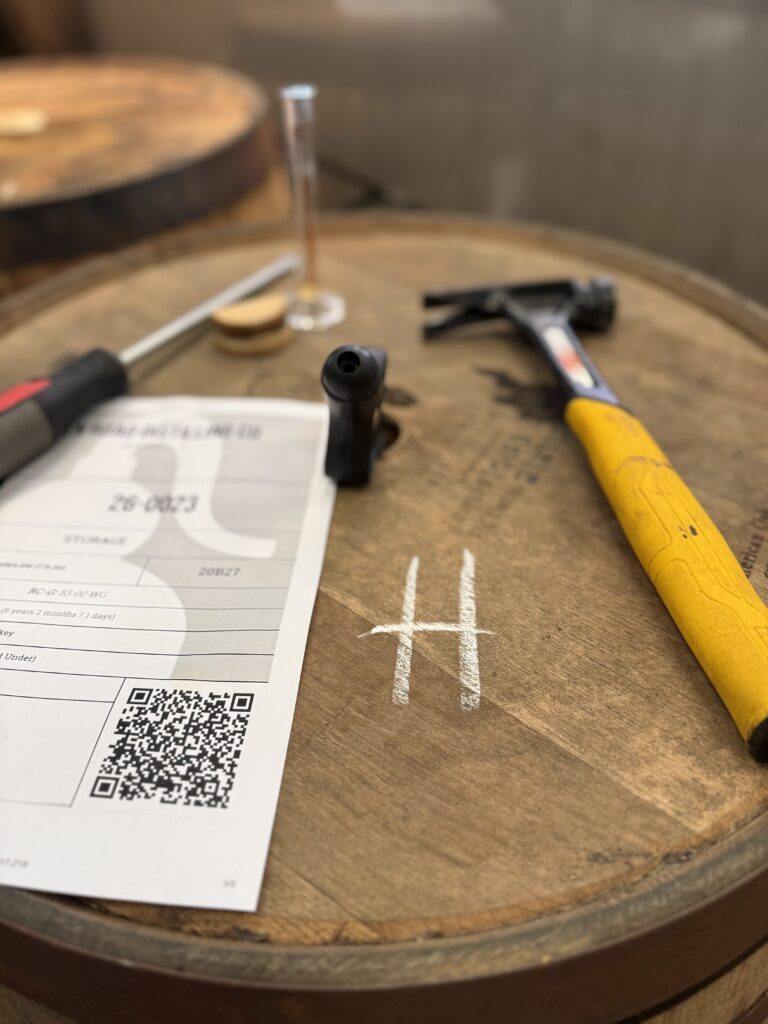
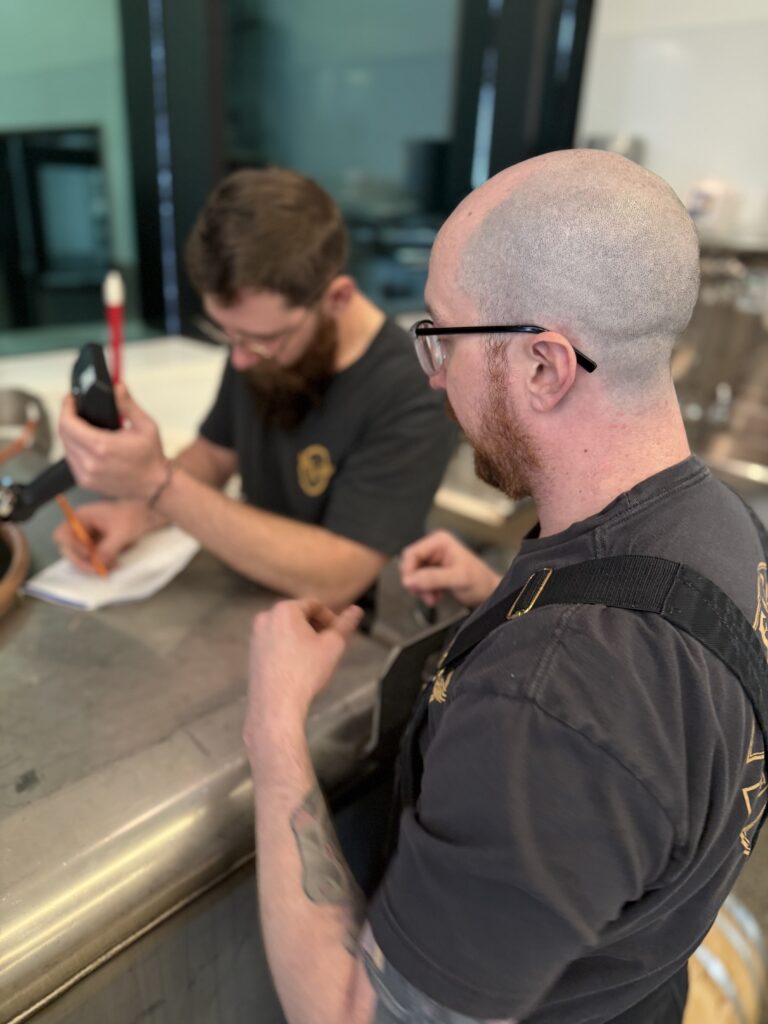
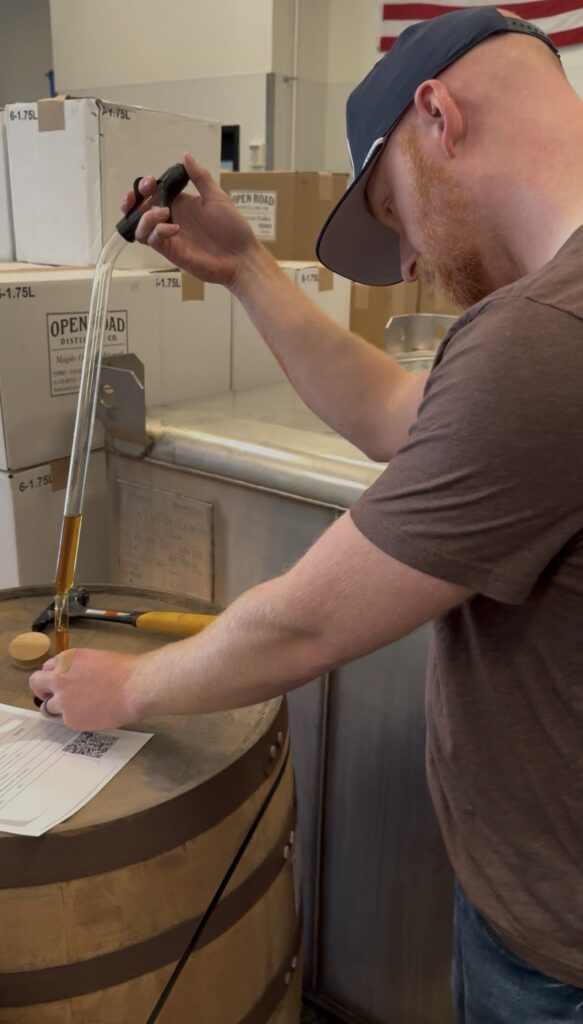
Head distiller and blender Michael McElroy typically starts with a six-barrel bench blend.
This round centered around:
- Four 7-year Indiana bourbon barrels
- Two 6-year Texas bourbon barrels
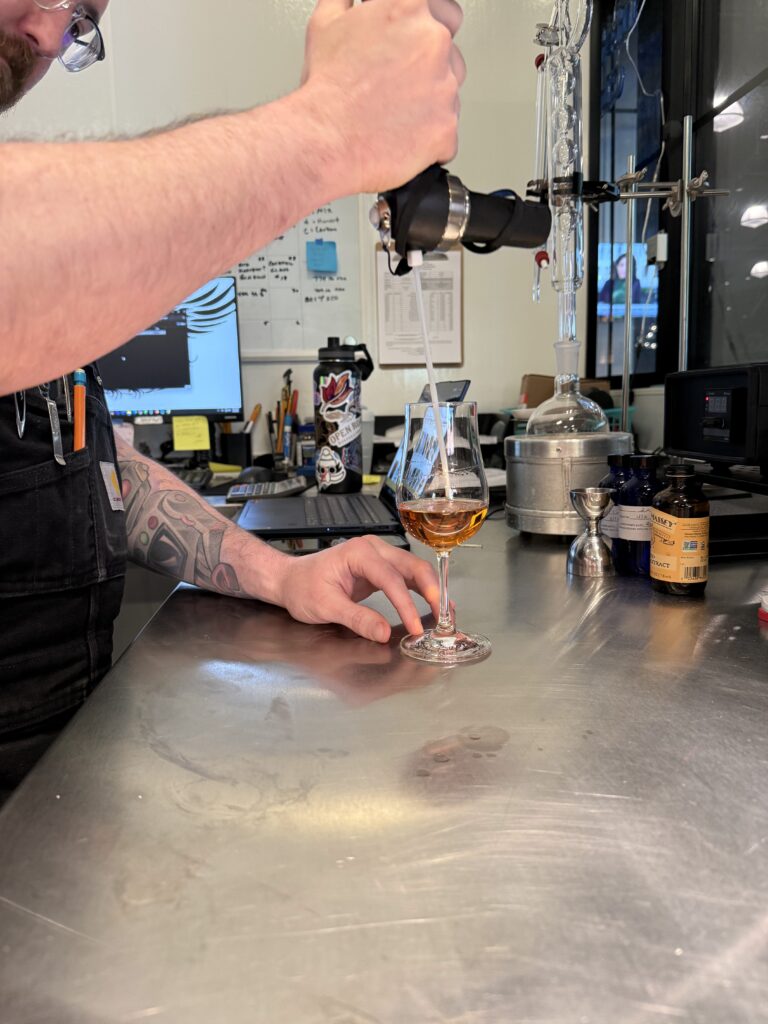
Ten milliliters from each.
Stirred together.
Then left alone.
That last part matters more than most people realize.
The blend changes constantly.
Freshly mixed, the whiskey exploded with bright red berry notes — raspberry and strawberry leaning, vivid and almost sharp. After resting under cover for five to ten minutes, it deepened considerably, becoming darker and more condensed. Later, once combined in the larger tank and allowed additional air exposure, the profile shifted again toward something more traditionally bourbon-driven: baking spice, darker sugars, richer oak.
It was startling how dramatically the whiskey evolved every single time it sat.
“Bottle shock” became part of the conversation too — the phenomenon where freshly bottled whiskey can temporarily taste disjointed before settling back together days later. Michael recommends waiting nearly a week before properly evaluating a newly bottled batch.
Six days.
Sometimes longer.
Patience is part of the process.
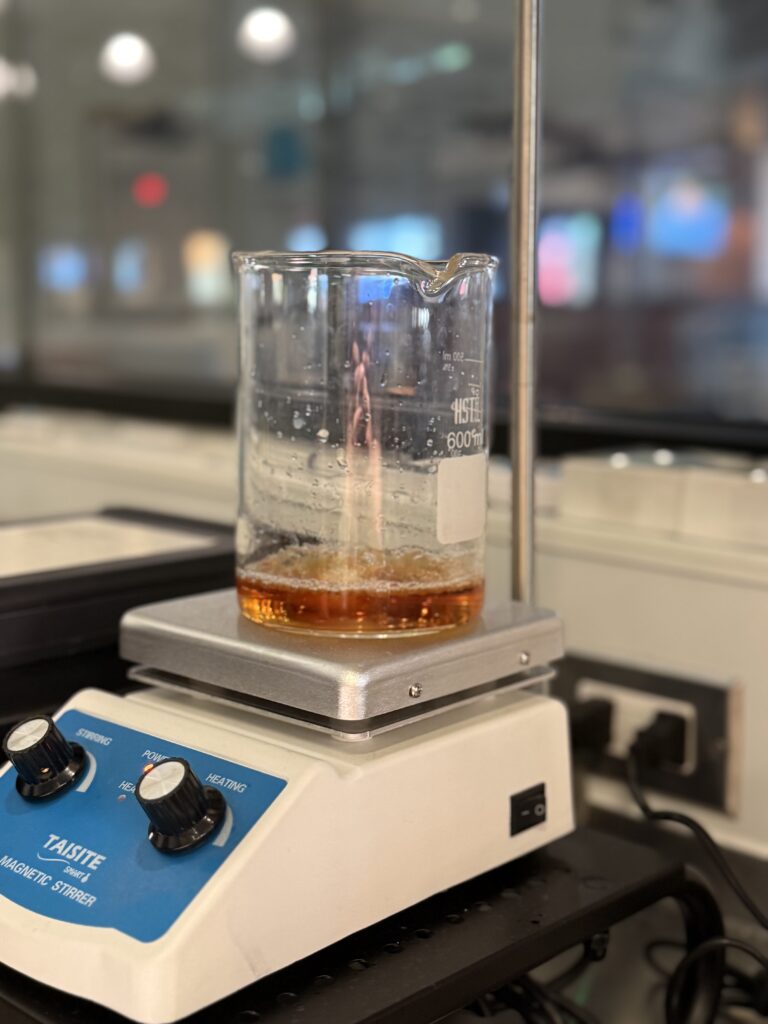
“Everything happens inside a working restaurant and entertainment complex where space is constantly borrowed, adapted, and negotiated in real time.”
The Bourbon Coupes
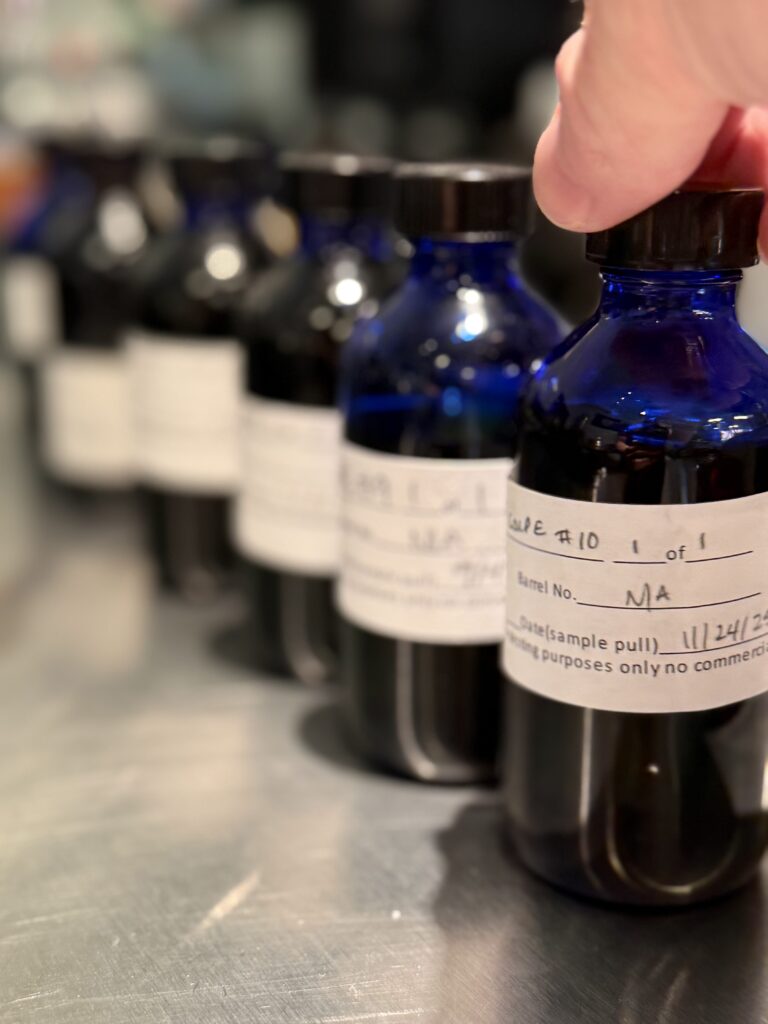
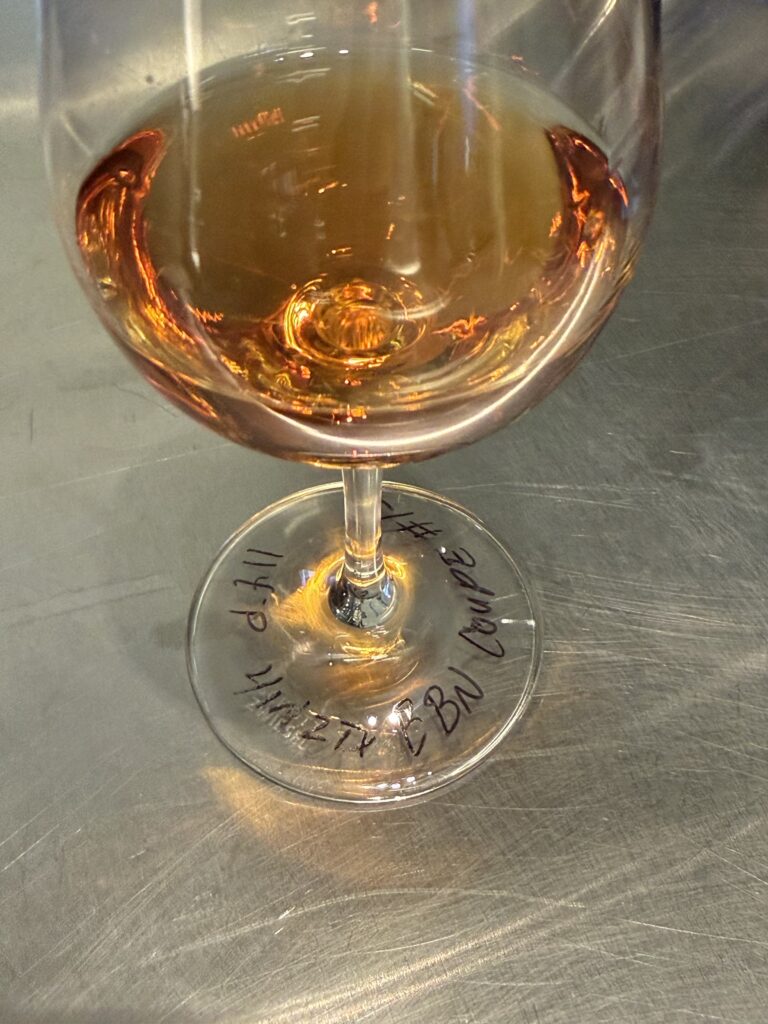
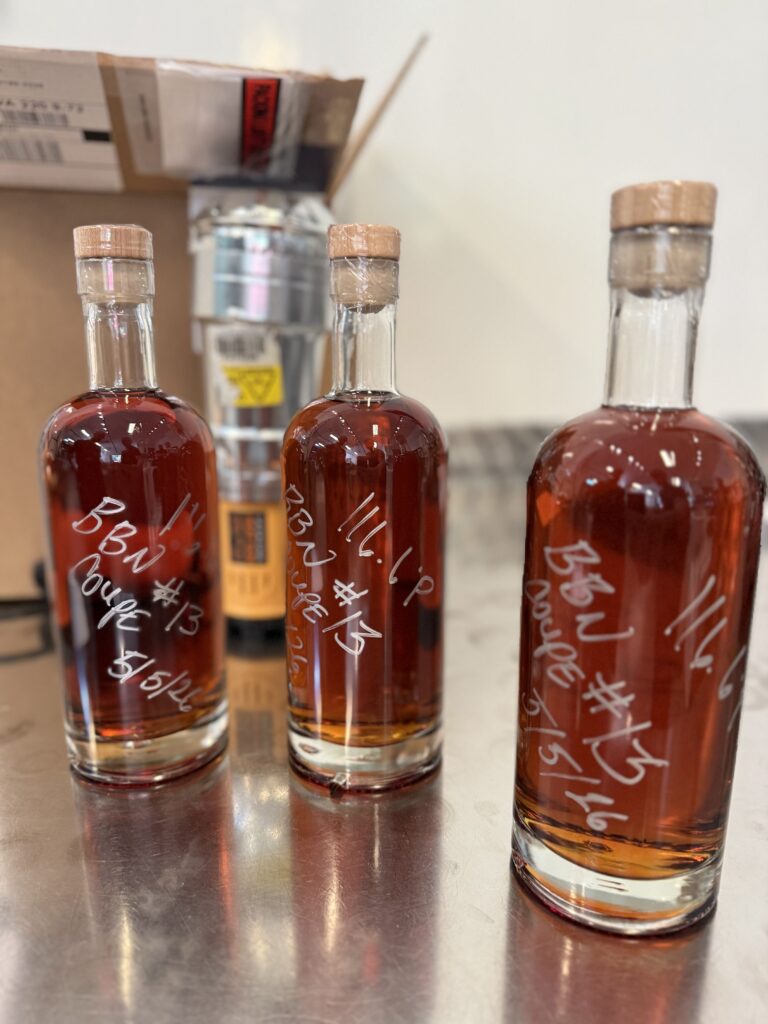
Before proofing the final blend down, we tasted through what Michael calls the “Bourbon Coupes” — snapshots of prior blend iterations preserved at higher proof before dilution.
Each one carried a distinct identity.
Coupe #1 leaned funkier and nuttier.
#3 immediately showed more Tennessee character (briefly sourced TN)
#7 found a beautiful spice balance.
#8 layered mint, dark fruit, and polished oak.
#9 felt the most complete overall.
#10 ramped up into bold cinnamon heat.
None were bad.
None tasted interchangeable.
And that’s the thing about blending that’s difficult to appreciate until you watch it happen in person: tiny movements matter. A little more Texas whiskey shifts the spice structure entirely. A touch more Indiana bourbon changes sweetness, oak balance, or texture.
The whiskey becomes less about single barrels and more about architecture.
If you’re curious about a deeper dive on one of the older Bourbon Coupes, you can read my full review on Coupe #6 here.
Slow Proofing
The final blend wasn’t rushed.
Open Road slow proofs over roughly two weeks:
- Seven days resting around 103.3 proof
- Another seven days around 91 proof
- Final adjustment to 90.1 proof
- Polishing filtration
- Additional marrying time before release
It’s meticulous for a reason.
Rapid proofing can flatten whiskey. Slow reduction gives the blend time to integrate — allowing oils, spice compounds, sweetness, and oak to settle into something more cohesive rather than feeling segmented.
Future batches may begin incorporating more Tennessee whiskey as well, according to the team, adding another variable into an already evolving process.
The Music Matters Too
One of my favorite details from the day had nothing to do with whiskey.
Blending days get bluegrass.
Country.
Something calmer.
The harder, louder music — hip-hop, metal, hard rock — gets reserved for the grittier production days.
It sounds small until you spend time around people who genuinely build their lives around hospitality and sensory experience. Then it makes complete sense.
Environment shapes palate.
Mood shapes creativity.
Energy shapes decisions.
And Open Road feels deeply shaped by the personality of Michael himself — someone whose service-industry background influences nearly everything about the operation. The whiskey isn’t approached like a laboratory exercise alone. It’s approached like hospitality.
How will this drink?
How will it feel?
How will people experience it together?
That perspective shows up constantly.
Mentorship and Influence
Michael also spoke about the influence of mentor Brendon Wheatley, whose background stretches through French distilling traditions, Pernod Ricard, Buffalo Trace Distillery, Aviation Gin, and St. Augustine Distillery.
You can feel traces of that influence in the way Open Road approaches balance and texture rather than simply chasing intensity.
The blending philosophy isn’t about overpowering the palate.
It’s about constructing something complete.
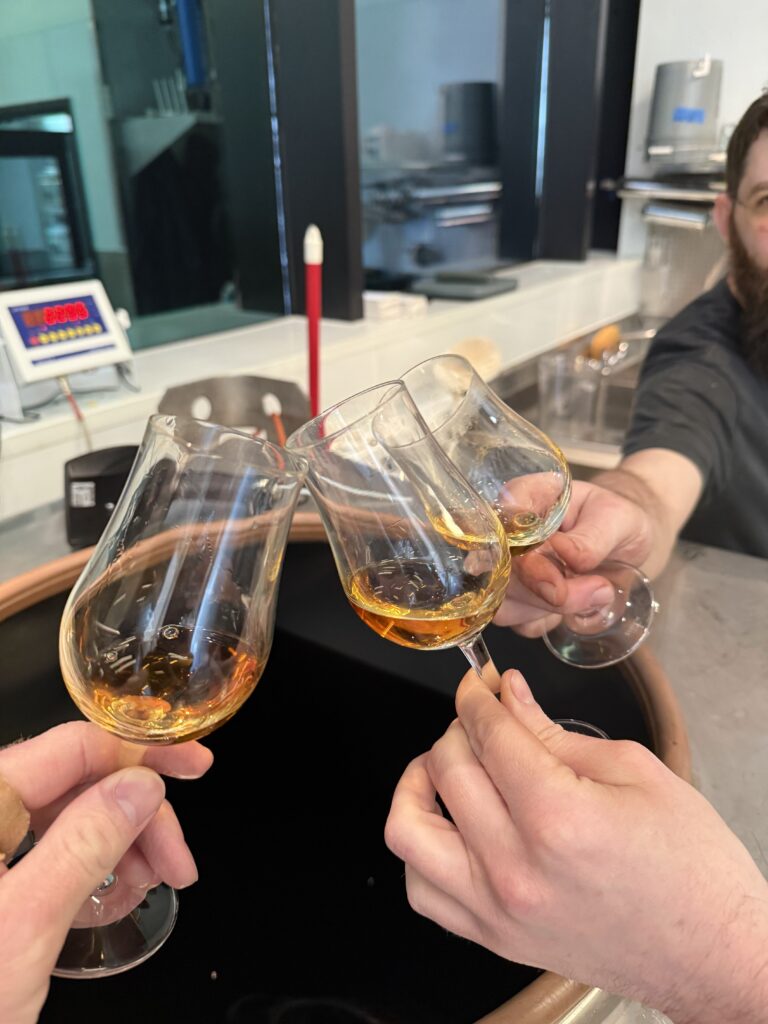
Tasting the Evolution
What struck me most wasn’t any individual sample.
It was watching the whiskey evolve over time.
Freshly blended:
Bright berries. Dense fruit. Sharp energy.
Five to ten minutes later:
Darker honey. Maple. Brioche. Condensed sweetness.
Later in the tank:
More traditional bourbon structure. Oak integration. Expanding baking spice.
And even then, everyone in the room acknowledged the whiskey still wasn’t finished becoming itself.
What would it taste like in a week?
Twenty-eight days?
Three months?
Blending is strange that way. You’re never just tasting the whiskey. You’re tasting a moment in the whiskey’s life.
The Work Behind the Bottle
Watching Open Road operate up close continues to challenge the lazy assumptions people often make about sourced whiskey.
Yes — they buy barrels.
But what happens afterward is physical.
Technical.
Creative.
Sometimes exhausting.
There’s sweat in these blends.
Improvisation.
Problem-solving.
And most importantly, intention.
You leave appreciating that blending isn’t simply selecting good whiskey. It’s understanding how whiskey changes — with oxygen, with water, with time, with temperature, with proof, and with other barrels around it.
That’s craftsmanship too.
Just a different kind.
About Open Road Distilling Co.
Open Road Distilling Company is a distillery, restaurant, cocktail bar, and entertainment venue located in Reston Town Center, Virginia.
Led by head distiller and blender Michael McElroy, the program focuses on approachable house blends alongside more ambitious Reserve Series releases built for sipping neat. Their whiskey program combines sourced barrels, blending experimentation, slow proofing techniques, and a hospitality-first mindset shaped by years in the restaurant industry.
The result is whiskey designed not just to impress enthusiasts, but to genuinely be enjoyed.
Related Articles
Dark, dense, and unexpectedly expressive — where MGP takes a left turn.
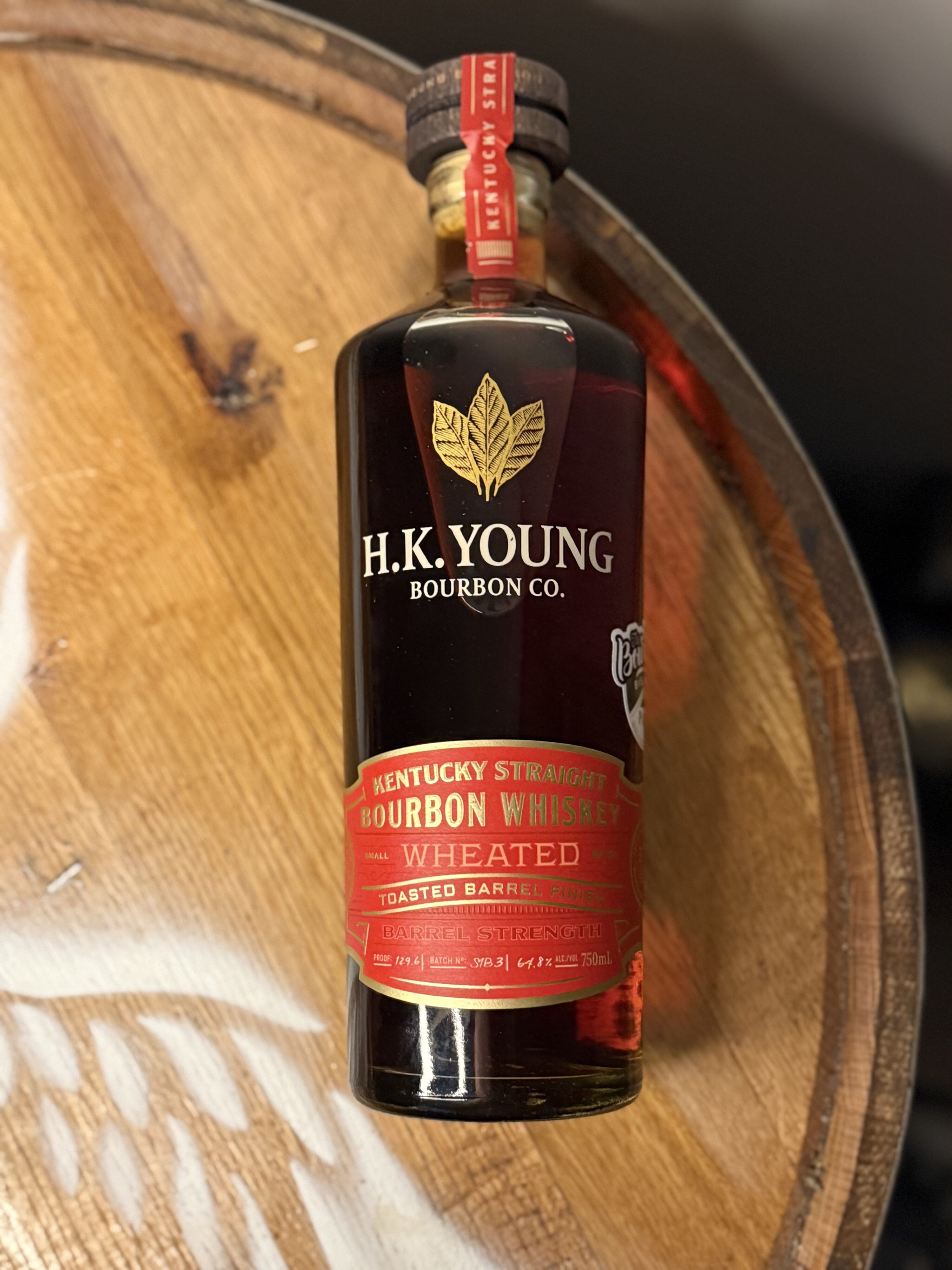
A 7-year, 129.6 proof HKY toasted wheated private barrel selected by Ethan Pope (@thebourbonbishop) and Pierre Bernal (@pierrebernal_). Dessert-forward with structure, defined by a long, spice-driven finish.
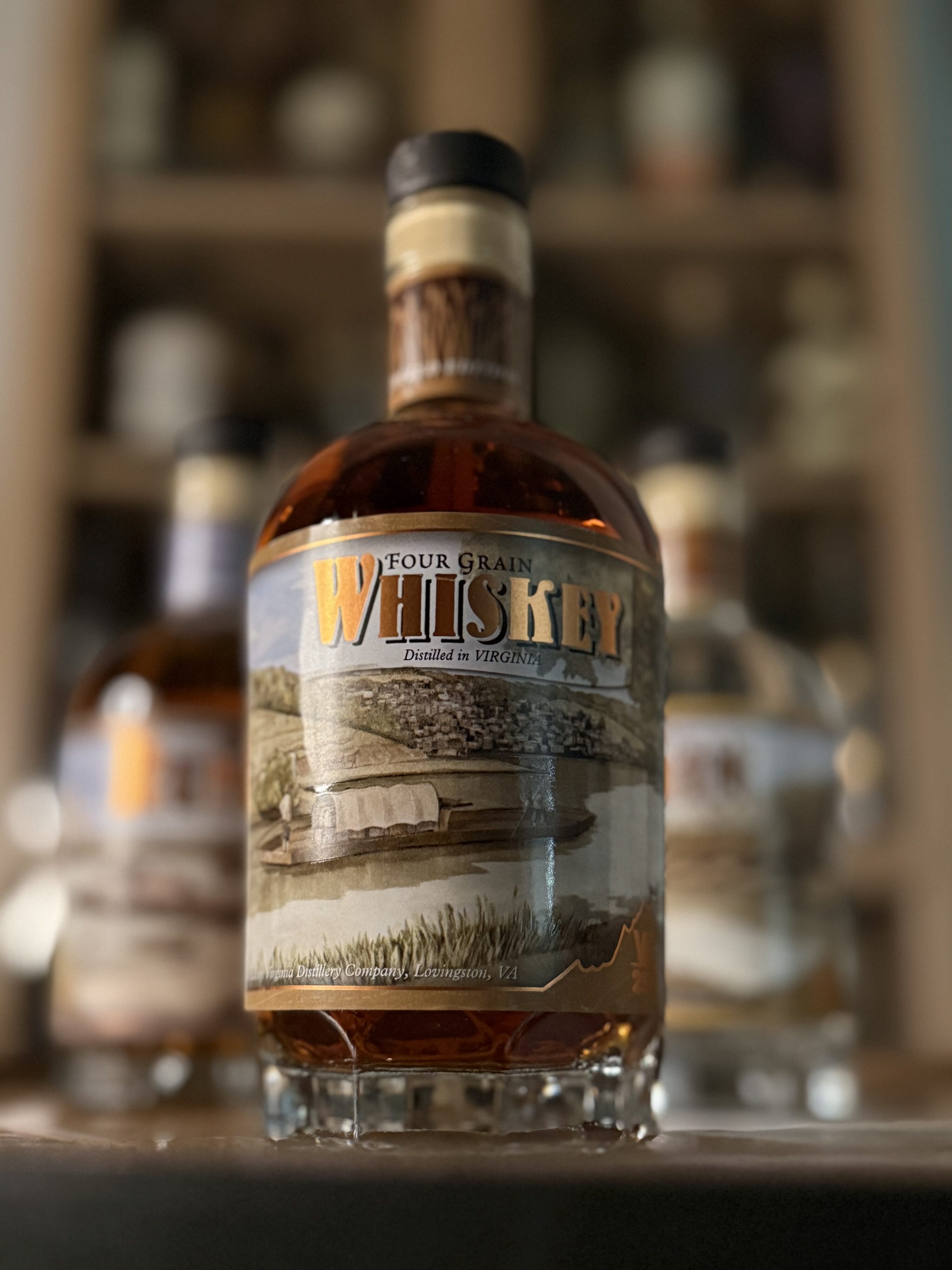
A four-grain Virginia whiskey blending bourbon, rye, single malt, and wheat: complex, grain-forward, and highly distinctive.
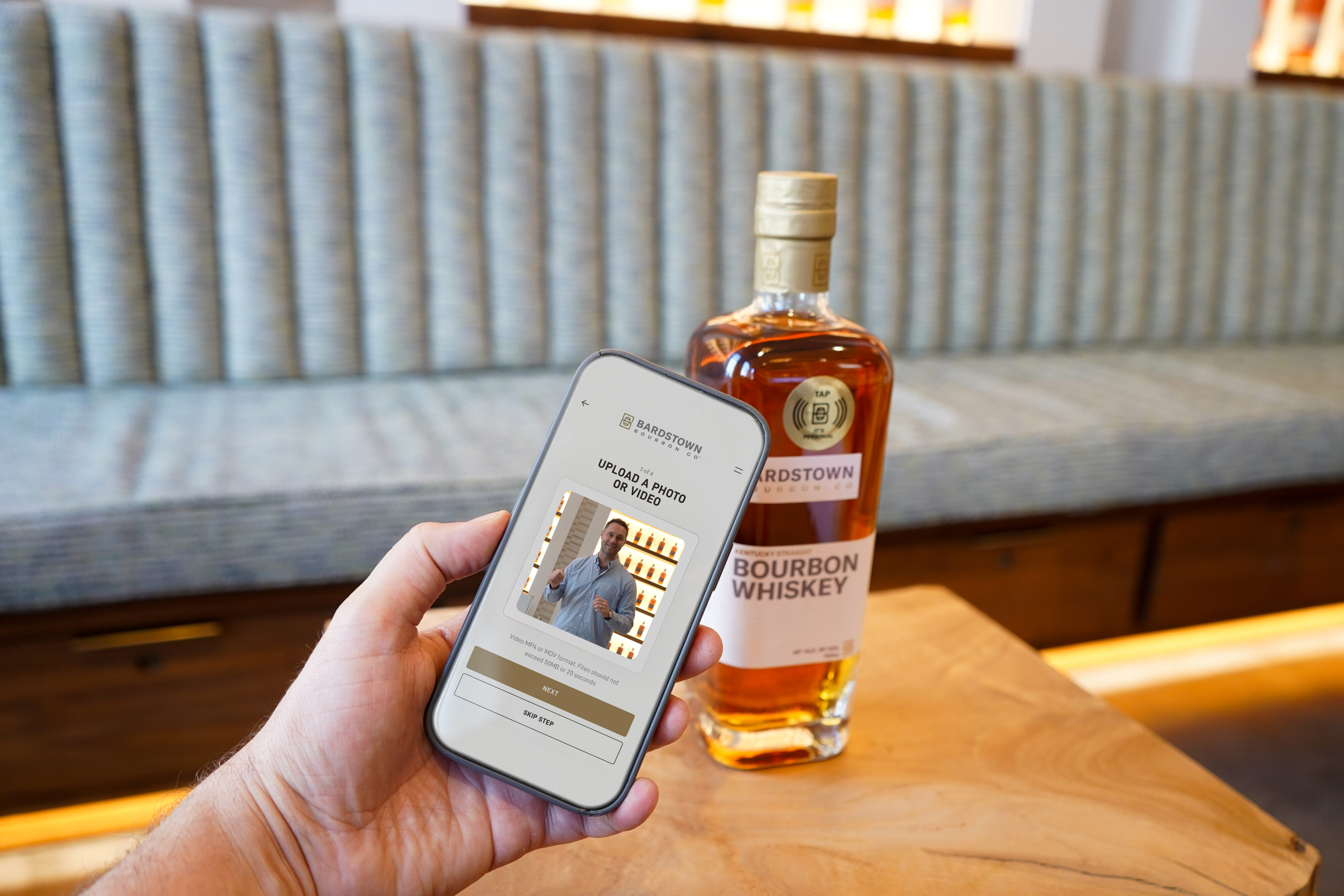
Bardstown Bourbon Company launches NFC-powered gifting tags, allowing consumers to attach personalized messages, photos, and videos to any bourbon bottle via smartphone tap.
Pingback: Distilleries Around Northern Virginia I'd Send a Friend To First Review | Bourbon Bishop
Pingback: The Rise of True Small Batch Bourbon: How NDPs Are Giving the Term Meaning Again Review | Bourbon Bishop
Pingback: RNDC Chapter 11 Filing Signals Deeper Strain Across the American Whiskey Industry Review | Bourbon Bishop
Pingback: The Bourbon Bishop Whiskey Blend: How I Created It with Barrel King | Bourbon Bishop