
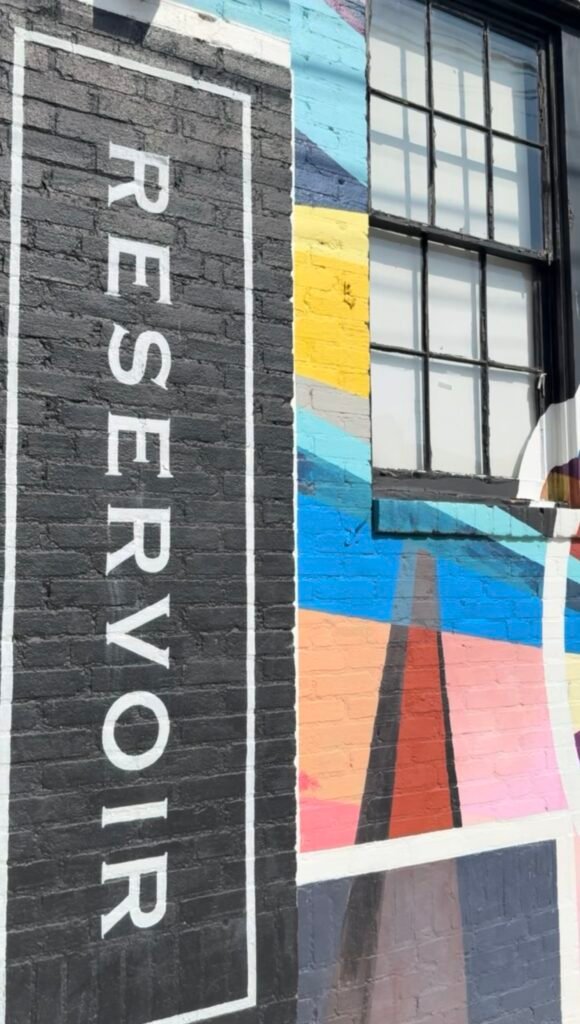
From single-grain distillates and unconventional stills to barrel experimentation and Virginia-grown heritage grains, Reservoir is exploring what American whiskey can become.
Part of the Bourbon Bishop Virginia Craft Whiskey Starter Trail
This distillery is featured on my Bourbon Bishop Virginia Craft Whiskey Starter Trail in the Virginia Spirits Trail app, a curated way to explore some of the Commonwealth’s craft distilleries.
My visit to Reservoir Distillery in Richmond, Virginia, gave me plenty to think about; not just the whiskey itself, but the decisions that go into making it.
Founded in 2008, Reservoir was exploring American whiskey outside the traditional Kentucky playbook before craft distilling became the crowded category it is today. The distillery works with individual grain spirits, experiments with different barrel sizes, and approaches production with an interest in understanding how every decision shapes the final whiskey.
What made the visit particularly interesting wasn’t simply the equipment or the unusual expressions in the tasting lineup. It was the conversations behind them. We talked about why bourbon developed the conventions it did, how much a barrel can change a spirit, why grain selection deserves more attention, and how Virginia’s agricultural history could influence the next generation of American whiskey.
I left with a greater appreciation for the decisions that happen long before a bottle reaches a shelf and for a distillery willing to question some of the assumptions that have shaped American whiskey for generations.
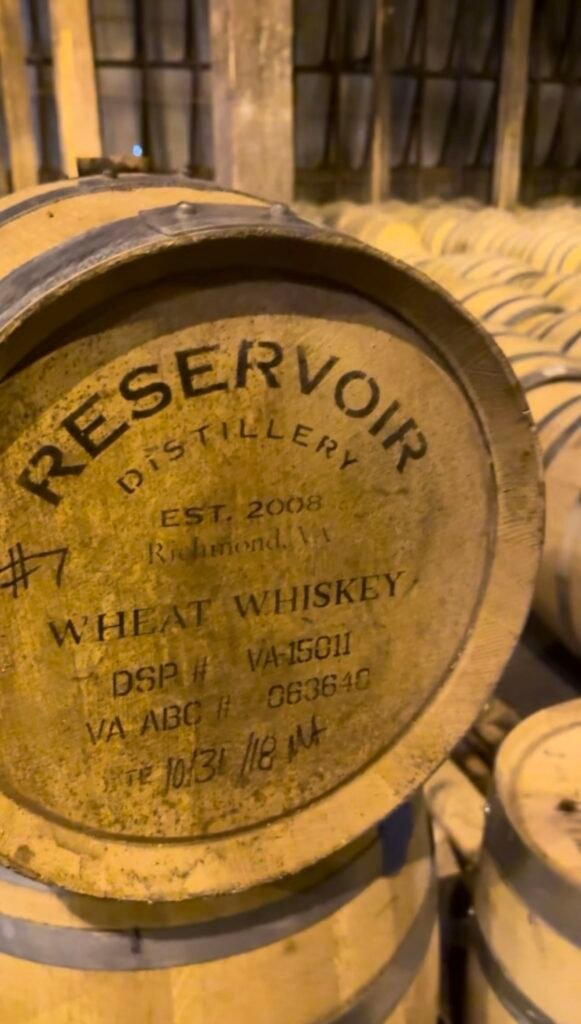
- Distillery: Reservoir Distillery
- Location: Richmond, Virginia
- Opened: 2008
- Known for: Single-grain whiskeys, unconventional distillation, experimental barrel aging, and Virginia-grown grains
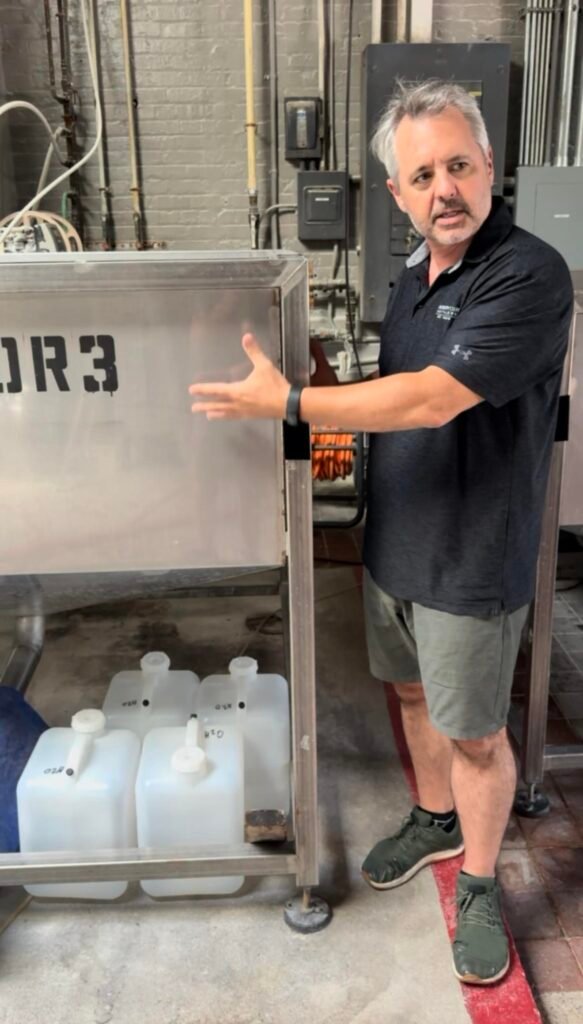
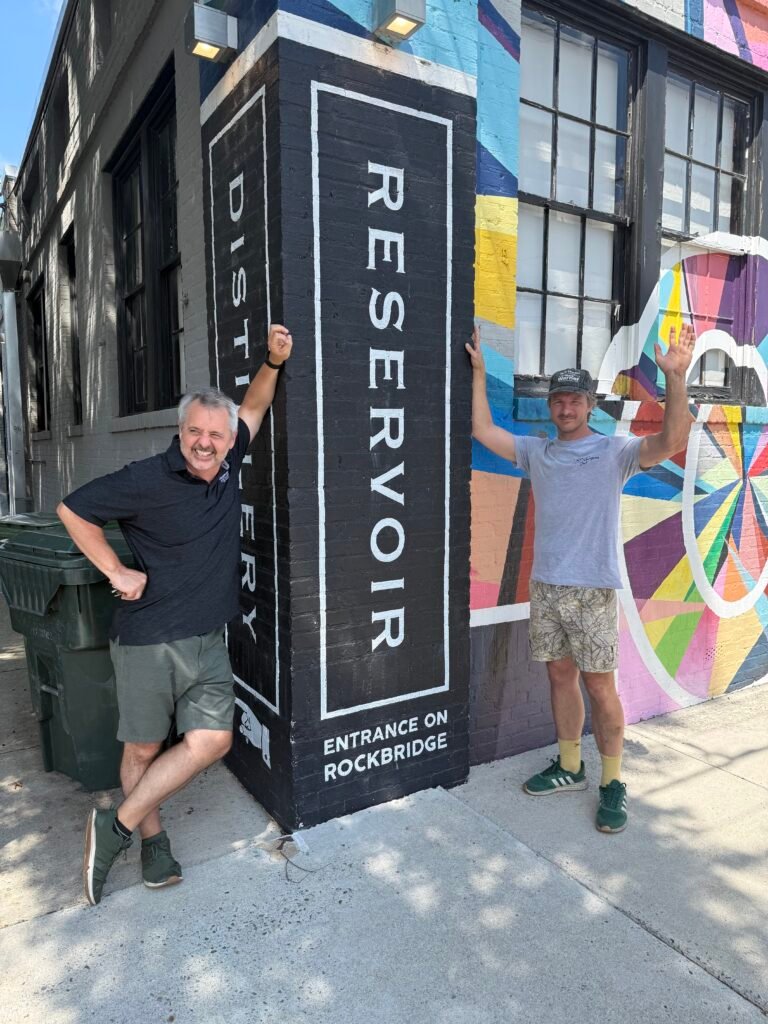
- Hosted by: Founder/Distiller Dave Cuttino & Head Blender Nick Vaughan
Reservoir Distillery: A Different Path for Virginia Whiskey
Founded on Experimentation
Reservoir was founded in 2008 by Dave Cuttino and Jay Carpenter. Cuttino learned from Tuthilltown Spirits in New York before establishing Reservoir, entering an American craft distilling landscape that looked very different from the one we know today.
Reservoir describes itself as the third distillery outside Kentucky to distill and release bourbon following Prohibition. That distinction speaks to how early the distillery entered the modern craft whiskey movement.
But its history is only part of the story.
Reservoir’s identity is tied closely to Virginia: its farmers, its grain, its barrels, and the climate in which its whiskey matures. Rather than simply reproducing the flavor profile of a traditional Kentucky bourbon, the distillery explores what happens when those ingredients and production decisions come together in a different place.
That doesn’t mean traditional bourbon needs fixing. It means there’s more than one way to make compelling American whiskey.
And Reservoir has spent years exploring those possibilities.
The Barrel Is More Than a Container
One of the most interesting conversations during my visit centered on barrels and just how much they influence the final whiskey.
We often talk about mash bills, age statements, and proof as if they tell us most of what we need to know about a bottle. But maturation can dramatically change how a spirit tastes, feels, and develops over time. Barrel size, the wood itself, char, climate, and the spirit’s interaction with the cask all play a role.
Reservoir has explored a range of barrel sizes, including five- and ten-gallon casks, and now works primarily with traditional 53-gallon barrels. Smaller barrels expose more of the spirit to the wood relative to the volume of liquid, which can accelerate extraction. That doesn’t automatically make a whiskey better or worse, but it changes the balance of influences that shape it.
The difference became especially interesting when tasting the distillery’s individual grain whiskeys. Each spirit brought its own character to the table, but the barrels were clearly part of the story.
This is where Reservoir’s approach becomes particularly compelling. Instead of treating maturation as a fixed waiting period, the distillery considers how the barrel contributes to the flavor it wants to achieve.
Single-Grain Whiskey and the Character of the Distillate
Reservoir’s founding lineup includes wheat whiskey, bourbon made from 100% corn, and rye whiskey made from 100% rye. These single-grain approaches offer an opportunity to explore the individual character of each grain without blending them together first.
That makes Reservoir a particularly interesting place to taste whiskey side by side.
Corn, wheat, and rye don’t contribute interchangeable flavors. Their effects depend on the grain itself, the fermentation, the distillation process, and the maturation that follows. By exploring individual grains, a distiller can better understand what each brings to a finished whiskey.
Reservoir also works with different grain combinations and custom mash bills for selected projects, including experimental releases and certain barrel-pick opportunities.
For whiskey enthusiasts, that’s an exciting possibility. A single-barrel selection doesn’t have to be limited to choosing between barrels of the same standard recipe. Depending on the project, the underlying grain composition can be part of the experimentation, too.
The result is a broader range of possibilities for the whiskey in the glass.
Fermentation, Distillation, and the Details You Don’t See on the Label
The conversations at Reservoir also continued well beyond grain percentages and barrel sizes.
The team discussed its wild, open-top fermentation approach and the importance of allowing the fermentation process to contribute to the spirit’s character. Fermentation is more than a way to produce alcohol. It creates compounds that can influence aroma and flavor throughout the rest of production.
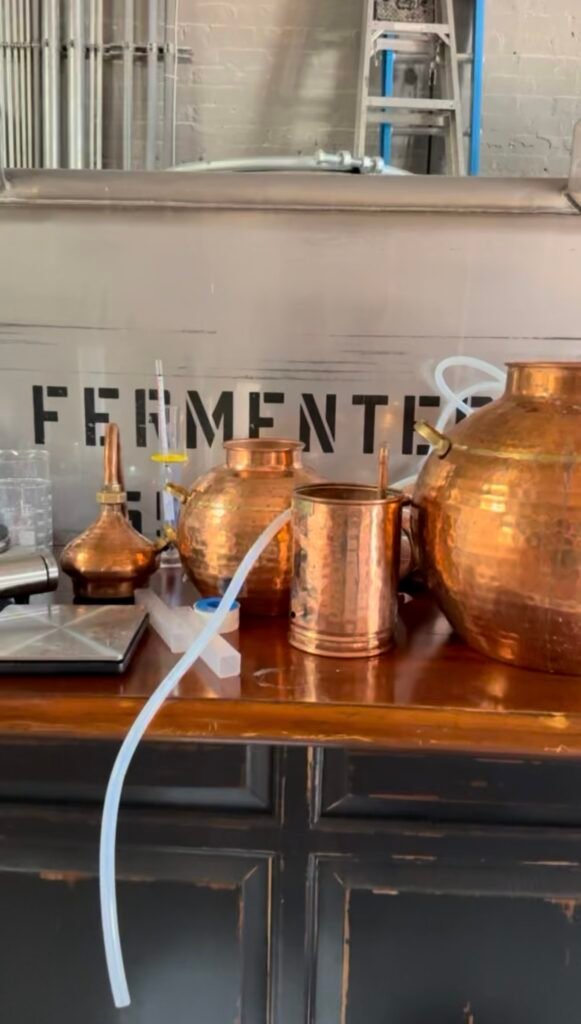
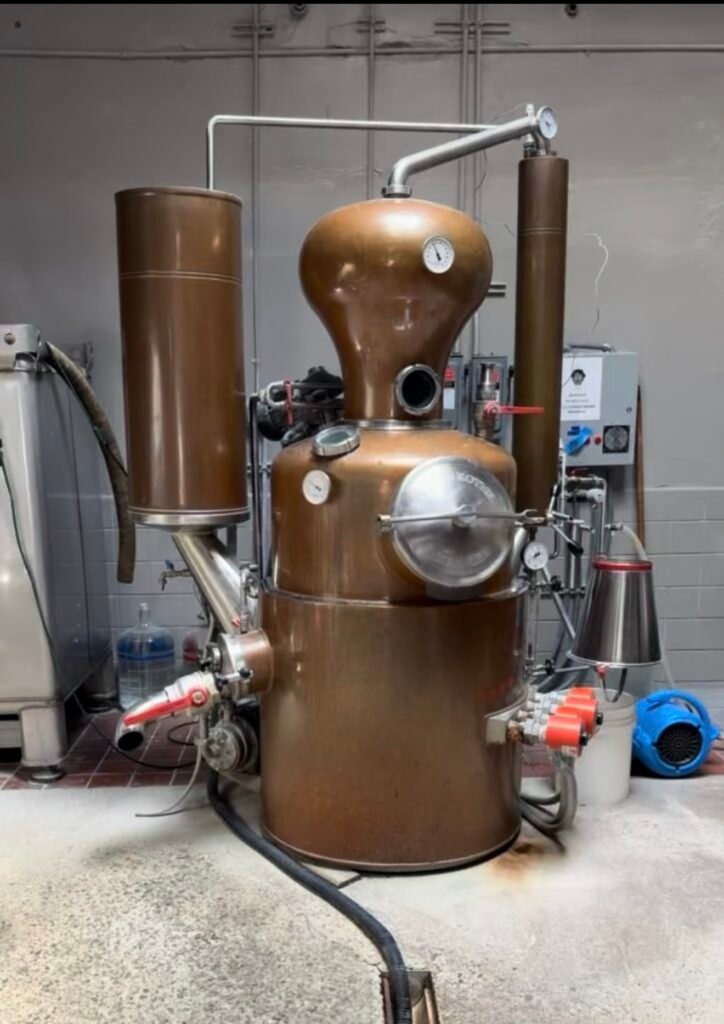
We also discussed the distillery’s use of an Armagnac-style still, which reflects a different approach from the equipment many American whiskey drinkers associate with bourbon production.
The design and operation of a still influence which components of a fermented mash carry through into the finished distillate. That selection affects texture, aroma, and flavor, making distillation another opportunity to shape the whiskey rather than simply extract alcohol.
Reservoir also uses enzymes to help achieve the conversion traditionally provided by malted barley. That offers flexibility when working with grains and recipes that don’t follow the conventional approach.
We discussed the importance of the distillation process, including how the handling of the run can influence the components retained in the spirit. These details become particularly interesting when working with heirloom grains, whose character may differ from more familiar commercial varieties.
It’s easy to overlook these decisions when picking up a bottle. But the whiskey in your glass is the accumulated result of all of them.
“Fun first, then everything else follows.”
– Dave Cuttino, Founder and Owner of Reservoir
Why Bourbon Became What It Is
One of my favorite parts of the visit was stepping back from production to discuss the history of American whiskey.
Many of the conventions we now associate with bourbon emerged from a combination of tradition, economics, consistency, and practical production considerations. Over time, those conventions became so familiar that they can feel like the only sensible way to make whiskey.
Reservoir’s approach encourages a different question: Why was the convention established in the first place?
The Story Behind the Mash Bill
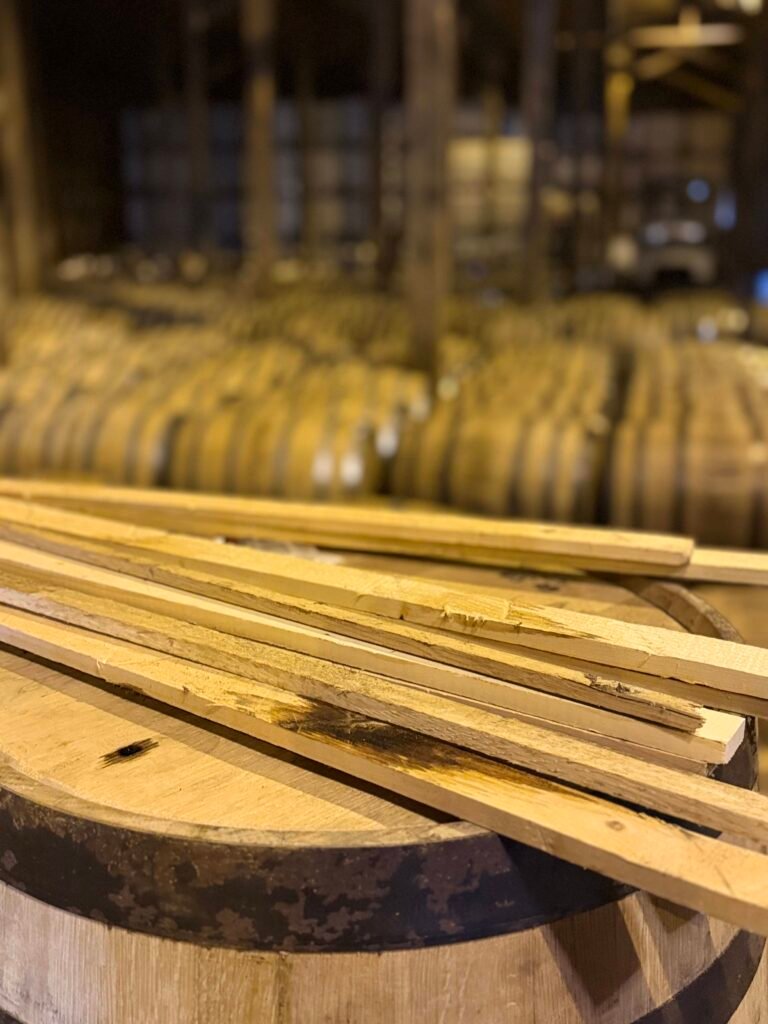
Consider a familiar bourbon mash bill of 75% corn, 21% rye, and 4% malted barley.
That recipe can produce excellent whiskey. But the proportions aren’t a universal formula for quality. They reflect one set of choices about flavor, grain costs, fermentability, and the practicalities of production.
Change the grain percentages, and the whiskey changes. Use a different grain variety, and the results can change again.
The same principle applies to other parts of production. The traditional 53-gallon barrel became a defining feature of American whiskey, while smaller casks provide another way to experiment with maturation.
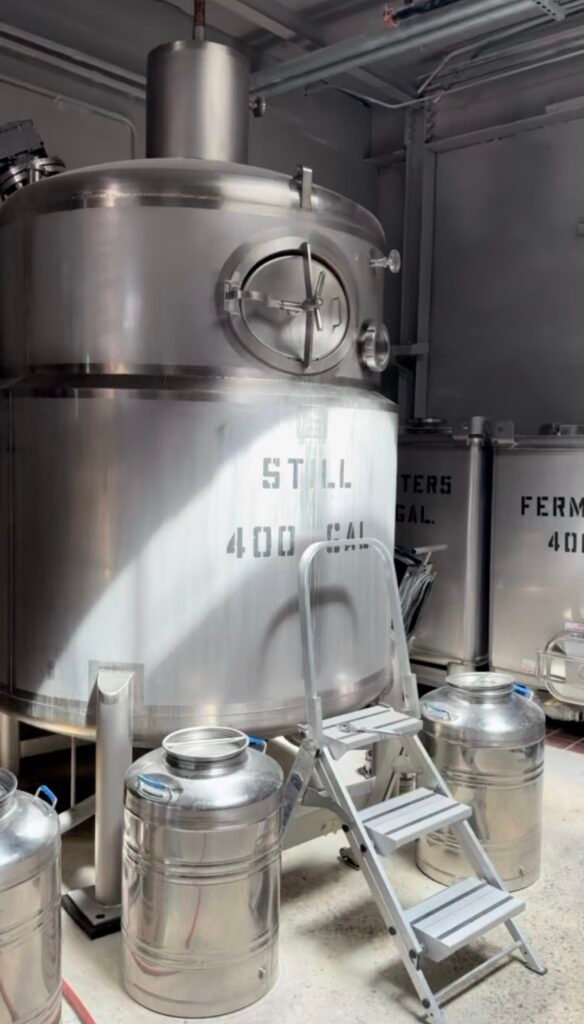
During our conversation, we discussed the practical thinking behind production scale, including the relationship between the amount of grain processed, the size of a production run, and the volume ultimately filled into barrels. A roughly 400-gallon production scale was discussed in that context: as an example of the practical calculations that can connect a mash to a traditional barrel fill.
The larger lesson wasn’t that conventional production methods are wrong. It’s that the methods we take for granted often have practical histories that are worth understanding.
Reservoir can work within those conventions when they make sense and explore alternatives when there is something to learn.
That willingness to question assumptions is one of the most compelling parts of its approach.
Virginia Grain: Connecting Whiskey to Its Agricultural Roots
Reservoir’s interest in grain extends beyond choosing between corn, wheat, and rye. The distillery is also involved in a broader effort to explore the possibilities of Virginia’s agricultural heritage.
The Virginia Heritage Grain Project
Led by Shelley Sackier, Reservoir’s Director of Distillery Education, the Virginia Heritage Grain Project investigates historic varieties of grains used in spirits production.
The project brings together distillers, farmers, and researchers to study how heritage varieties perform in the field and what flavors they contribute when distilled. It has included research with Virginia Tech and other agricultural partners, with trials covering corn, wheat, rye, and barley.
The idea is straightforward but ambitious: some of the most interesting flavors in future American whiskey may come from grains that have fallen out of widespread commercial use.
Older varieties can have different growing characteristics, yields, and flavor profiles from modern commercial grains. The challenge is to understand which varieties are practical to grow and useful to distillers, not simply to celebrate them because they’re old.
That makes this more than a historical exercise. It is an effort to build connections between agriculture and spirits production, creating opportunities for Virginia farmers while helping distillers develop products with a stronger sense of place.
The project also raises an important question for the broader whiskey industry: What flavors might we have lost as agriculture and production increasingly prioritized efficiency and consistency?
For a distillery that already experiments with single-grain spirits, it’s a natural extension of the work.
“For a distillery that already experiments with single-grain spirits, [the Virginia Heritage Grain Project] is a natural extension of the work.
Why Local Grain Matters
Virginia’s distilling industry has an agricultural story that deserves more attention.
When a distillery purchases grain from regional farmers, it creates a direct connection between the bottle and the land. It also gives producers opportunities to work with varieties that may not be widely available through large commodity supply chains.
Local sourcing alone doesn’t guarantee better whiskey. What matters is what the grain contributes and how it performs in production. But the relationship creates room for experimentation and gives producers a way to distinguish their spirits through more than packaging or finishing techniques.
Reservoir’s involvement in the Virginia Heritage Grain Project makes that connection particularly tangible.
Instead of asking only how to make the next whiskey, the project asks what Virginia can grow, what those grains can become, and how the resulting spirits might express something distinctive about the region.
That’s a much bigger conversation than a mash bill on the back of a bottle.
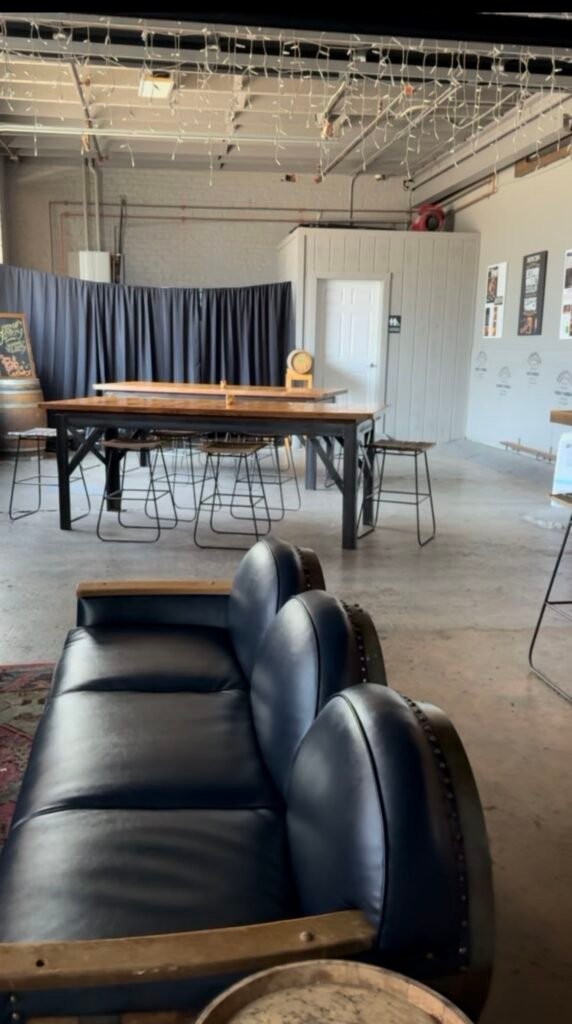
Tasting Through Reservoir: From Single Grains to Finished Whiskeys
The most rewarding part of the visit was tasting through a range of spirits and seeing how the production conversations translated into the glass.
These notes reflect the specific samples I tasted during the visit. Some were experimental or small-barrel examples, so they shouldn’t be taken as descriptions of every current release.
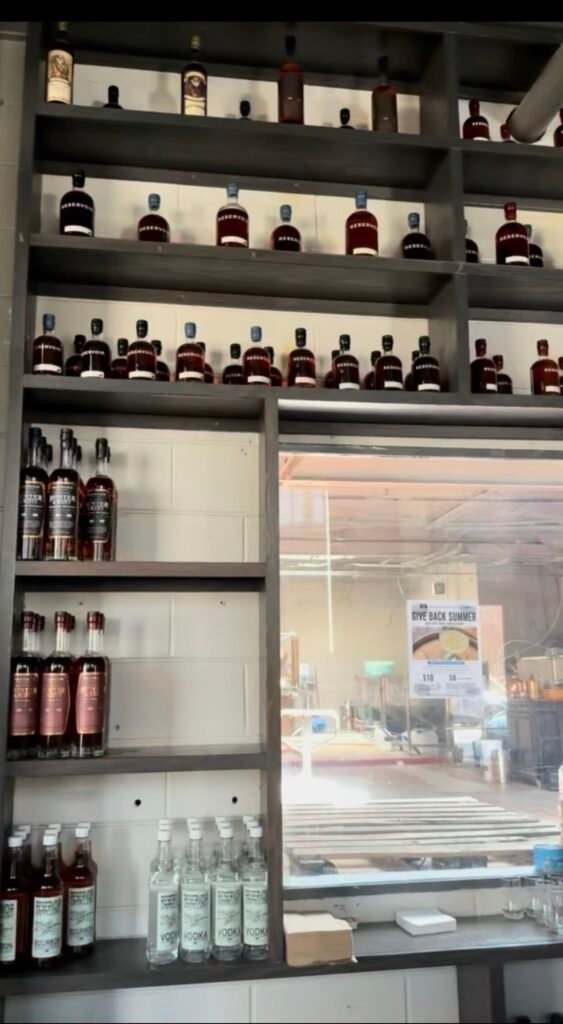
Wheat Whiskey: Bright Red Fruit and Maple-Like Sweetness
The wheat whiskey, aged in a five-gallon Barrel Mill cask, was bright and approachable.
Red-fruit notes led the way, with a maple-like sweetness that helped bring the flavors together. The whiskey felt balanced, with the fruit providing lift and keeping the sweetness from becoming too heavy.
It’s a useful introduction to the idea of a single-grain whiskey. Without corn in the recipe, the spirit offered a different expression from the familiar sweetness many drinkers associate with bourbon.
The small barrel was part of the story, too, giving us a chance to discuss how maturation can shape the final result.
Corn Whiskey: Werther’s Originals in a Glass
The corn whiskey, aged in a ten-gallon Gibbs barrel, took a richer direction.
My immediate association was Werther’s Originals: deep, buttery caramel with a familiar confectionery sweetness.
It was an entirely different experience from the wheat whiskey. Tasting the two side by side helped illustrate how the grain, distillation, and barrel work together to produce distinct profiles.
The takeaway wasn’t that corn whiskey has to taste like caramel, or that one grain is inherently better than another. It was that the starting material matters and that tasting individual grain spirits makes those differences easier to appreciate.
Rye Whiskey: Baking Spice, Green Fruit, and Oak
The rye whiskey, also aged in a ten-gallon Gibbs barrel, brought another shift in character.
Baking spice and green-fruit notes reminiscent of pear and apple were balanced by a substantial oak presence. The fruit helped keep the spice and wood from dominating, giving the whiskey a satisfying balance.
Rye can lean heavily into pepper, herbs, or sharp spice. This pour showed a different side, with the fruit playing an important supporting role.
Taken together, the wheat, corn, and rye whiskeys made a strong case for tasting individual grain spirits whenever the opportunity presents itself. It’s one thing to read a mash bill. It’s another to taste the results.
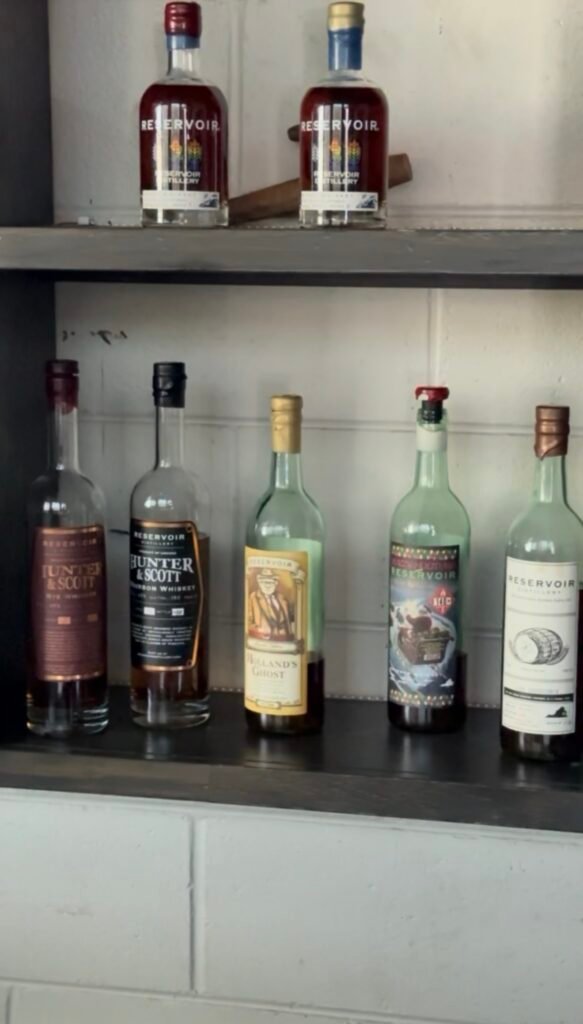
Hunter & Scott: An Accessible Expression of Reservoir
Hunter & Scott takes a different approach, blending Reservoir’s own single-grain whiskeys with selected Kentucky and Indiana whiskeys.
The goal is to make an approachable, versatile whiskey for sipping or mixing while allowing Reservoir’s distillate to remain part of the finished character.
We discussed how the blend was initially developed for an account looking for a particular style of whiskey. That project became an opportunity to create something accessible and crowd-pleasing without losing the identity of the distillery behind it.
Blending is sometimes treated as a compromise between a distillery’s own spirit and something sourced from elsewhere. In reality, it can be a deliberate tool for achieving balance, consistency, and a particular flavor profile.
Hunter & Scott illustrates that approach. It offers an entry point for drinkers who want an everyday pour while remaining connected to Reservoir’s broader production philosophy.
Holland’s Ghost: Cocoa, Vanilla, and a Richer Side of Reservoir
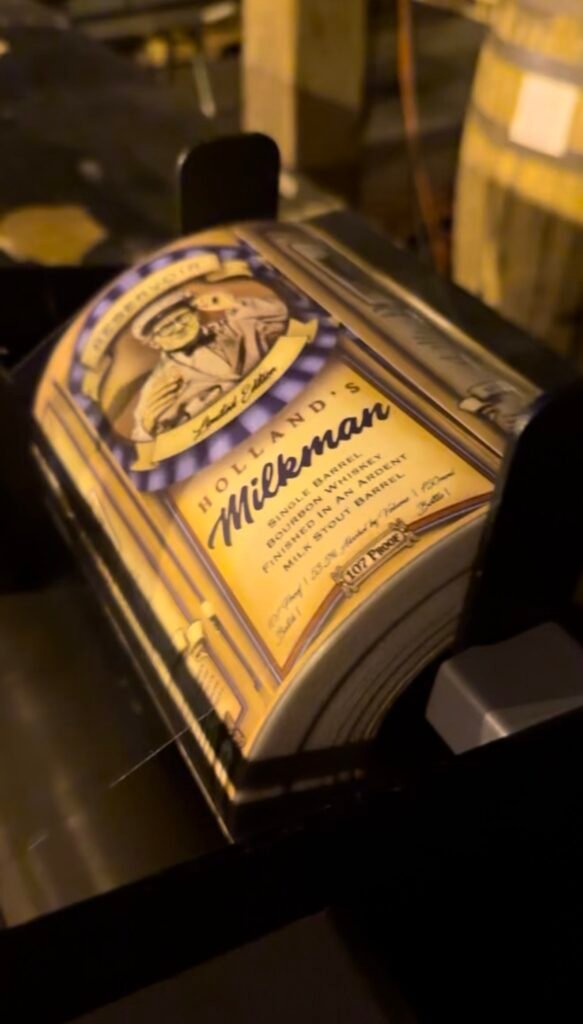
Holland’s Ghost was one of the standout pours of the visit.
Cocoa and vanilla were the dominant impressions for me, creating a rich, dessert-like character that was immediately appealing.
A bourbon matured in small, heavily charred barrels before being finished in a Richmond stout barrel, the whiskey’s roasted, chocolate-leaning character makes that finishing approach particularly interesting.
Cognac Cask Experience: Red Grapes and a Creamy Texture
The Cognac-finished whiskey offered a very different experience.
Big red-grape notes were the first impression, accompanied by a creamy mouthfeel that kept the fruit balanced and approachable. It was one of the more distinctive combinations in the tasting.
A collaboration with the Cognac house François Voyer, the expression uses a wheated rye whiskey made with 65% rye and 35% wheat, which spent additional time in a cask previously holding Cognac.
The specific pour I tasted emphasized red grape and texture. That made it an interesting example of the influence a finishing cask can have on a spirit’s personality.
It’s also a reminder that experimentation doesn’t always mean inventing a completely new production method. Sometimes the most interesting results come from combining a carefully made whiskey with a different maturation influence.
A Seven-Year Whiskey: Malted Barley and Wheat
Another detail from the tasting was a seven-year whiskey made with two parts malted barley to one part wheat.
That combination offered another opportunity to discuss how mash-bill decisions influence the starting point for a whiskey. The balance between grains, the distillation approach, and the time spent in a barrel all contribute to the eventual character.
It also brought the conversation back to the broader point of the visit: there is no single recipe that defines what an interesting American whiskey must be.
Different grain combinations create different opportunities, and the only way to understand those possibilities is to experiment, taste, and learn from the results.
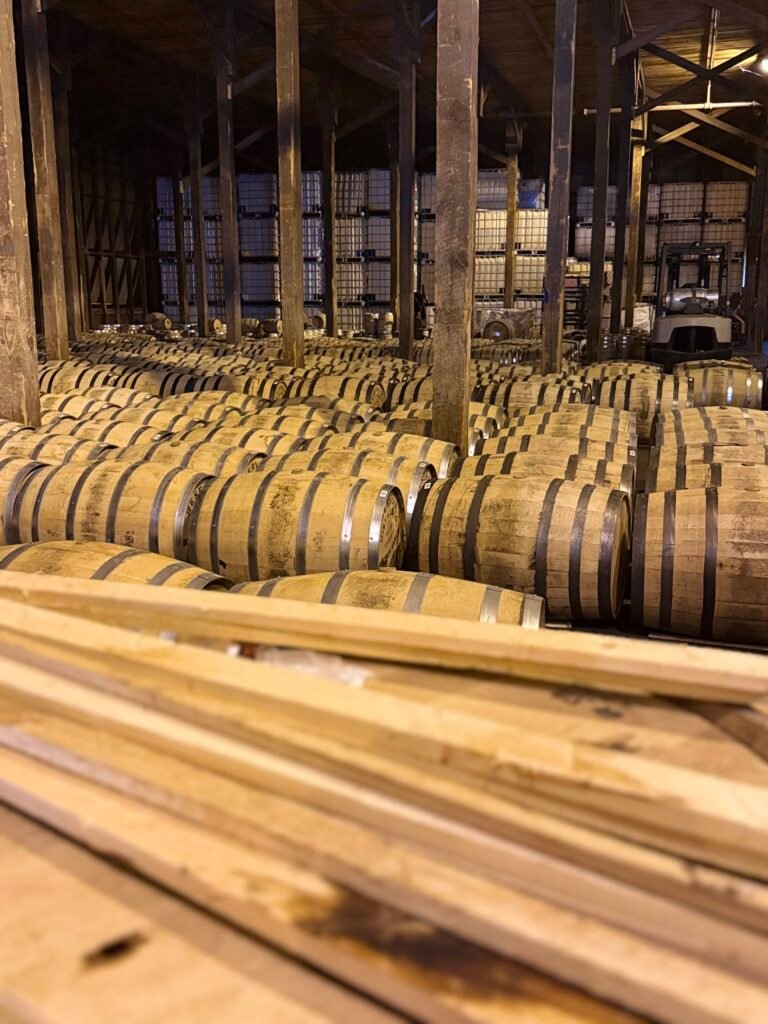
Inside the Rickhouse: An Old Tobacco Building With a Story
The visit also offered a reminder that a distillery’s character isn’t limited to its equipment or bottles.
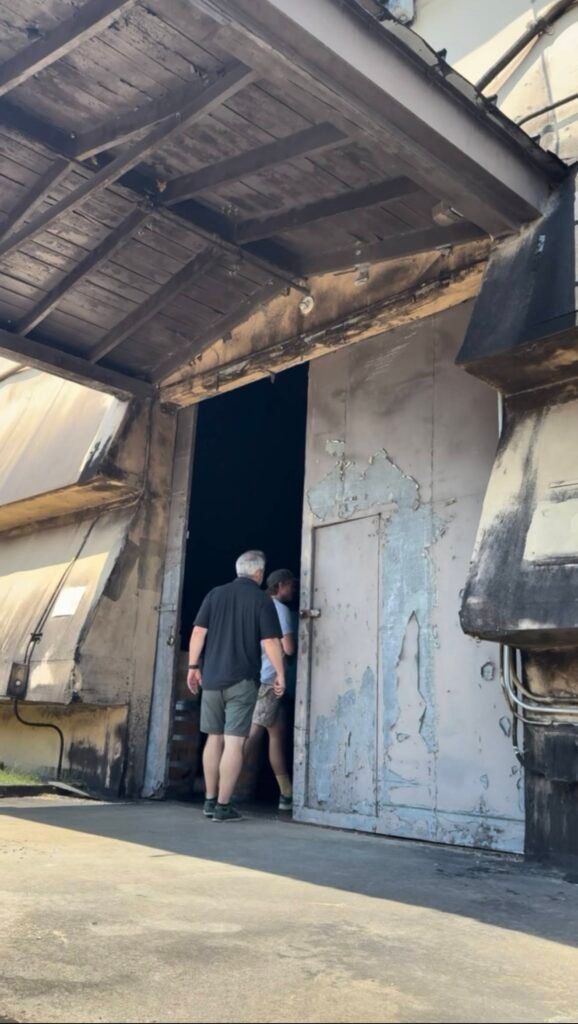
Reservoir’s aging space occupies a former American tobacco building, and the building’s history is still tangible. One detail that stayed with me was the residual tobacco oil associated with the center aisle.
It’s the sort of detail that connects a modern whiskey operation with the industrial history of Richmond. The building wasn’t designed around the idea of becoming a whiskey destination. It has its own past, and that past has become part of the place where the spirit matures.
For a distillery so focused on the interaction between spirit and environment, that sense of place feels appropriate.
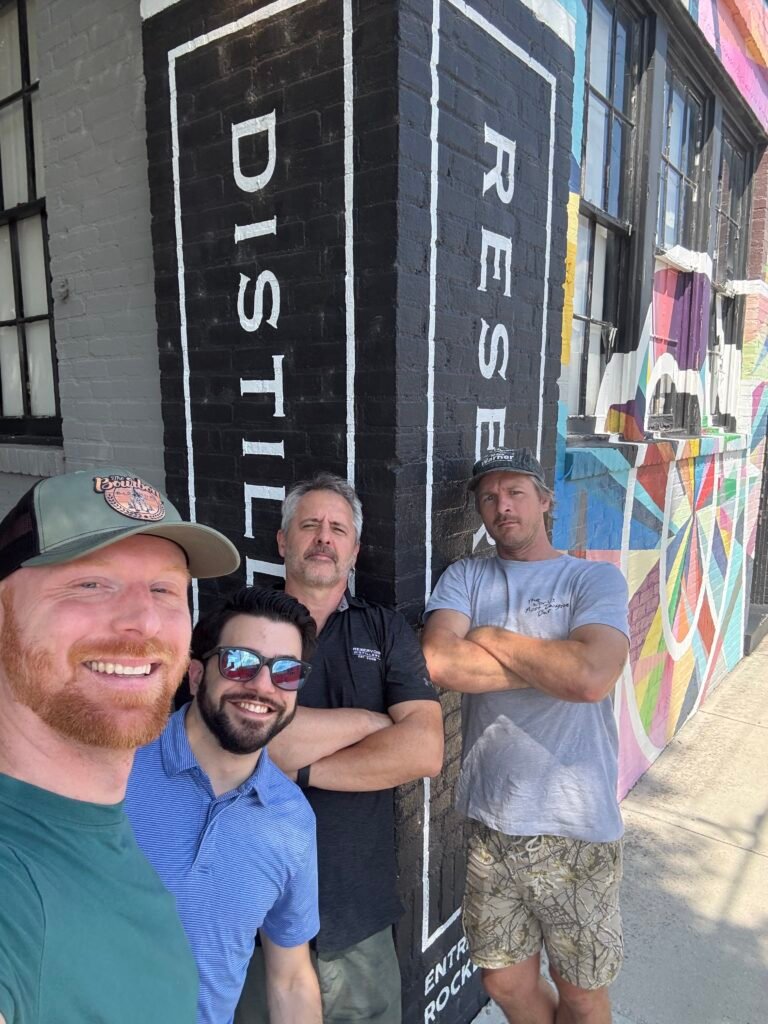
Bourbon Bishop Bottom Line:
Reservoir gave me a lot to think about beyond the whiskey in my glass. The conversations about grain, fermentation, distillation, and barrel size helped explain why its whiskeys can taste so different from what drinkers might expect from a more traditional bourbon or rye.
What stood out most was the willingness to experiment while remaining focused on what ends up in the bottle. From single-grain distillates to unusual barrel choices and Virginia-grown grain, Reservoir is exploring how much room American whiskey still has to evolve.
If you’re in Richmond, I’d recommend making time for a visit. Go ready to ask questions, taste across different expressions, and spend some time learning about the choices behind the whiskey. Whether you leave with a new favorite bottle or a better understanding of how whiskey gets made, there’s plenty here for curious drinkers to appreciate.
This piece was written in conjuction with my current Virginia Spirits project. Check out the Bourbon Bishop Virginia Craft Whiskey Starter Trail Here, only on the Virginia Spirits Trail App
If you enjoyed this piece, check out my past distillery visit articles here.
This visit was hosted by the distillery. All thoughts are my own and not influenced by the experience.
Related Distillery Visits
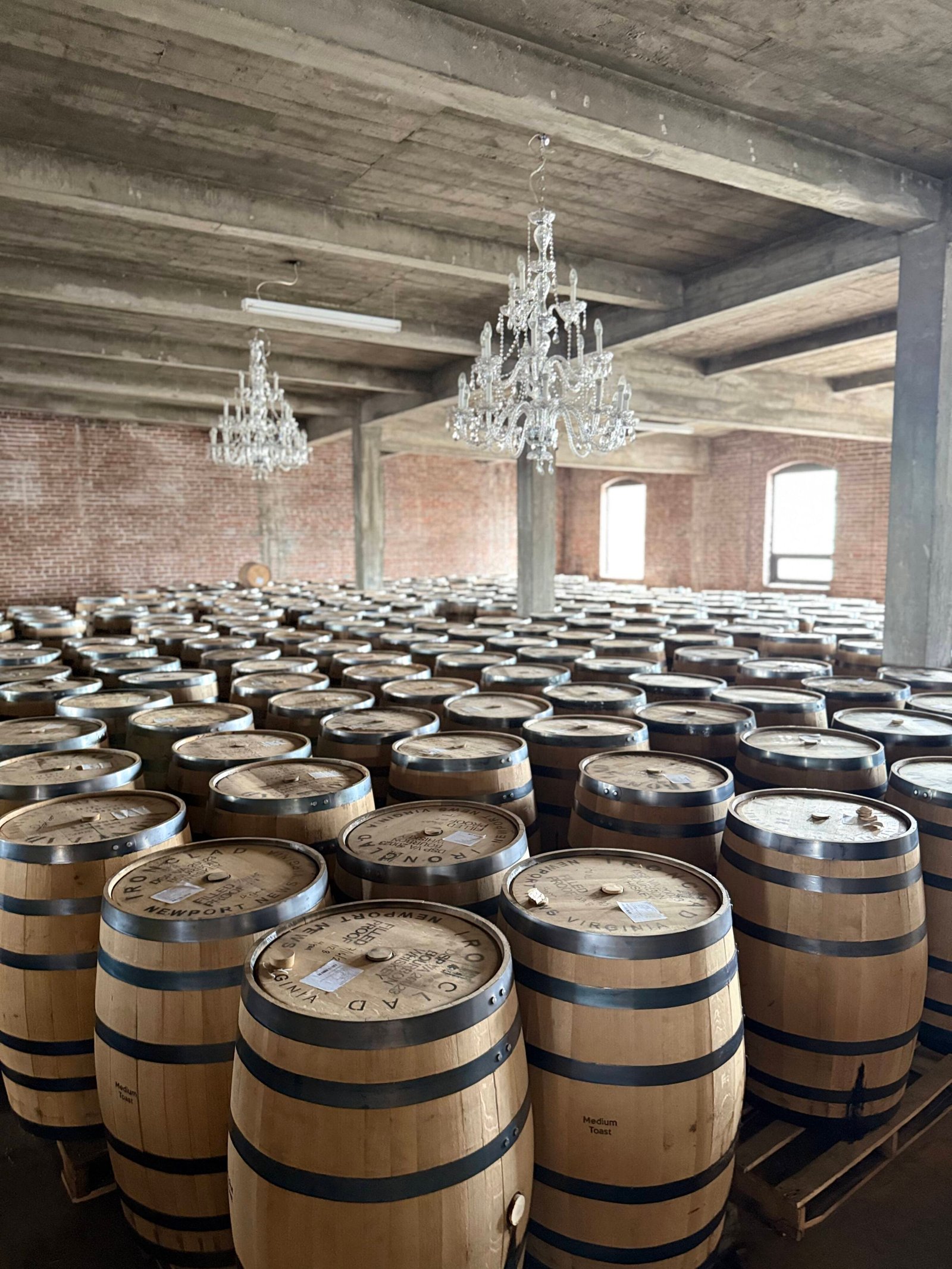
Visit Ironclad Distillery in Newport News, Virginia, to explore its four-grain bourbon, experimental whiskey finishes, historic home, and Virginia spirits.
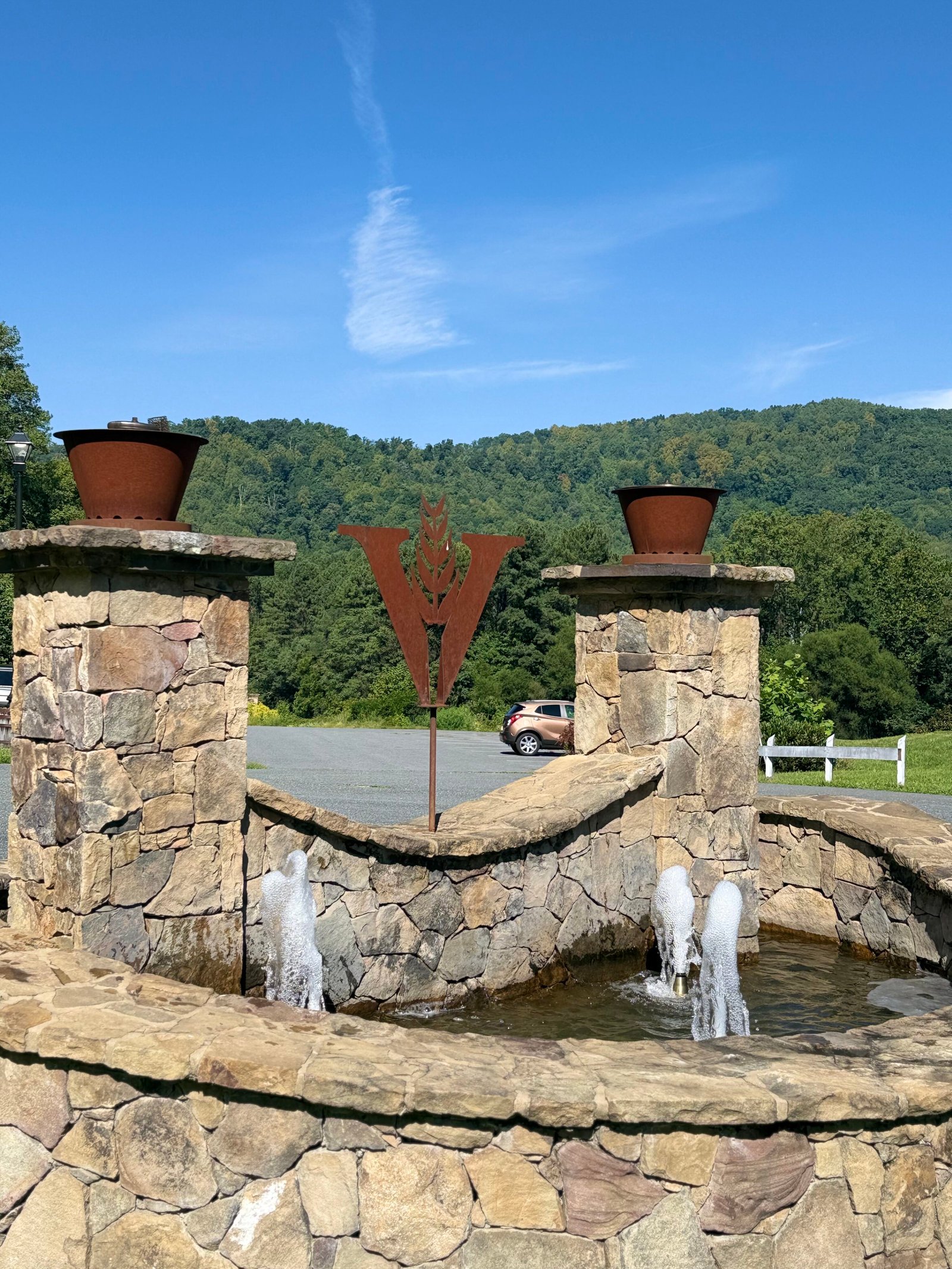
Inside Virginia Distillery Company in Lovingston, Virginia, where 100% malted barley, a historic Boby Mill, Blue Ridge climate and adventurous cask finishes shape American single malt whisky.
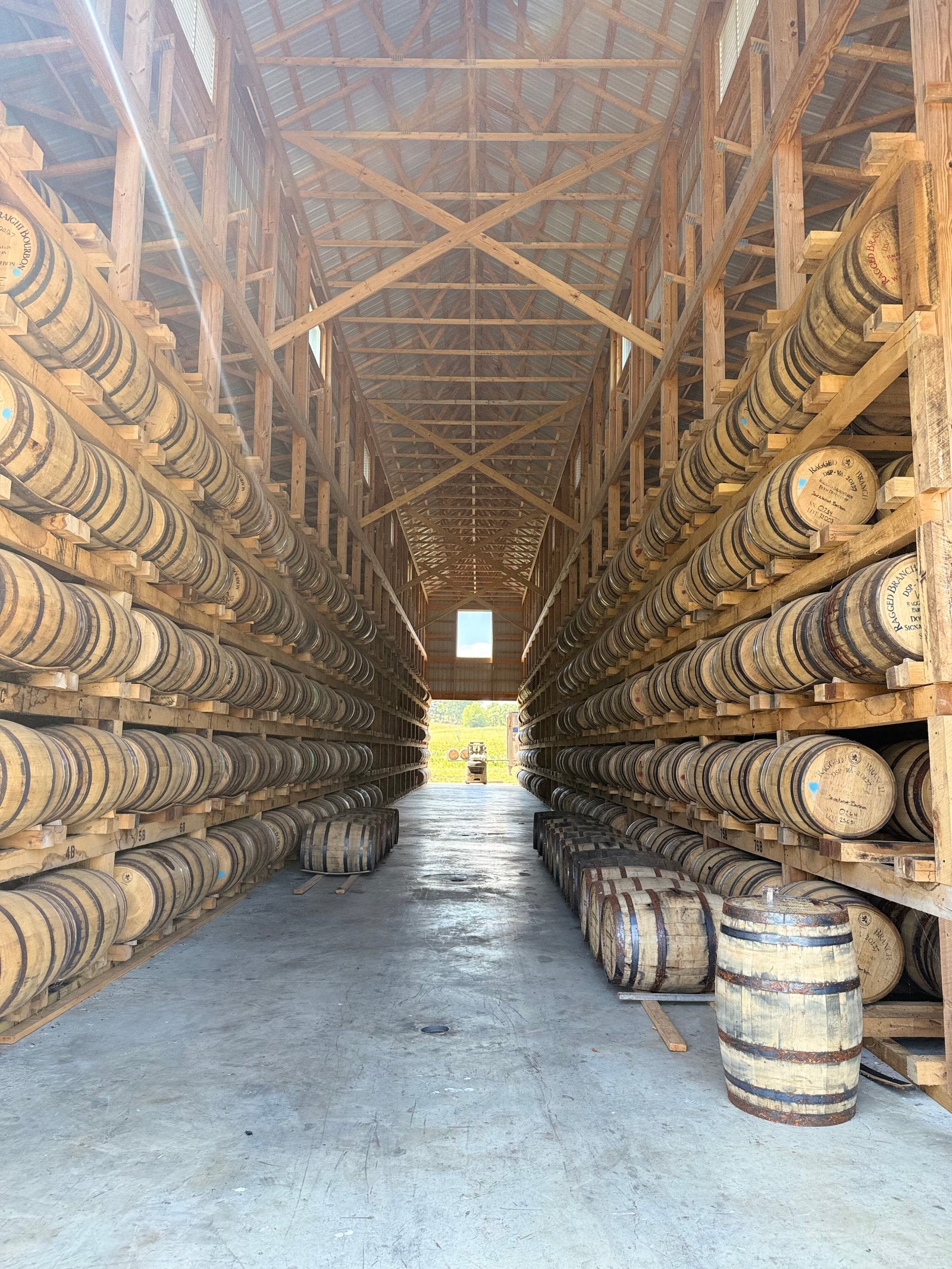
Explore Ragged Branch Distillery in Augusta County, Virginia, from its new production facility and towering rickhouse to its farm-grown bourbon and next chapter.
A behind-the-scenes visit to MurLarkey Distilled Spirits in Manassas, Virginia, exploring Virginia-grown grain, award-winning whiskey, innovative flavored spirits, and one of the Commonwealth’s premier craft distillery experiences.
Explore Provenance with Jay West and discover the philosophy behind curated whiskey, Reveries single barrels, slow proofing, experimental finishes, and the Bottle Your Own experience.
From the distillery and dining experience to the home glass — the quality sourced and blended whiskies of Open Road Open Road Distilling Co.
A visit to Lost Whiskey Club in Virginia — exploring their sourced whiskey program, evolving maturation approach, and a philosophy rooted in community, storytelling, and shared pours.