
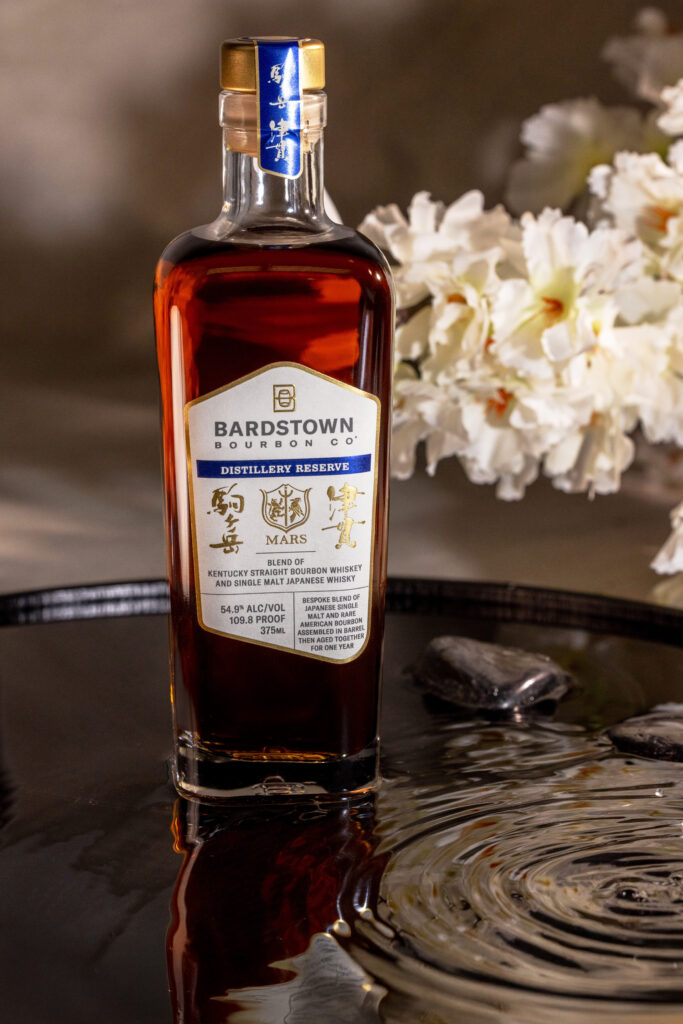
A new release from Bardstown Bourbon Company is attempting something whiskey rarely does successfully: merge two established traditions without allowing either one to dominate the other.
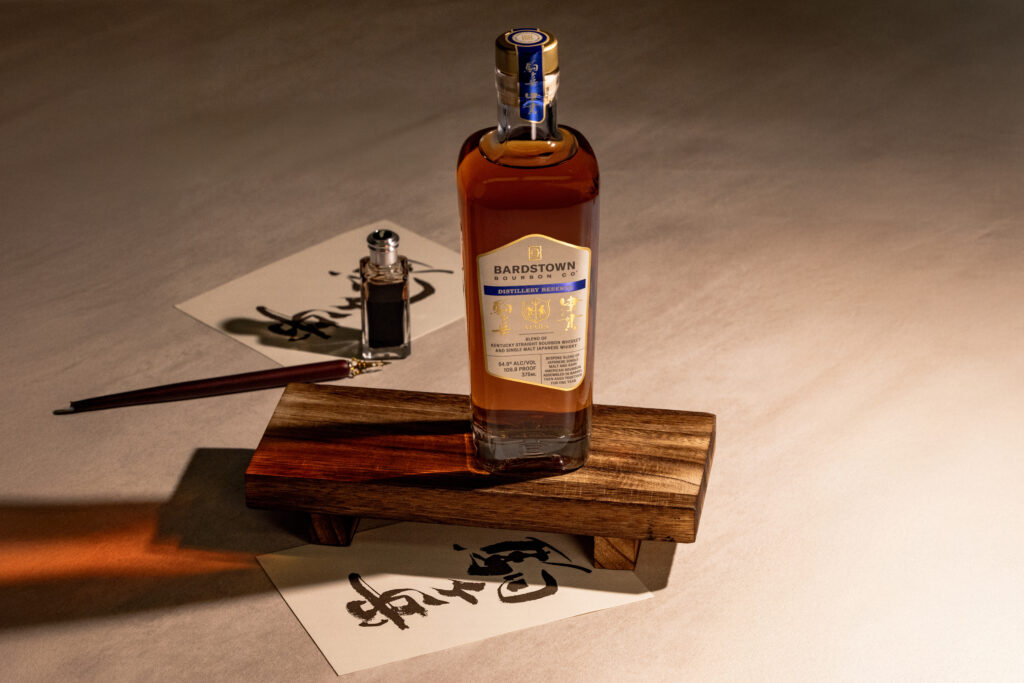
BARDSTOWN, Ky. (May 26, 2026) — Bardstown Bourbon Company has announced the Distillery Reserve Mars Single Malt Japanese Blend, an experimental release developed in collaboration with Mars Whisky that co-ages Kentucky bourbon and Japanese single malt whisky together inside the same barrel.
The project represents one of the more technically unusual whiskey collaborations in recent memory.
Rather than using Japanese whisky as a traditional finishing component after bourbon maturation, Bardstown introduced mature Japanese single malts directly into barrels already containing aged Kentucky bourbon. The spirits then spent an additional 12 months aging together, allowing the whiskey to integrate gradually rather than layering one profile over another.
That distinction matters.
Most cross-category whiskey collaborations operate through finishing, blending, or secondary cask influence. Bardstown’s approach instead treats the barrel as a shared maturation environment where both spirits continue evolving simultaneously.
The result is less a finished bourbon and more a fully integrated hybrid whiskey.
The release arrives as part of Bardstown’s experimental Distillery Reserve series, a line increasingly focused on unconventional maturation techniques and globally influenced whiskey concepts.
What Makes This Different
At its core, the Mars Single Malt Japanese Blend is built around the idea of co-evolution rather than post-production blending.
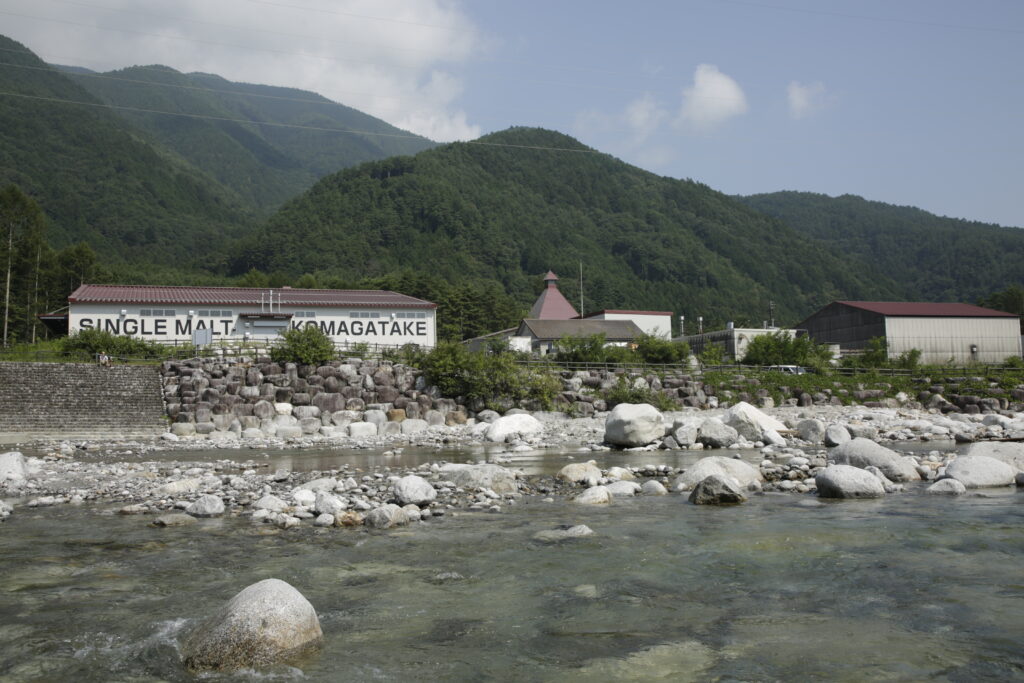
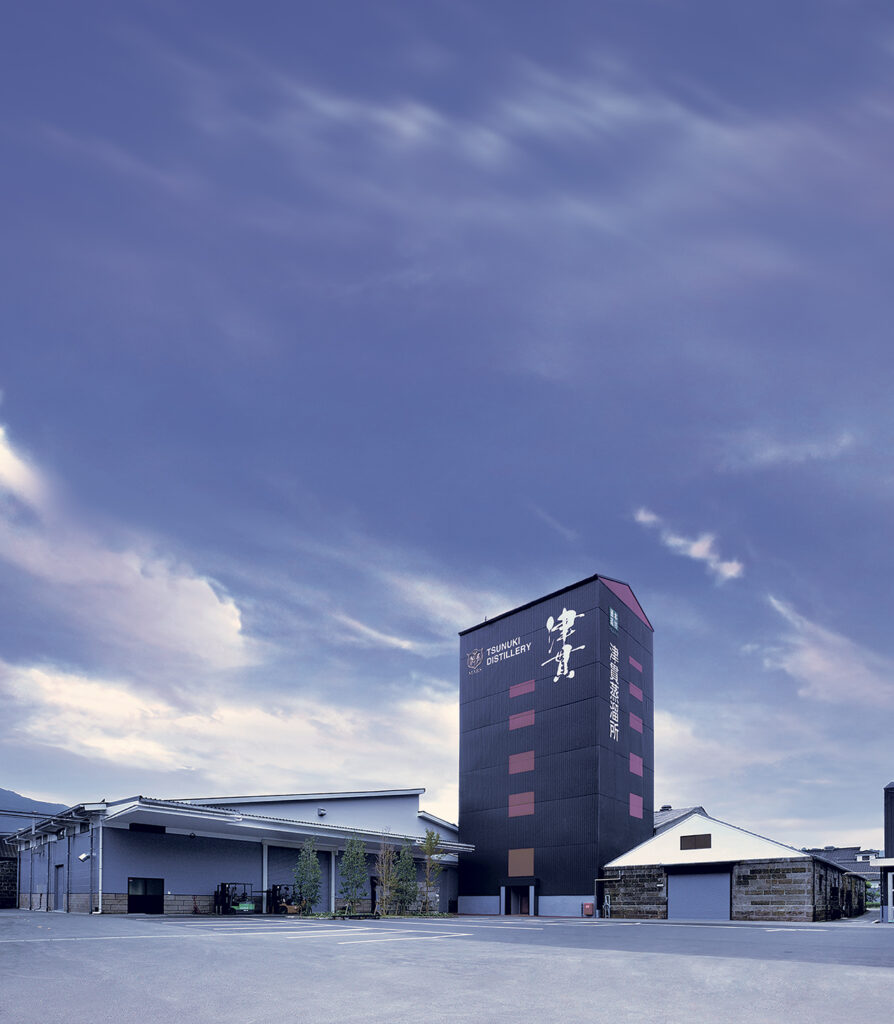
The Japanese whisky components originate from Mars’ Komagatake and Tsunuki distilleries, both produced from 100% malted barley but matured in highly distinctive cask types before arriving in Kentucky.
Komagatake single malt was aged in Umeshu (plum liqueur) barrels, contributing fruit-forward sweetness and floral character.
Tsunuki single malt matured in rare Sakura (cherry wood) barrels, adding spice and delicate wood influence uncommon even within Japanese whisky.
Those whiskies were then introduced into barrels containing mature Kentucky bourbons aged 10 and 16 years.
Instead of simply finishing the bourbon with Japanese whisky influence, Bardstown allowed all components to mature together for another full year.
That additional Kentucky aging period likely plays a significant role in the final profile.
Kentucky’s climate accelerates extraction and interaction inside the barrel, meaning the final year was not passive integration. According to the company, the process added additional wood sugars, deeper barrel character, and further structural balance between the spirits.
Dan Callaway, Master Blender for Bardstown Bourbon Company, described the release less as blending and more as creating a new category space between traditions.
“By aging Japanese single malt whiskies together with Kentucky bourbon in the same barrel, we’ve created something entirely new.”
That framing feels intentional.
This release is clearly positioned as innovation through process rather than novelty through finishing.
Why This Matters
The whiskey world has spent the last decade heavily focused on finishing experimentation.
Secondary casks.
Wine barrels.
Exotic woods.
International finishing influences.
What has been comparatively rare is experimentation involving active co-aging between mature spirits from entirely different whiskey traditions.
That’s partly because it introduces substantial risk.
Bourbon’s heavier oak extraction and sweetness can easily overpower more delicate Japanese whisky profiles. Conversely, Japanese malt character can sometimes disappear entirely when introduced into highly mature American whiskey.
Bardstown’s challenge here was balance.
The project only works if both traditions remain identifiable while still feeling cohesive.
That broader philosophy aligns naturally with the Distillery Reserve platform, which Bardstown launched in 2025 specifically to explore small-scale experimental whiskey concepts that would be difficult to execute within traditional large-scale production models.
Previous releases in the series have focused on unusual oak species and finishing techniques, including Mizunara oak, Calvados brandy barrels, and Garryana oak.
The Mars collaboration feels like a logical progression:
less about exotic barrels and more about redefining how whiskey components interact during maturation itself.
There’s also larger industry significance underneath the release.
Japanese whisky and American bourbon have increasingly influenced each other commercially over the past decade, but true production-level collaboration between distilleries remains relatively uncommon.
This project moves beyond branding partnership into shared technical experimentation.
Notably, the collaboration is also reciprocal.
A second co-aging project is currently underway at Mars’ Tsunuki Distillery in Japan, where Bardstown bourbon is being integrated into Mars’ own aging stocks using similar concepts.
That makes this feel less like a one-off marketing release and more like the beginning of a broader exchange between two whiskey-making philosophies.
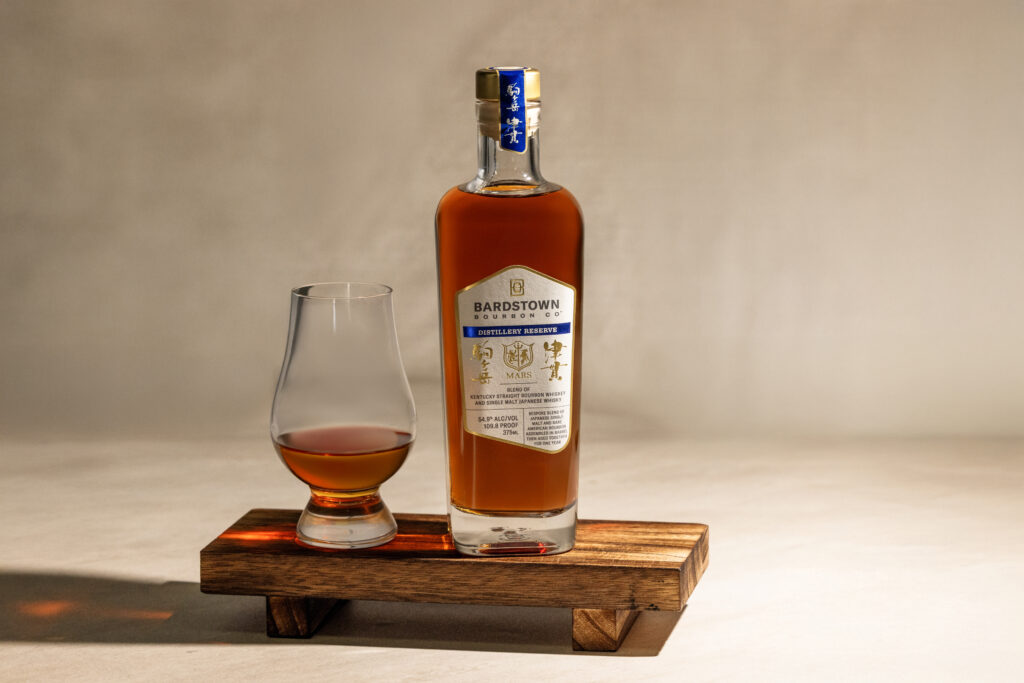
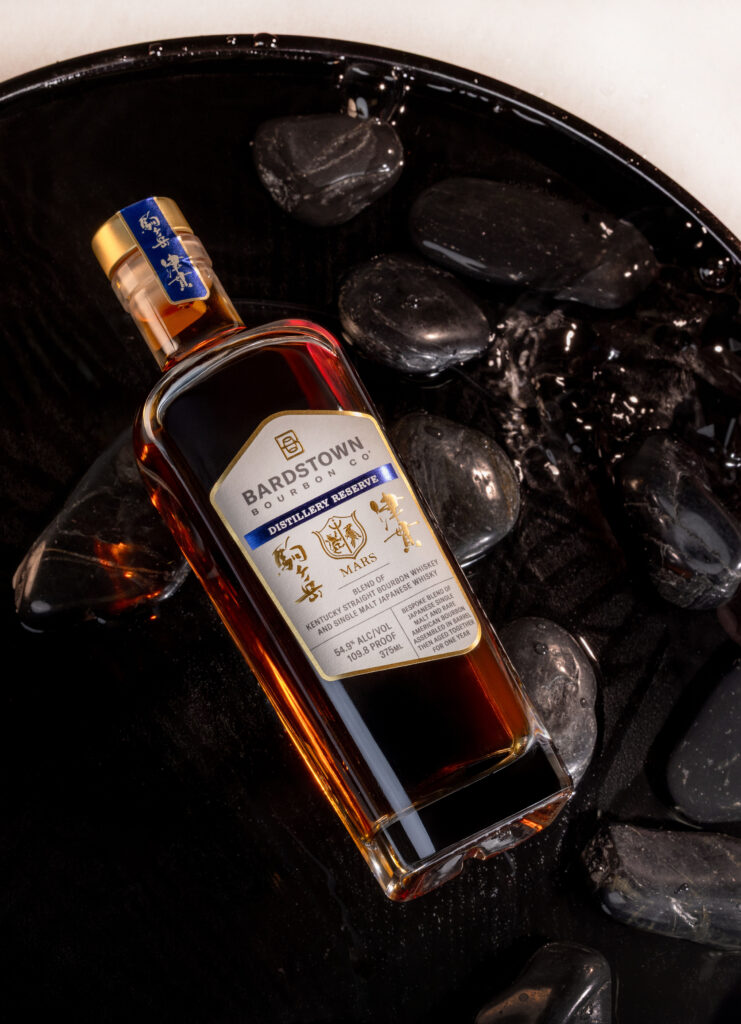
The Whiskey
- Classification: Co-Aged Bourbon and Japanese Single Malt Whiskey Blend
- Proof: 109.8 (54.9% ABV)
- Format: 375mL
- MSRP: $99.99
- Availability: Distillery-exclusive
Japanese Components:
- Mars Komagatake Single Malt aged in Umeshu barrels
- Mars Tsunuki Single Malt aged in Sakura barrels
Bourbon Components:
- Kentucky bourbons aged 10 and 16 years
According to Bardstown, the whiskey carries notes of caramelized plum, roasted malt, vanilla bean, baked cherry, and toasted oak with a refined, delicate finish balancing bourbon richness against Japanese whisky elegance.
At nearly 110 proof, the release also avoids one of the common pitfalls of experimental whiskey projects: dilution.
Maintaining higher proof suggests confidence that the whiskey’s structure can support the unusual integration without requiring softness or overcorrection.
The 375mL format, meanwhile, reflects the release’s intended positioning as both experimental and limited rather than a permanent portfolio addition.
“By aging Japanese single malt whiskies together with Kentucky bourbon in the same barrel, we’ve created something entirely new.”
— Dan Callaway, Master Blender for Bardstown Bourbon Company
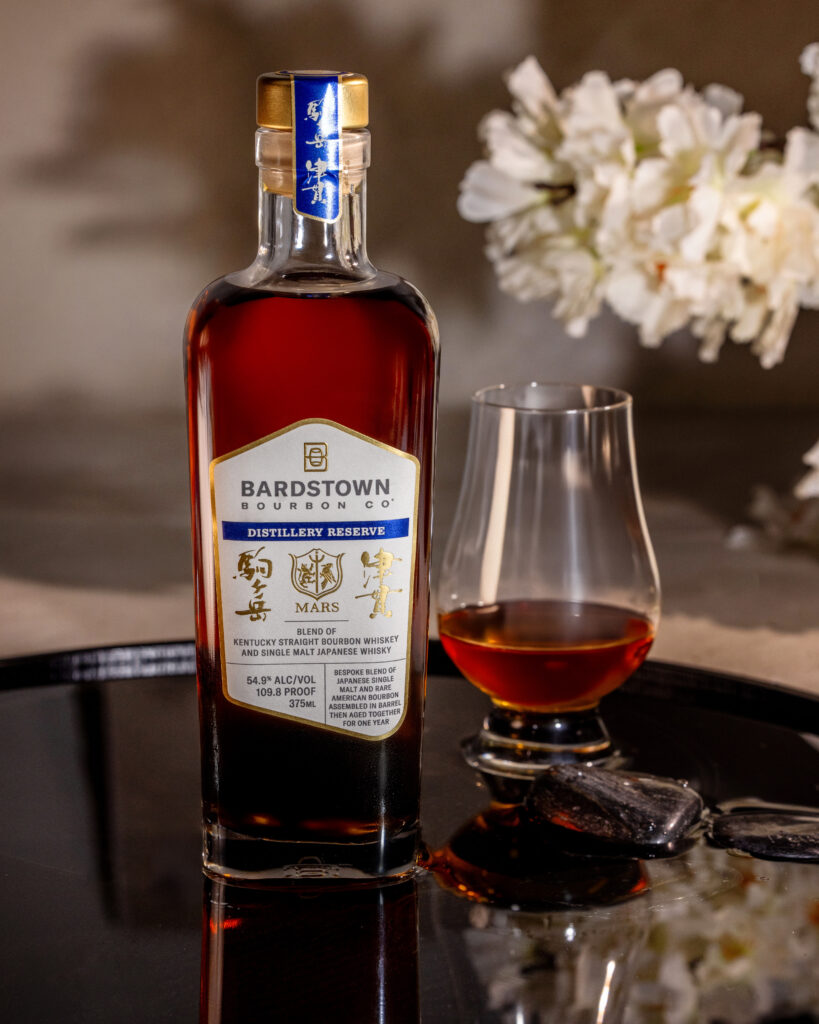
Availability
Distillery Reserve Mars Single Malt Japanese Blend launches May 29, 2026, and will be available exclusively through Bardstown Bourbon Company’s official website distillery gift shop and Louisville tasting room.
Given the limited nature of prior Distillery Reserve releases, availability will likely be highly constrained.
The Bottom Line
Bardstown Bourbon Company isn’t simply borrowing Japanese whisky aesthetics here.
It’s experimenting with shared maturation as a completely different production philosophy.
That distinction is important.
Many international whiskey collaborations stop at finishing or blending.
This release attempts something more ambitious:
allowing two mature whiskey traditions to evolve together inside the same barrel until they become something neither could produce independently.
Whether the concept fully succeeds will ultimately depend on balance.
But from a technical standpoint alone, Distillery Reserve Mars Single Malt Japanese Blend feels more meaningful than the average experimental release because the innovation is structural rather than cosmetic.
And increasingly, that’s the kind of experimentation whiskey enthusiasts seem most interested in seeing.
Related Articles
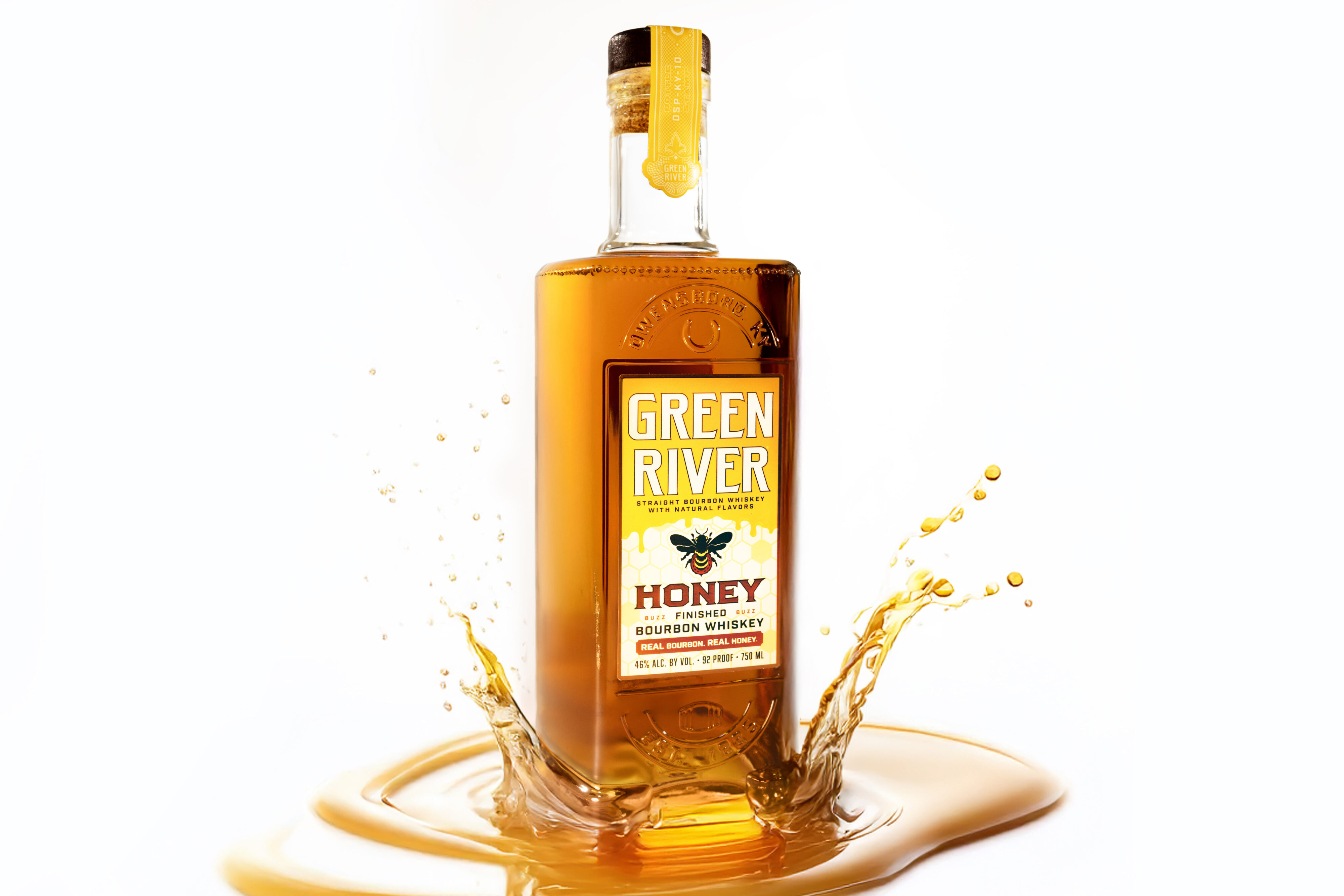
Green River Distilling Co. has announced Honey Finished Bourbon, a 92-proof Kentucky straight bourbon finished in-barrel with 100% real honey and no artificial sweeteners or additives.
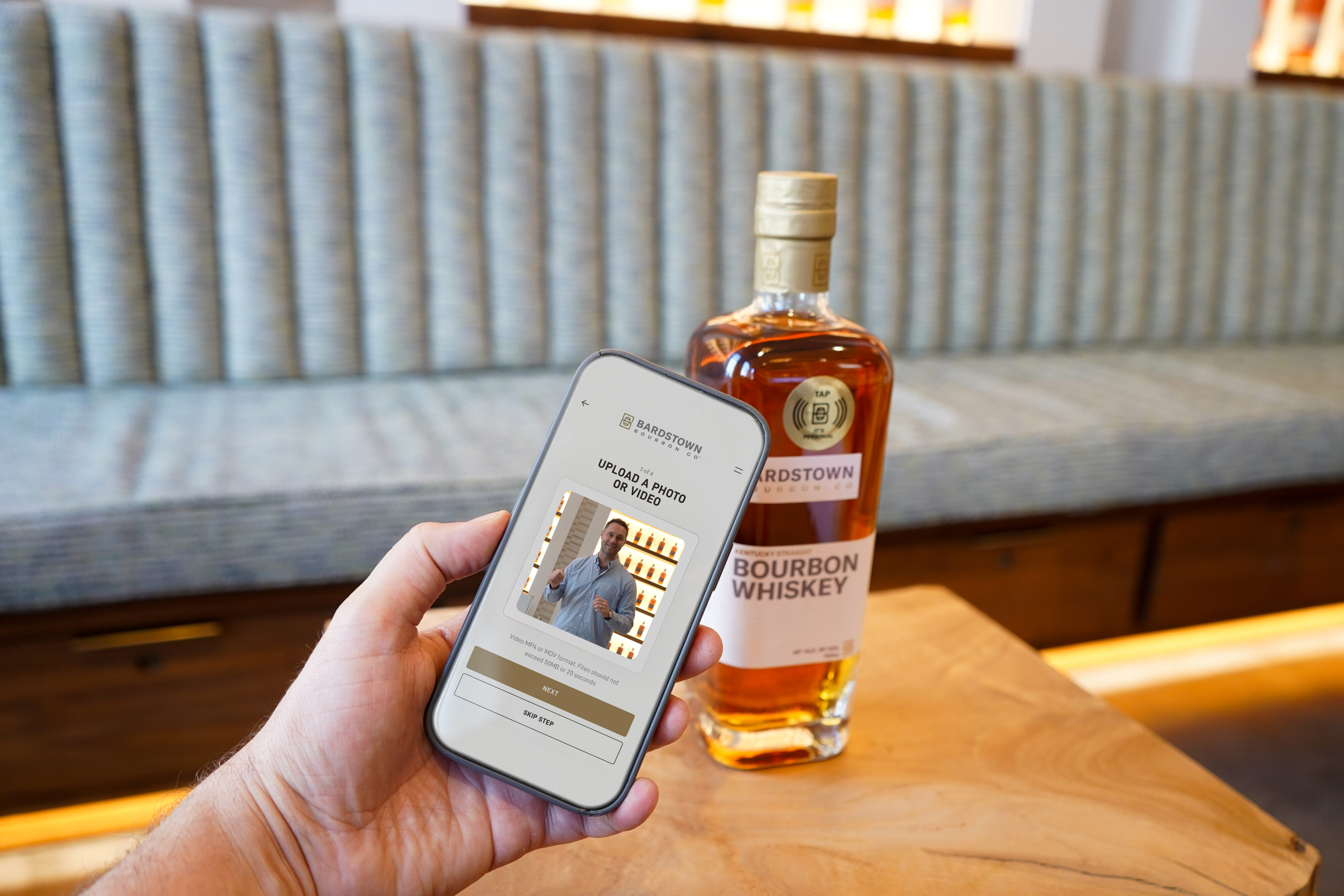
Bardstown Bourbon Company launches NFC-powered gifting tags, allowing consumers to attach personalized messages, photos, and videos to any bourbon bottle via smartphone tap.
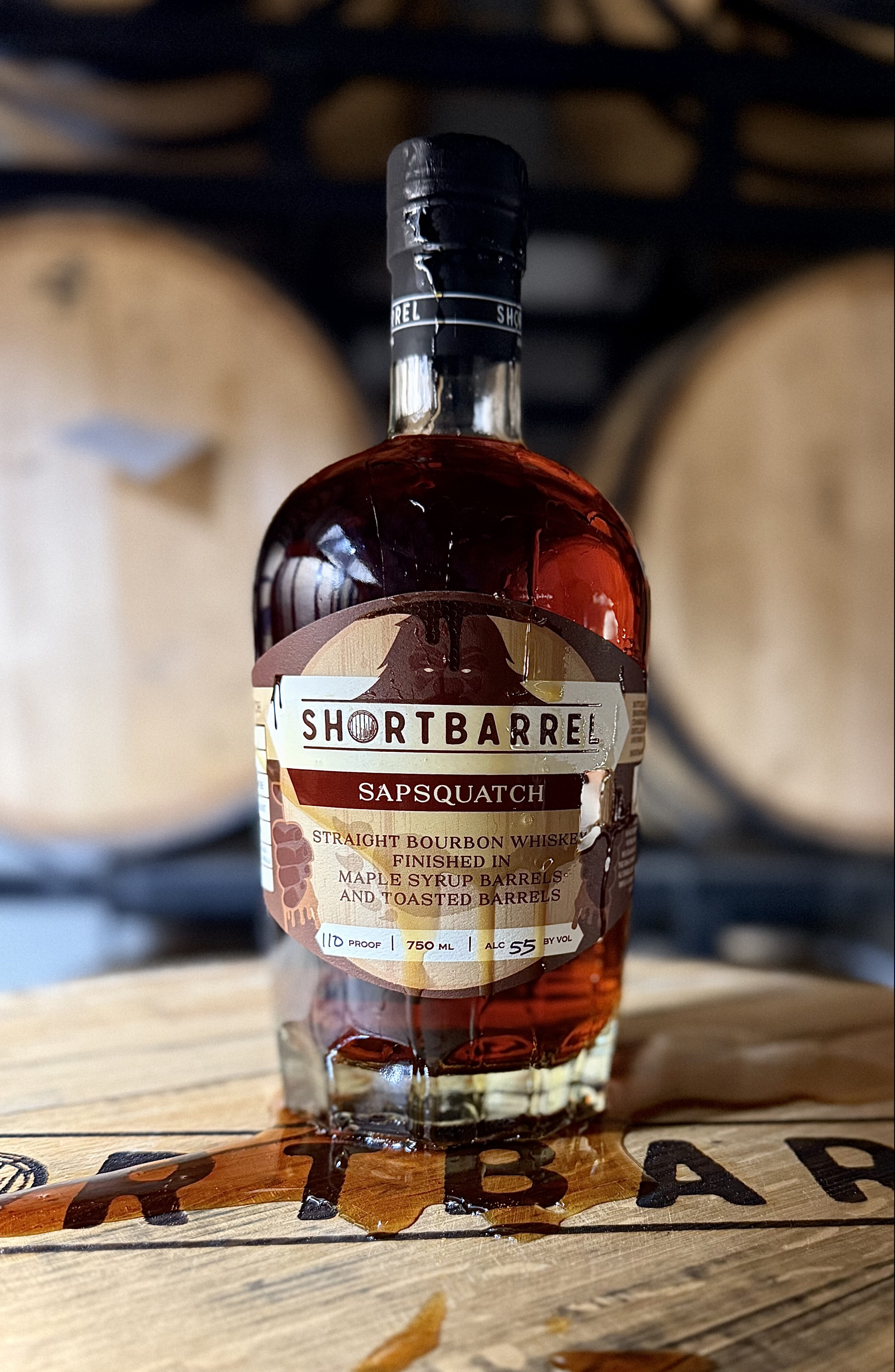
Shortbarrel’s Sapsquatch Bourbon returns for 2026 as a 110-proof maple-finished release blending Kentucky and Indiana bourbons with a unique two-stage finishing process focused on oak, spice, and texture over sweetness.
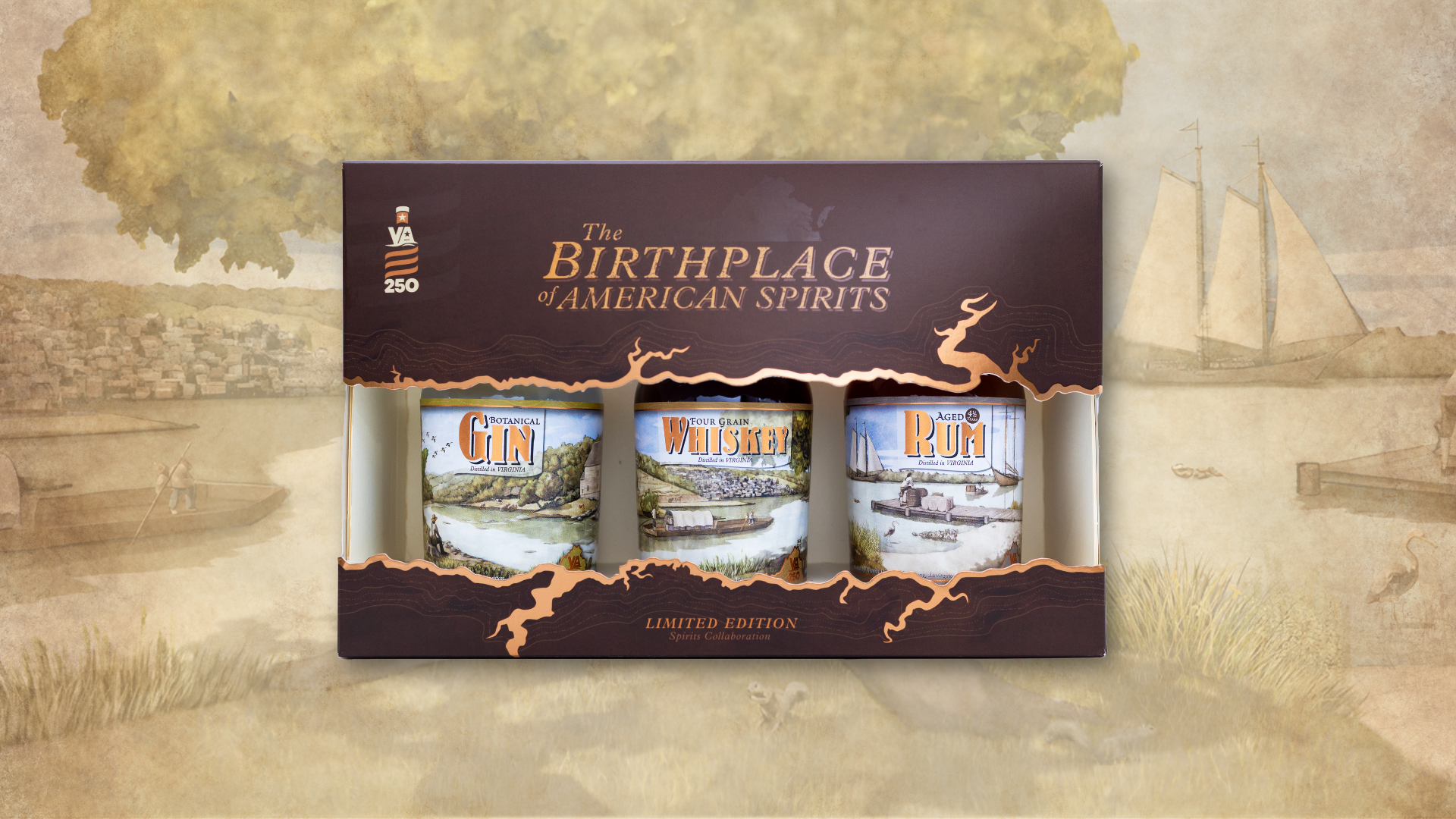
Virginia distillers release a limited-edition 250th anniversary trio pack featuring rum, whiskey, and gin. Details on the collaboration, distilleries involved, and why it matters.
Pingback: Kentucky Peerless 10-Year Bourbon Wins Double Platinum at 2026 ASCOT Awards Review | Bourbon Bishop