
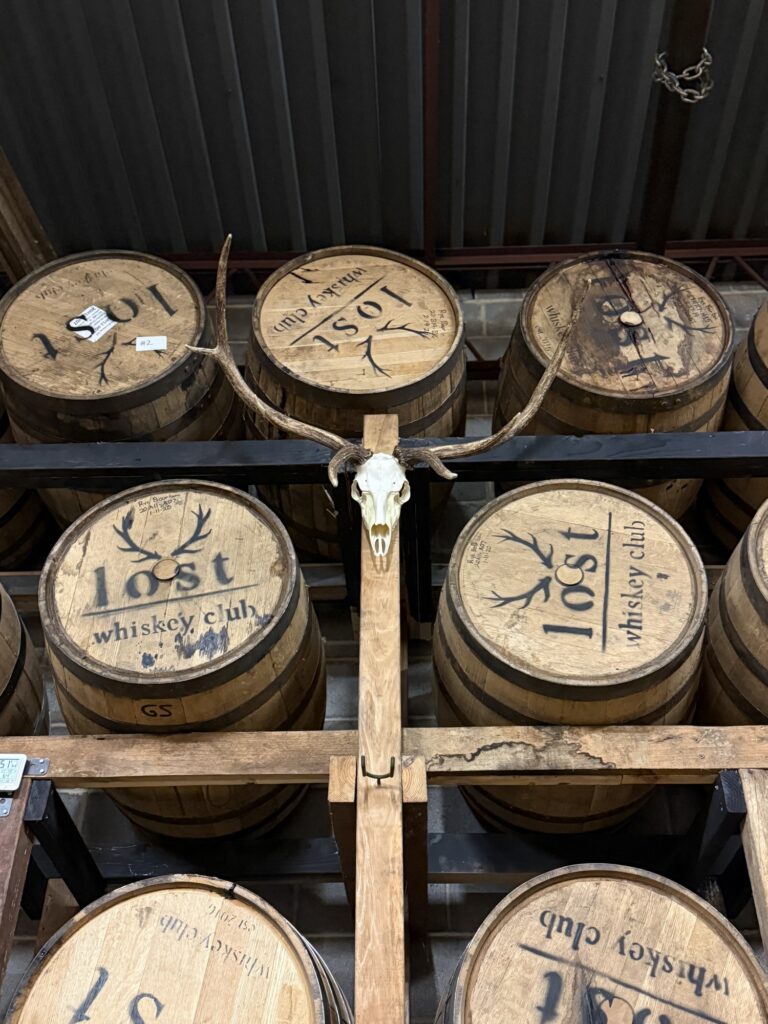
A snow-covered reminder of what whiskey is actually about
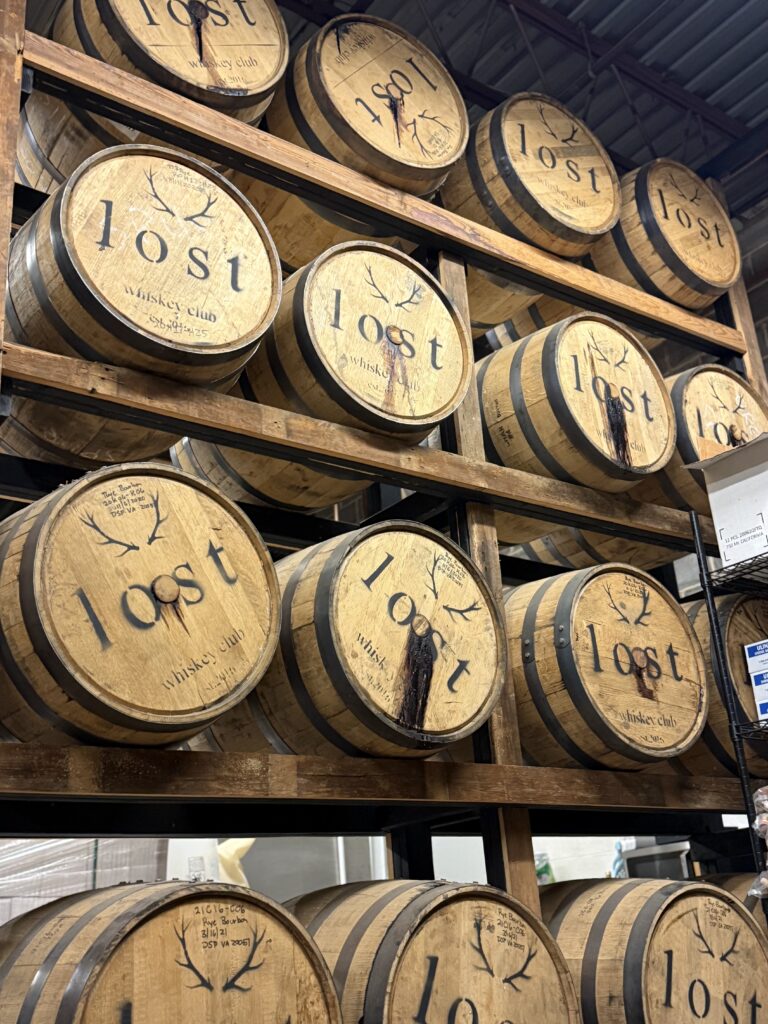
A small Virginia rickhouse, a handful of sourced barrels, and a philosophy that puts the pour ahead of the pedigree.
- Distillery: Lost Whiskey Club
- Location: Fairfax, Virginia
- Founded: 2016
- Known for: Curated sourced and VA-aged single barrel only bottles
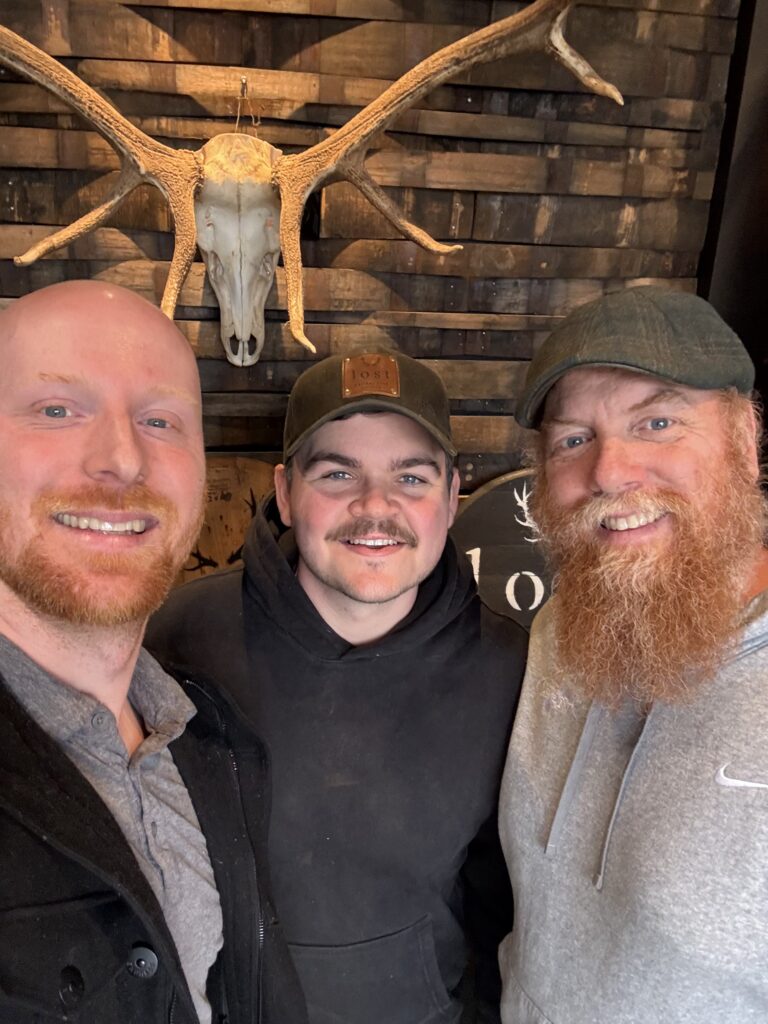
- Visit Type: Hosted by owners Mark, Nick & director Matt
The People of Lost
Who’s actually behind the bottle
Nick Cioffi is deeply hands-on — selecting barrels, working through each release, and maintaining a level of involvement that shows up in the final product.
Mark Turner brings a background rooted in hospitality, storytelling, and building environments that bring people together.
Matt Stinnett now directs the whiskey program, drawing on prior distillery experience in Montana to guide barrel selection and the evolution of the lineup.
Together, the focus stays consistent: build something that people use, not just collect.
The Visit
Snow, setting, and first impressions
After a stretch of unseasonably warm 80-degree days, a sudden Virginia snowstorm set the tone. Thick flakes fell steadily, muting everything around the rickhouse and giving the approach a kind of cinematic stillness.
It felt fitting.
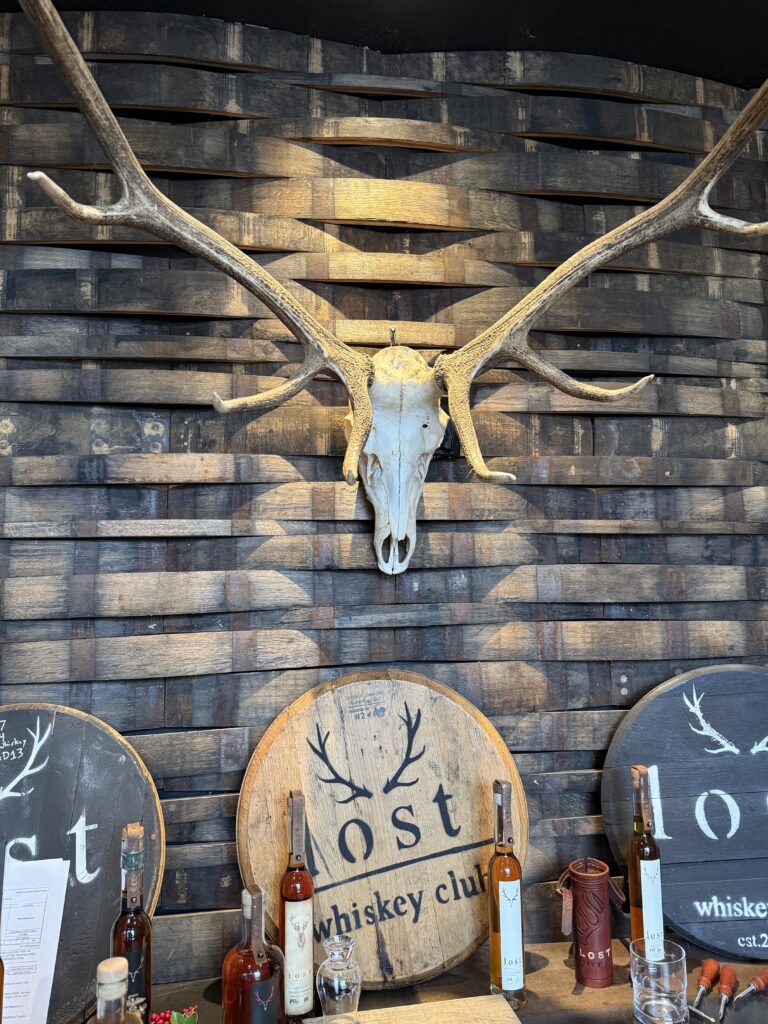
Lost Whiskey Club operates out of a small, lodge-inspired space tucked into the barrel room. It’s not expansive or polished in the traditional sense. Instead, it leans into a camping and hunting aesthetic — wood textures, antlers, and a lived-in feel that mirrors the brand’s identity.
That identity traces back to Mark Turner’s background, including family roots connected to one of the oldest elk ranches in what is now Jackson Hole.
It’s a space designed less for spectacle and more for gathering.
The Philosophy
Architecture, whiskey, and the idea of “place”
Lost Whiskey Club was founded by Nick Cioffi and Mark Turner — architects by trade, and it shows.
Their worldview is consistent:
- analog over digital
- slow over fast
- simple over complex
They speak about wood, steel, landscape, and light with the same weight as mash bills and proof points. In their view, whiskey and architecture are built on the same foundation — time, material, and environment shaping outcome.
There’s a clear influence from Wallace Stegner’s idea that a place only becomes meaningful once it holds memory. That idea runs through everything here.
The goal isn’t just to make whiskey.
It’s to create a setting where stories happen—and then give you something to mark them with.
“The value of whiskey is part chemistry and craft — but mostly story and kinship.”
The Whiskey Program
Sourced, single barrel, and intentionally simple
The foundation is sourced whiskey — initially from MGP Ingredients and now contract distilled through Middle West Spirits.
From there, the approach is disciplined:
- Single barrels only (no blending)
- Minimum ~4 years aging, often longer
- No added flavoring or manipulation
- Bottled as-is, especially at cask strength
Each bottle carries a leather band stamped with a barrel and story number — designed to be removed and kept. Like worn leather, it becomes part of the memory it represents.
Even the bottle size plays into this. Many releases come in smaller formats, encouraging you to open, share, and finish them in a single sitting.
Not save them.
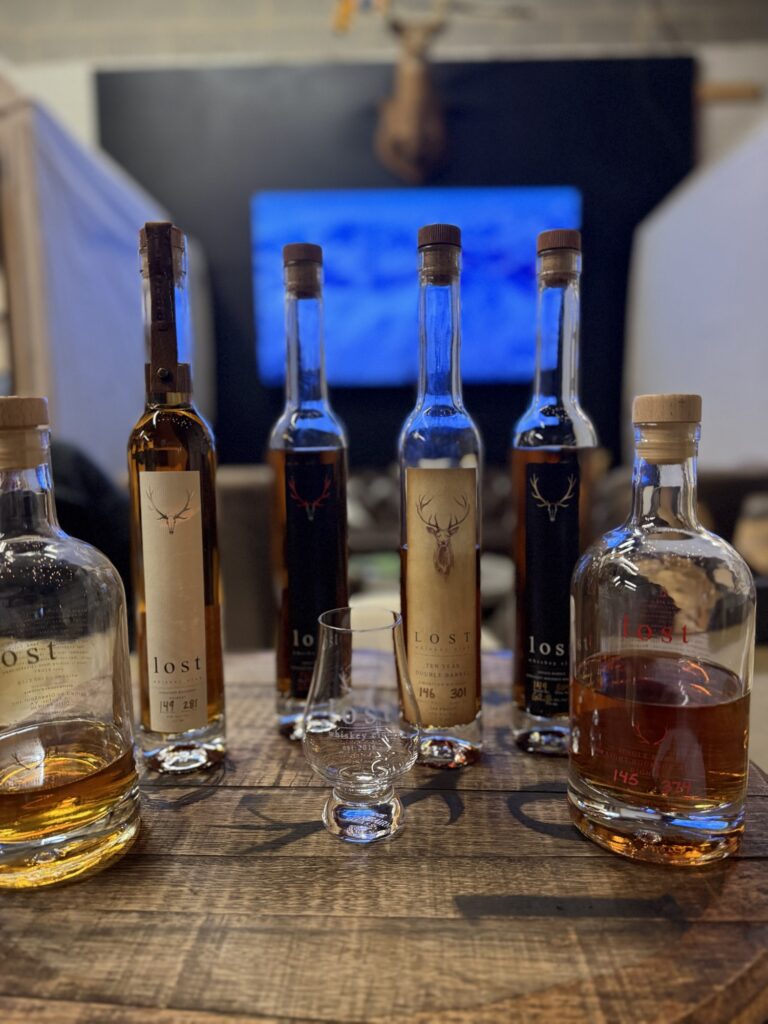
Tasting the Lineup
Core expressions and what stood out
Wheated Bourbon (Gold Antler / 90 proof vs. Cask Strength)
A strong showing for the style.
Cherry candy leads into softer bakery notes — vanilla frosting, light bread, and a rounded sweetness. The cask strength version deepens those flavors without losing structure, adding weight and a longer finish.
High-Rye Bourbon (Red Antler / 90 Proof vs. Cask Strength)
An interesting contrast.
The 90 proof delivered more noticeable baking spice — cinnamon, clove — while the cask strength (at least this specific single barrel) leaned softer than expected. That particular barrel trades spice for depth, showing darker sweetness and a more rounded profile.
On the nose: dark honey, apricot jam, and a fuller fruit presence.
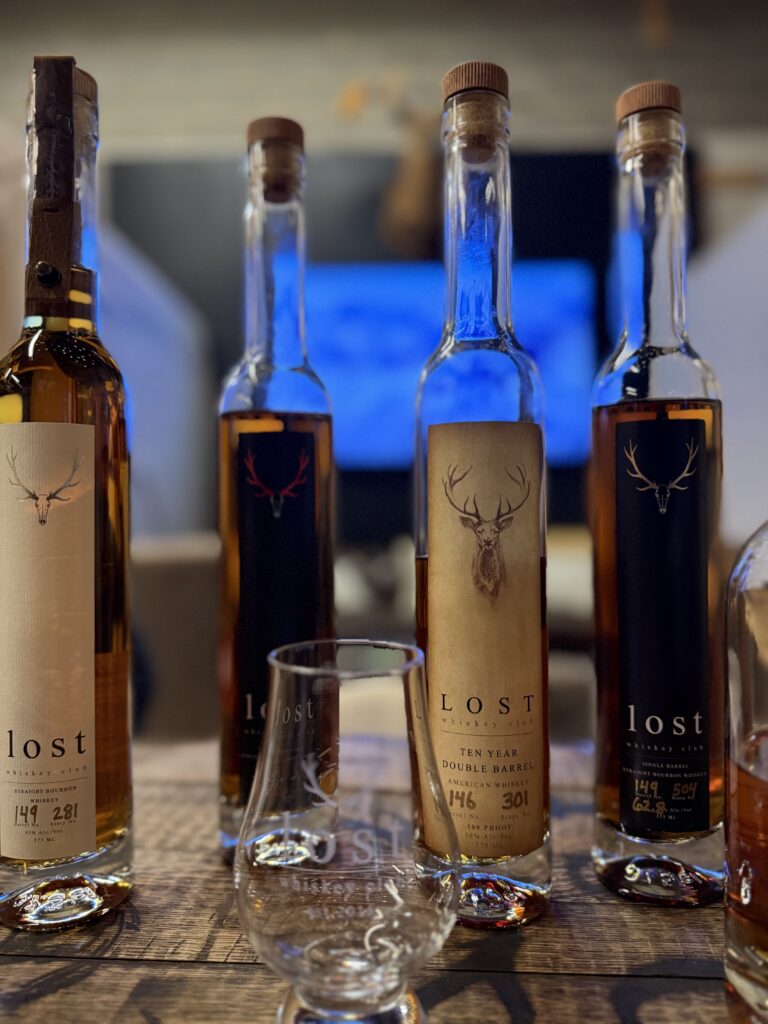
Standout Pour
10-Year Double Barrel American Whiskey
The most distinctive whiskey of the visit — and the clearest example of their willingness to experiment.
Originally aged in used barrels, the whiskey was reworked after presenting too light early on. It was re-barreled and aged further in new oak from Speyside Cooperage, resulting in something far more layered.
The profile sits between worlds:
- Vanilla and light bakery sweetness
- Floral, almost wine-like notes
- Stone fruit and a texture that occasionally leans toward unpeated scotch
It doesn’t fully resolve into one category—and that’s what makes it work.
Place Beyond the Warehouse
Lost Mountain and what’s coming next
The long-term vision extends beyond the current Fairfax space.
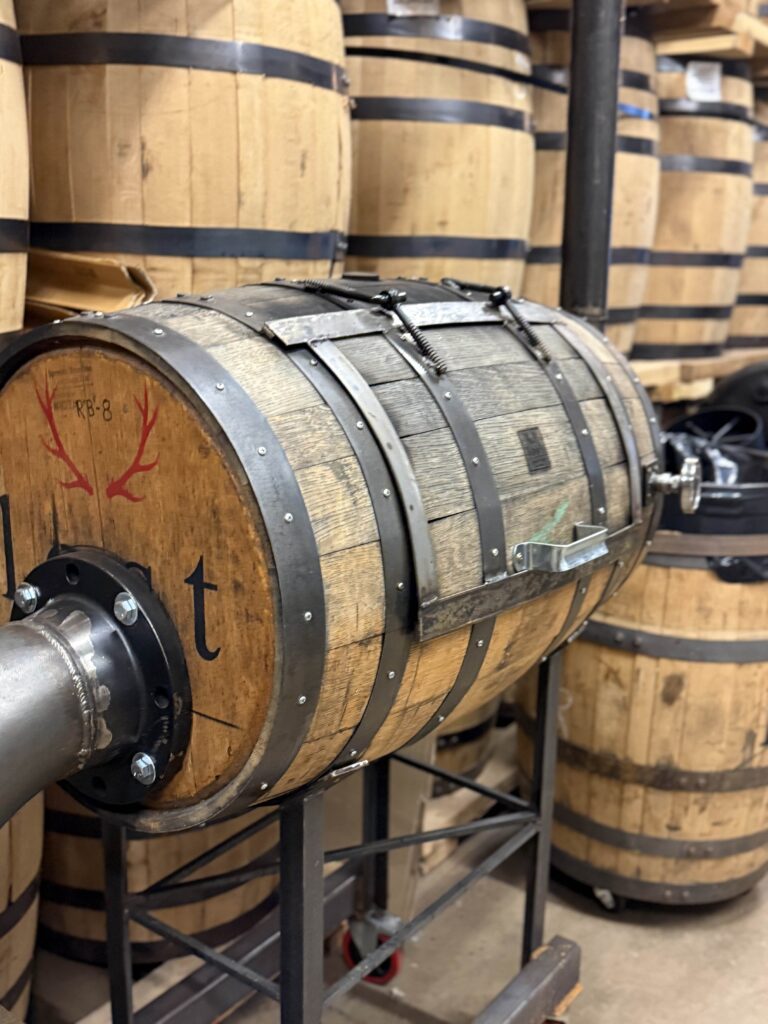
Lost Whiskey Club owns a significant stretch of land on Lost Mountain, where they’re actively building toward a more immersive version of the brand. A dedicated rickhouse has been approved and is already aging barrels, alongside events designed to bring people directly into that environment. From what Nick and Matt report, these mountain aged barrels are going to be incredible.
Additionally, they’ve already started testing the concept of utilizing the space beyond aging.
One recent event brought in a Michelin-starred chef for a dinner set against the landscape — refined execution in a deliberately rustic setting. It’s a strong indicator of where things are headed: curated experiences that merge environment, food, and whiskey into a single moment or enjoying a sipper neat or a cocktail at home.
Beyond the Whiskey
Food, stories, and why it all works
The experience doesn’t stop at the glass.
The team also runs a competitive barbecue program, and during the visit, smoked pork meatballs — made from brisket trimmings — were served alongside the pours. Simple, but memorable — and perfectly aligned with the setting.
Conversations moved easily from whiskey into stories:
- bottles traveling across borders
- milestone celebrations
- moments tied to place and people
At a certain point, the whiskey fades into the background.
And that’s kind of the point.
Final Thoughts
Lost Whiskey Club isn’t trying to be the best whiskey on the shelf.
It’s trying to be the bottle you open at the right moment and preferably still one of the finest.
In an industry driven by scarcity, specs, and origin debates, that approach feels intentionally grounded. The whiskey holds up — often exceeding expectations for sourced stock — but it’s the surrounding philosophy that leaves the stronger impression.
In a small rickhouse, during an unexpected snowstorm, that perspective felt especially clear.
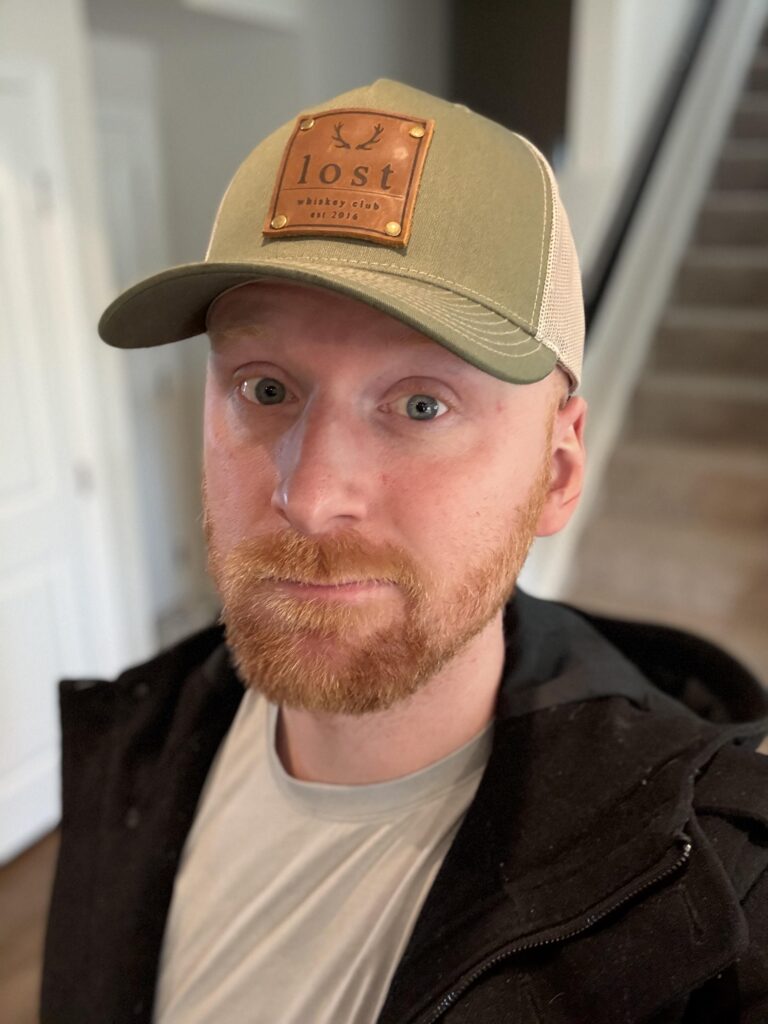
This visit was hosted by the distillery. All thoughts are my own and not influenced by the experience.
Love local DC, Maryland, and Virginia whiskey? Explore the full collection of reviews and distillery visits to discover more small-batch gems and high-proof favorites.
Related Distillery Visits
Explore Song Dog Distillery in Boyds, Maryland
Explore the farm-to-glass operation in the Agricultural Reserve, reviews of their bourbon and an exclusive rye blending experience with head distiller Kristian Naslund
From the distillery and dining experience to the home glass — the quality sourced and blended whiskies of Open Road Open Road Distilling Co.